Tag: Inland Empire

  • California’s Coming Youth Deficit

    Images of California, particularly the southern coast, are embedded with those associated with youthfulness — surfers, actors, models, glamorous entrepreneurs. Yet, in reality, the state — and the region — are falling well behind in the growth of their youthful population, which carries significant implications for our future economic trajectory and the nature of our society.

    The numbers, provided by demographer Wendell Cox, based on U.S. Census Bureau estimates, should concern every business and community, particularly across the high-priced coastal areas. On the other hand, the stronger youthful growth in the interior, notably the Inland Empire, may become the basis for a regional resurgence, given a less draconian state regulatory regime.

    What the numbers say

    Let’s start with the millennials, the population that was aged between 20 and 34 in 2015. Since 2000, the growth of this segment of the population has been, for the most part, very slow along the coastal regions, well below the 6 percent national average. In Los Angeles and Orange County, the youth population grew by roughly 3 percent, about half the national average. San Francisco-Oakland, did a bit better, at 7 percent, but Silicon Valley-San Jose experienced a barely 1 percent increase.

    In comparison, the millennial population of Orlando, Fla., grew by 47 percent, while in Las Vegas it increased by 42 percent. The four big Texas cities — led by San Antonio, with a 43 percent increase — all registered well over 20 percent growth. Rising tech regions, like Raleigh, N.C., saw 30 percent growth — 30 times the rate in Silicon Valley.

    Yet, not all of California is losing out in the coming generation. The fastest-growing region for young people among the 53 largest metropolitan regions is right here in Southern California, the Riverside-San Bernardino area, which saw its 20-34 population expand by a remarkable 47 percent. Another inland standout in California, Sacramento, grew by over 30 percent, far ahead of any of the coastal areas.

    Read the entire piece in the Orange County Register.

    Joel Kotkin is executive editor of NewGeography.com. He is the Roger Hobbs Distinguished Fellow in Urban Studies at Chapman University and executive director of the Houston-based Center for Opportunity Urbanism. His newest book is The Human City: Urbanism for the rest of us. He is also author of The New Class ConflictThe City: A Global History, and The Next Hundred Million: America in 2050. He lives in Orange County, CA.

    Wendell Cox is principal of Demographia, an international public policy and demographics firm. He is a Senior Fellow of the Center for Opportunity Urbanism (US), Senior Fellow for Housing Affordability and Municipal Policy for the Frontier Centre for Public Policy (Canada), and a member of the Board of Advisors of the Center for Demographics and Policy at Chapman University (California). He is co-author of the “Demographia International Housing Affordability Survey” and author of “Demographia World Urban Areas” and “War on the Dream: How Anti-Sprawl Policy Threatens the Quality of Life.” He was appointed to three terms on the Los Angeles County Transportation Commission, where he served with the leading city and county leadership as the only non-elected member. He served as a visiting professor at the Conservatoire National des Arts et Metiers, a national university in Paris.

    Photo by vlasta2 [CC BY 2.0], via Wikimedia Commons

  • The other California: A flyover state within a state

    California may never secede, or divide into different states, but it has effectively split into entities that could not be more different. On one side is the much-celebrated, post-industrial, coastal California, beneficiary of both the Tech Boom 2.0 and a relentlessly inflating property market. The other California, located in the state’s interior, is still tied to basic industries like homebuilding, manufacturing, energy and agriculture. It is populated largely by working- and middle-class people who, overall, earn roughly half that of those on the coast.

    Over the past decade or two, interior California has lost virtually all influence, as Silicon Valley and Bay Area progressives have come to dominate both state politics and state policy. “We don’t have seats at the table,” laments Richard Chapman, president and CEO of the Kern Economic Development Corporation. “We are a flyover state within a state.”

    Virtually all the polices now embraced by Sacramento — from water and energy regulations to the embrace of sanctuary status and a $15-an-hour minimum wage — come right out of San Francisco central casting. Little consideration is given to the needs of the interior, and little respect is given to their economies.

    San Francisco, for example, recently decided to not pump oil from land owned by the city in Kern County, although one wonders what the new rich in that region use to fill the tanks of their BMWs. California’s “enlightened” green policies help boost energy prices 50 percent above those of neighboring states, which makes a bigger difference in the less temperate interior, where many face longer commutes than workers in more compact coastal areas.

    The new Bantustans

    Fresno, Bakersfield, Ontario and San Bernardino are rapidly becoming the Bantustans — the impoverished areas designed for Africans under the racist South African regime — in California’s geographic apartheid. Poverty rates in the Central Valley and Inland Empire reach over a third of the population, well above the share in the Bay Area. By some estimates, rural California counties suffer the highest unemployment rate in the country; six of the 10 metropolitan areas in the country with the highest percentage of jobless are located in the central and eastern parts of the state. The interior counties — from San Bernardino to Merced — also suffer the worst health conditions in the state.

    This disparity has worsened in recent years. Until the 2008 housing crash, the interior counties served, as the Kern EDC’s Chapman puts it, as “an incubator for mobility.” These areas were places that Californians of modest means, and companies no longer able to afford coastal prices, could get a second shot.

    But state policies, notably those tied to Gov. Jerry Brown’s climate jihad, suggests Inland Empire economist John Husing, have placed California “at war” with blue-collar industries like homebuilding, energy, agriculture and manufacturing. These kinds of jobs are critical for regions where almost half the workforce has a high school education or less.

    Read the entire piece at The Orange County Register.

    Joel Kotkin is executive editor of NewGeography.com. He is the Roger Hobbs Distinguished Fellow in Urban Studies at Chapman University and executive director of the Houston-based Center for Opportunity Urbanism. His newest book, The Human City: Urbanism for the rest of us, was published in April by Agate. He is also author of The New Class ConflictThe City: A Global History, and The Next Hundred Million: America in 2050. He lives in Orange County, CA.

    Photo: Michael Patrick, CC License.

  • Them that’s got shall have. Them that’s not shall lose.

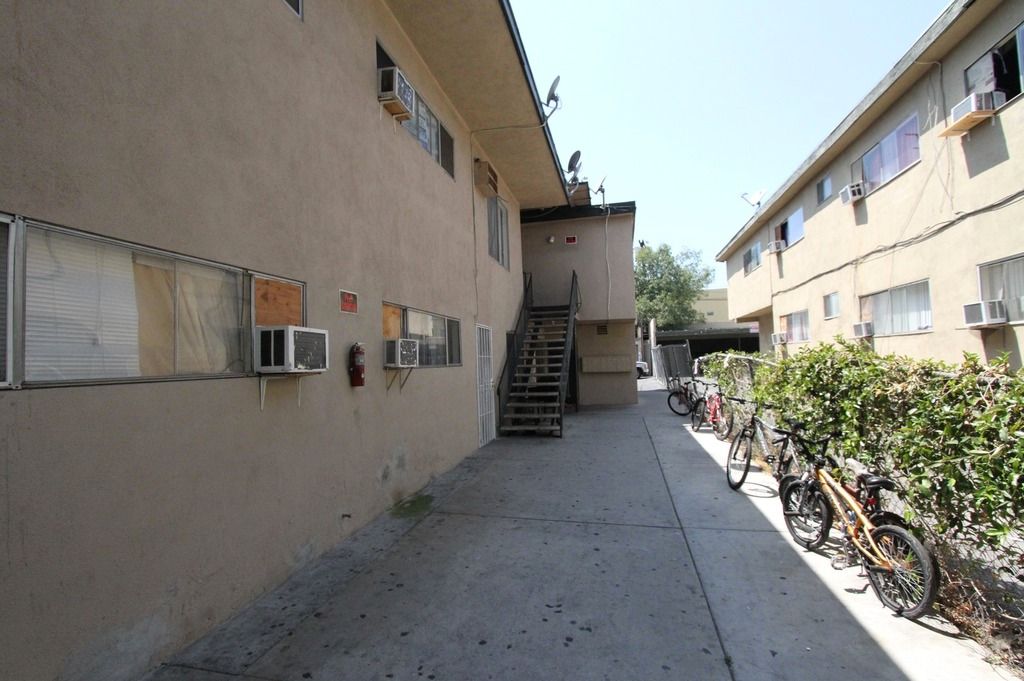
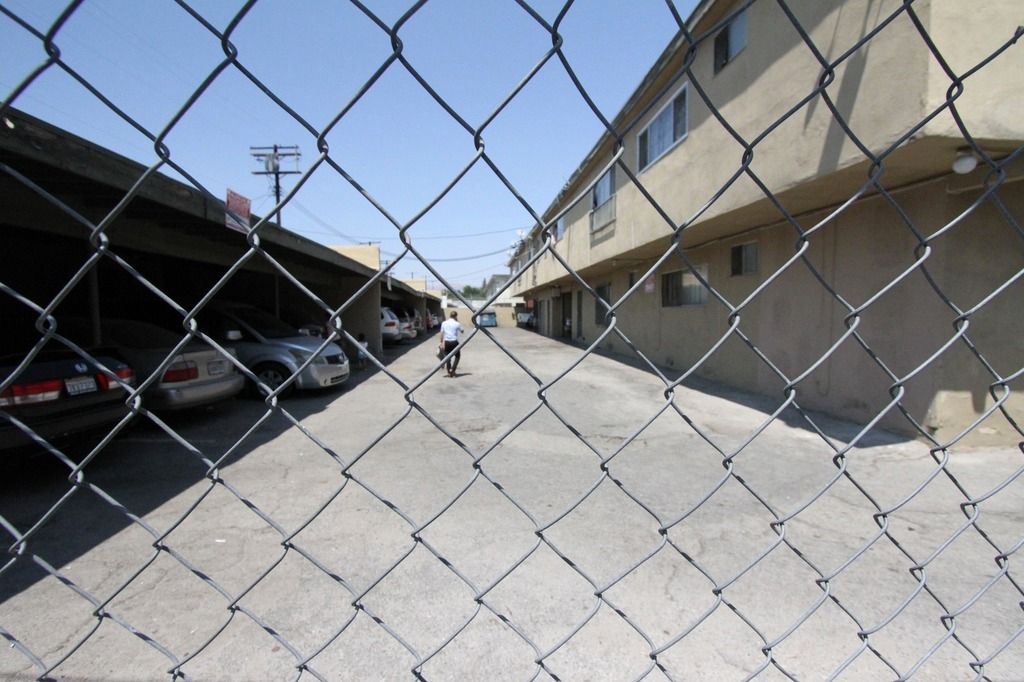
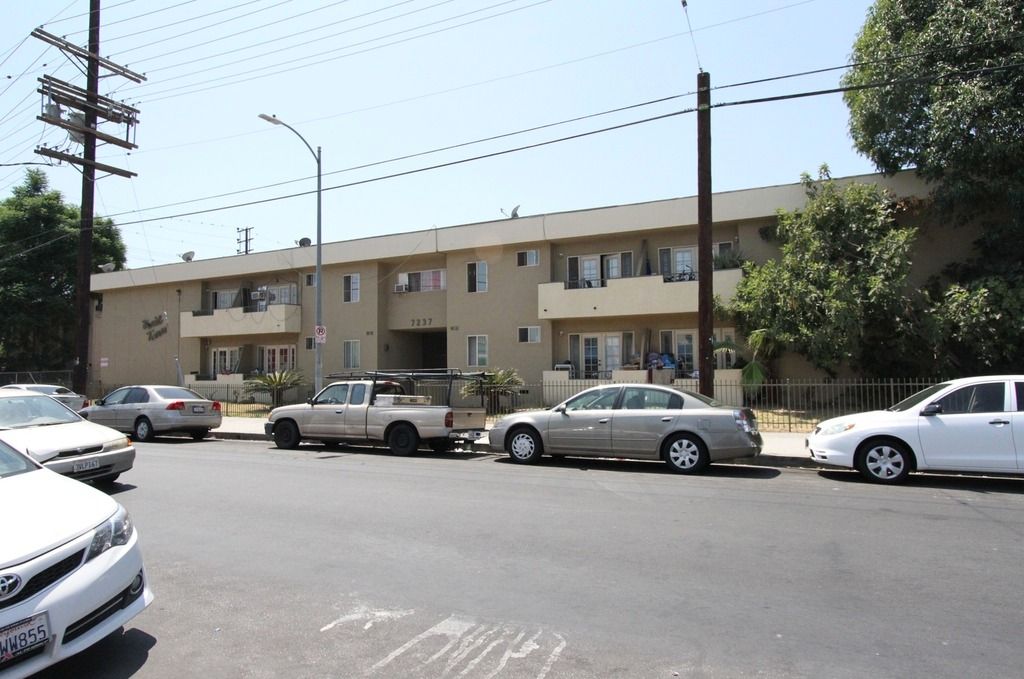
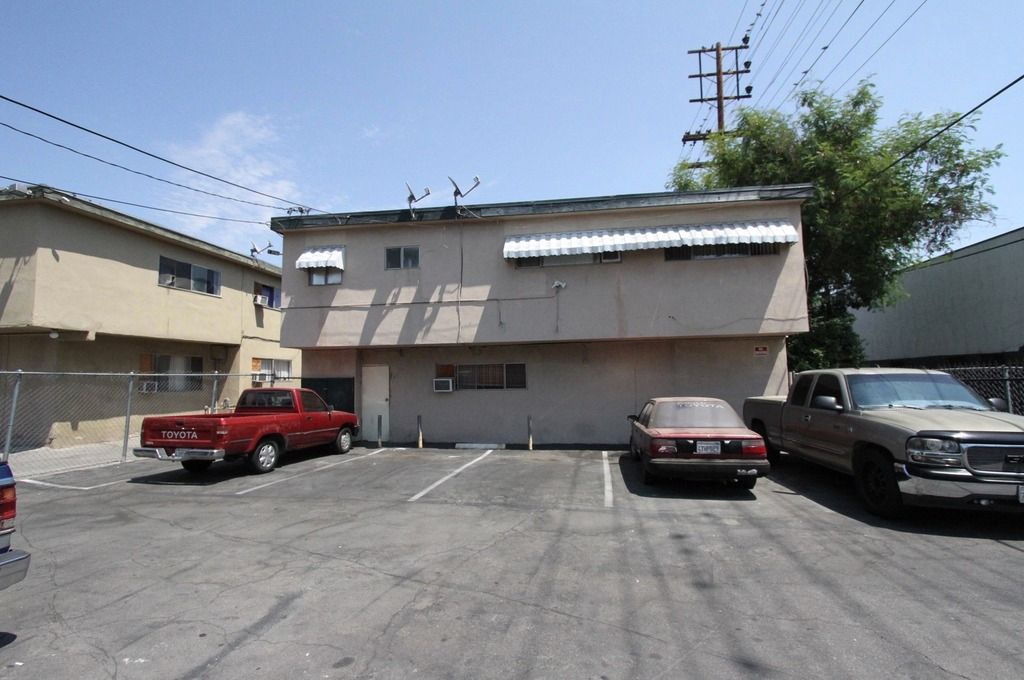
    My family lived in this building when I was a kid in the 1970’s. This was the door to our old apartment. It’s in a nondescript part of the San Fernando Valley in Los Angeles. There are a million places just like this all over the Southland. These beige stucco boxes are the workhorses of semi-affordable market rate housing in California. The place hasn’t changed in forty years other than the on-going deferred maintenance.

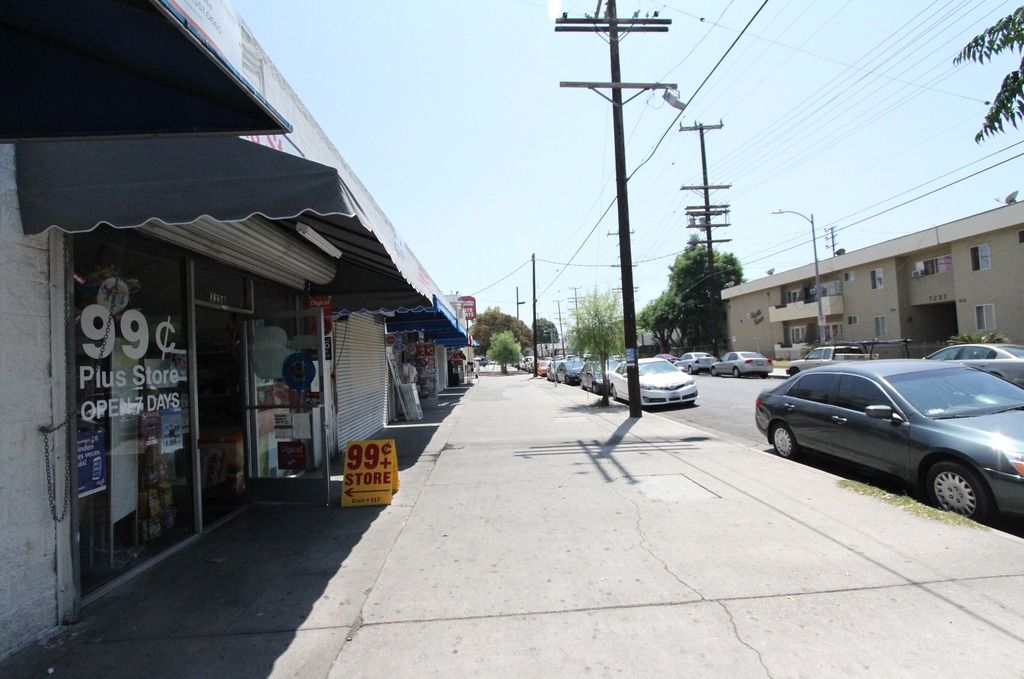
    I walked around the block to see the buildings where my friends used to live and the shops where we bought groceries and such. I can’t say I felt nostalgia. These weren’t happy times. But I was aware of the fact that the people who live here now are the same as my family was then – basically good people who are scraping by with almost no money doing the best they can with what they have. These are the minimum wage workers who do all the invisible dirty work of the city. Real incomes for these folks haven’t changed since I was a kid. But the cost of everything important from owning a home to health care to a proper education has skyrocketed.

    I want to go back to my last post about the exclusive homes in the fringe suburbs. The people who can afford to live here do so in large part so they can distance themselves from the people in my old neighborhood. Fair enough. I completely understand. I don’t want to live in my old neighborhood again either.

    But there’s that lingering problem of public infrastructure vs. the tax base of various forms of development. The city has spent almost nothing on my old block for decades. Yet those sad buildings keep spinning off revenue year after year. And there are a lot of them. Collectively they generate enough excess cash that the authorities can siphon it off to fund other activities. When it comes time to allocate resources who do you think has the most likely chance of getting what they need? The people who live in my old apartment, or the folks who live in the $700,000 homes up on the hill?

    As a society we want to believe that the poor are draining the public coffers dry. We need to blame the lower end of the working class for whatever we don’t like about the country. We want it to be true that they are undeserving compared to the better people who begrudgingly support them from a distance. Welfare. Food stamps. Section 8. But the reality – if you look at the budget and the actual numbers – is that without the poor packed tightly in their crappy apartments all working for crumbs in underfunded sections of town there could be no exclusive enclaves.

    Billie Holiday said it best. Them that’s got shall have. Them that’s not shall lose.

    John Sanphillippo lives in San Francisco and blogs about urbanism, adaptation, and resilience at granolashotgun.com. He’s a member of the Congress for New Urbanism, films videos for faircompanies.com, and is a regular contributor to Strongtowns.org. He earns his living by buying, renovating, and renting undervalued properties in places that have good long term prospects. He is a graduate of Rutgers University.

    All photos by Johnny Sanphillippo

  • California: The Economics of Delusion

    In Sacramento, and much of the media, California is enjoying a “comeback” that puts a lie to the argument that regulations and high taxes actually matter. The hero of this recovery, Gov. Jerry Brown, in Bill Maher’s assessment, “took a broken state and fixed it.”

    Yet, if you look at the long-term employment trends, housing affordability, inequality and the state’s long-term fiscal health, the comeback seems far less miraculous. Silicon Valley flacks may insist that the “landscape now has been altered,” so prosperity is now permanent, but this view is both not sustainable and deeply flawed.

    Jobs: The long view

    Since 2010, California has begun to generate jobs at a rate somewhat faster than the nation, but this still has just barely made up for the deep recession in 2007. The celebratory notion that true-blue California is outperforming red states like Texas is valid only in a very short-term perspective. Indeed, even since 2010, the job growth in Austin and Dallas has been higher than that in the Bay Area, while Los Angeles has lagged well behind.

    If you go back to 2000, the gap is even more marked. Between 2000 and 2015, Austin has increased its jobs by 50 percent, while Raleigh, Houston, San Antonio, Dallas, Nashville, Orlando, Charlotte, Phoenix and Salt Lake City – all in lower-tax, regulation-light states – have seen job growth of 24 percent or above. In contrast, since 2000, Los Angeles and San Francisco expanded jobs by barely 10 percent. San Jose, the home of Silicon Valley, has seen only a 6 percent expansion over that period.

    Regional concentration

    As Chapman University economist and forecaster Jim Doti recently suggested, the California boom is exceedingly concentrated in one region. “It’s not a California miracle, but really should be called a Silicon Valley miracle,” Doti noted in his latest forecast. “The rest of the state really isn’t doing well.”

    Read the entire piece at The Orange County Register.

    Joel Kotkin is executive editor of NewGeography.com. He is the Roger Hobbs Distinguished Fellow in Urban Studies at Chapman University and executive director of the Houston-based Center for Opportunity Urbanism. His newest book, The Human City: Urbanism for the rest of us, will be published in April by Agate. He is also author of The New Class ConflictThe City: A Global History, and The Next Hundred Million: America in 2050. He lives in Orange County, CA.

    Bill Watkins is a professor at California Lutheran University and runs the Center for Economic Research and Forecasting, which can be found at clucerf.org.

  • Why California’s Salad Days Have Wilted

    “Science,” wrote the University of California’s first President Daniel Coit Gilman, “is the mother of California.” In making this assertion, Gilman was referring mostly to finding ways to overcoming the state’s “peculiar geographical position” so that the state could develop its “undeveloped resources.”

    Nowhere was this more true than in the case of water. Except for the far north and the Sierra, California – and that includes San Francisco as well as greater Los Angeles – is essentially a semiarid desert. The soil and the climate might be ideal, but without water, California is just a lot of sunny potential, but not much economic value.

    Yet, previous generations of Californians, following Gilman’s instructions, used technology to build new waterworks, from the Hetch Hetchy Dam to the L.A. Aqueduct and, finally, the California State Water Project and its federal counterpart, the Central Valley Project. These turned California into the richest farming area on the planet and generated opportunities for the tens of millions who came to live in the state’s cities and suburbs.

    Read the entire piece at The Orange County Register.

    Joel Kotkin is executive editor of NewGeography.com and Roger Hobbs Distinguished Fellow in Urban Studies at Chapman University, and a member of the editorial board of the Orange County Register. He is also executive director of the Houston-based Center for Opportunity Urbanism. His newest book, The New Class Conflict is now available at Amazon and Telos Press. He is also author of The City: A Global History and The Next Hundred Million: America in 2050.  He lives in Los Angeles, CA.

    Photo of Lake Palmdale California Water Project by Kfasimpaur (Own work) [Public domain], via Wikimedia Commons

  • Go East, Young Southern California Workers

    Do the middle class and working class have a future in the Southland? If they do, that future will be largely determined in the Inland Empire, the one corner of Southern California that seems able to accommodate large-scale growth in population and jobs. If Southern California’s economy is going to grow, it will need a strong Inland Empire.

    The calculation starts with the basics of the labor market. Simply put, Los Angeles and Orange counties mostly have become too expensive for many middle-skilled workers. The Riverside-San Bernardino area has emerged as a key labor supplier to the coastal counties, with upward of 15 percent to 25 percent of workers commuting to the coastal counties.

    In a new report recently released by National Core, a Rancho Cucamonga nonprofit that develops low-income housing, I and my colleagues, demographer Wendell Cox and analyst Mark Schill, explored the challenges facing the region. Although we found many reasons for concern, the region’s overall condition and its long-term prospects may be better than many might suspect.

    Population trends

    The region’s once-explosive growth has slowed considerably. From 1945-2010, the area’s population soared from 265,000 to 4.25 million. Already the nation’s 12th-largest metropolitan area, the I.E. could pass San Francisco and Boston by 2020 (unless faster-growing Phoenix does so first).

    Yet, contrary to expectations (and, perhaps, hope among anti-sprawl campaigners), the area continues to be a beacon for people from the rest of the region. There is a notion, widely expressed in the mainstream media, that Southern California’s growth will now focus more on the urban core around Downtown Los Angeles. Yet, as is often the case, what planners and pundits desire is not widely shared by the vast majority of people.

    People continue to vote for the Inland Empire – and other peripheral areas – with their feet. Census Bureau data indicates that, from 2007-11, nearly 35,000 more residents moved from Los Angeles County to the Inland Empire than moved in the other direction. There was also a net movement of more than 9,000 from Orange County and more than 4,000 net migration from San Diego County.

    Several long-standing demographic trends favor a continued shift to the Inland region, according to Cox and Schill. Immigrants and their offspring may prove the critical factor. Over the past decade, the Inland region dramatically increased its population of foreign-born residents, more than three times the number and at nearly 18 times the rate of the coastal counties.

    The influx of immigrants and their children is largely responsible for the region’s relatively young population, compared with the rest of Southern California. As recently as 2000, the proportion of population ages 5-14 in Los Angeles and Orange counties stood at 16 percent, the sixth-highest level among the nation’s 52 largest metropolitan areas. Thirteen years later, that proportion had dropped to 12.8 percent, 33rd among the 52 largest metropolitan areas. In terms of a dropping share of youngsters, the area experienced a 20 percent reduction, the largest in the nation.

    In contrast, the Inland Empire remains a bastion of familialism, with 15.3 percent of the population aged 5-14, among the highest levels in the nation. This follows a general pattern; according to recent analysis of Census data, high-cost areas tend to repel families. Of the nation’s most expensive areas, such as the Bay Area, New York and Boston, all tend to have well below national norms in terms of families among their populations.

    Perhaps more surprising, younger educated workers also are heading to the region. In fact, from 2011-13, according to American Community Survey data, Riverside-San Bernardino witnessed the 12th-largest increase among the 52 major metro areas in the share of college-educated residents ages 25-34. No major California metro area, including Silicon Valley, could match it. From 2000-13, the Inland region experienced a 91 percent jump in population with bachelor or higher degrees, just less than twice the increase for either Orange or Los Angeles counties.

    Overall, the I.E. has become something of a growth area for millennials – basically, adults ages 20-29. San Bernardino-Riverside ranked second among 52 metro areas, adding 50,000 millennials, an 8.3 percent increase since 2010. Los Angeles and Orange counties – older, settled areas with far lower population growth – together registered 18th.

    Economic Restructuring

    These trends also may reflect improving prospects for the region’s economic recovery. The area remains some 30,000 jobs below its 2007 level, notes California Lutheran University economist Dan Hamilton, but is now growing faster than the rest of the Southland. The region created jobs over the past year at a 2.2 percent rate, well above the 2.0 percent increase in Orange County and almost twice that of L.A.’s 1.3 percent. Foreclosures have diminished to the lowest levels since 2007 and appear back to something resembling normalcy.

    One important source of new employment is grass-roots entrepreneurship. Overall, the Inland Empire accounted for a large proportion of the new businesses created statewide from 2012-13 – despite hosting only 7.4 percent of the total businesses in California. A recent report by Beacon Economics suggested that growth will accelerate over the next five years.

    At the same time, some of the core industries – such as manufacturing and warehousing – have shown signs of recovery. Industrial vacancy rates have fallen from nearly 12 percent in 2009 to roughly half that level today.

    Much of the growth has been for “middle-skilled jobs,” paying $14 to $21 per hour, including positions in medical services, trucking and customer service. Overall, according to one recent survey, the Inland Empire ranked 13th among the nation’s large metropolitan areas in creating such positions. These jobs, notes economist John Husing, are critical to a region where almost half the workforce has a high school education or less.

    Even the housing sector, the driver of the post-crash employment decline, has improved considerably. Today, the Inland Empire is experiencing a far greater increase in construction permits than either Los Angeles or Orange counties. This has also helped boost construction employment, although not to anything like the levels experienced a decade before. Construction employment, although up recently, still totals barely half the people it did in 2006.

    Some, such as University of Redlands economist Johannes Moenius, express concern that important industries, like warehousing and manufacturing, are increasingly using part-time workers. Positions paying $15,000 to $30,000 annually constitute nearly half of all new jobs.

    The ambiguity in the recovery is reflected in a recent survey by Cal State San Bernardino, which found the percentage of those saying the economy was excellent or good had almost doubled since 2010, from 9 percent to 17 percent, but this was considerably below the 40-plus percent seen before the crash.

    The Path Ahead

    The fate of the Inland Empire remains in the balance. The recovery of the region depends largely on continued widespread population growth, largely stimulated by the production of affordable housing. Yet, at the same time, state regulations, spurred on by the environmental lobby, which seeks to slow, or even eliminate, single-family construction, threaten to force up prices and drive young families outside the state.

    Many other core industries of the area – such as warehousing and manufacturing – also face growing regulatory barriers. High taxes and energy costs originating from Sacramento are particularly difficult for industries that require power to operate. Southern California Edison’s rates, for example, are almost twice those found in Salt Lake City, Seattle or Albuquerque.

    Some may celebrate these policies that encourage people to say “good riddance” to a region too sprawling and insufficiently cultured. Yet, it’s hard to see how Southern California can continue to add workers – notably, younger middle-class families – without a vibrant Inland Empire. It remains the one Southern California region with the land, and the housing cost structure, to accommodate much of the hard-pressed middle class. Without growth inland, Southern California will be largely relegated to a torpid economy and rapidly aging demographics, a fate that would compromise the aspirations of future generations.

    This piece originally appeared in The Orange County Register.

    Joel Kotkin is executive editor of NewGeography.com and Roger Hobbs Distinguished Fellow in Urban Studies at Chapman University, and a member of the editorial board of the Orange County Register. He is also executive director of the Houston-based Center for Opportunity Urbanism. His newest book, The New Class Conflict is now available at Amazon and Telos Press. He is also author of The City: A Global History and The Next Hundred Million: America in 2050.  He lives in Los Angeles, CA.

  • California’s Southern Discomfort

    We know this was a harsh recession, followed by, at best, a tepid recovery for the vast majority of Americans. But some people and some regions have surged somewhat ahead, while others have stagnated or worse.

    Greater Los Angeles fails to make the grade. In per capita growth of gross domestic product since 2010, according to analyst Aaron Renn, our region ranks a very mediocre 38th out of 52 metro areas, with a measly 1.5 percent, well below the national average of 3.8 percent. It places behind up-and-comers among the Texas cities, Oklahoma City and some tech-oriented clusters – Silicon Valley ranked second, after Houston. These places have growth rates roughly twice those of the Southland.

    When we wanted to drill down to the more local level, and analyze what is happening by county, we needed to go to the Census Bureau, as opposed to the Bureau of Economic Analysis, where we could glean what is happening in our communities. Our analysis is based on those figures, and neither of us hopes the Southern California region continues to stagnate or decline.

    Poverty

    One of the saddest results of the Great Recession and the weak recovery has been the expansion of poverty across the country. The poverty rate among the country’s 52 largest metropolitan areas, according to the most recent census numbers, grew from 14.9 percent in 1999 to 15.8 percent in 2013, a 7 percent rise. At least one-quarter of that rise has taken place since the recovery began.

    Southland politicians, like those in much of California, often decry income inequality and poverty, but they have not been very effective in combatting it. The region has had higher-than-average poverty for well over a decade, and things have not gotten better recently. Since 2009, the Los Angeles region, which includes Orange County, has seen its poverty rate grow by 1.8 percent, 80 percent higher than the national norm. The area ranked 47th out of 52 in terms of increased poverty. Riverside-San Bernardino saw a similar jump, 1.7 percent, in poverty.

    The scale of the poverty problem in the Southland is much greater than many imagine. When we broke down the figures, Los Angeles County remained the area with the highest concentration of poverty. L.A. saw a slight reduction in poverty from 1999-2010, but has moved in the other direction more recently. From 2010-13, poverty in L.A. County rose from 17.5 percent to 18.9 percent, an 8 percent increase. Poverty now afflicts a considerably larger portion of the population of Los Angeles than it did in 1999.

    But if Los Angeles County endures the largest pocket of poverty, there’s not much for the surrounding counties to shout about. San Bernardino and Riverside counties have each seen rapid 20 percent increases in their poverty rates since 1999; in fact, San Bernardino’s 19.1 percent poverty rate is slightly higher than that of Los Angeles County.

    Orange County fares better, but the curse of poverty is spreading even here. Although its 13.5 percent poverty rate lies below the national average, the ranks of the O.C. poor have jumped 30 percent relative to the entire population since 1999. The expansion of poverty as a share of the population has grown by more than 10 percent since 2010.

    Low Income Growth and High Housing Prices: A Bad Combination

    As befits a region with relatively low GDP growth, incomes in Southern California have stagnated. Median household incomes have dropped in every county in the region, including Ventura and Orange, whose residents boast median household incomes above $70,000, well above the $50,000 range found in Los Angeles, San Bernardino and Riverside. Since 2010, the biggest income drops have happened in the Inland Empire, where real incomes have fallen by nearly 7 percent. Los Angeles also has experienced a drop, with real incomes down 3 percent since 2010.

    For the most part, the more-affluent suburban counties have done better, consistent with the two-speed U.S. economy. Orange and Ventura enjoy median household incomes a full $20,000 above those of Los Angeles County and the Inland Empire. This is after the smaller 2.1 percent reduction (2010-13) in Orange County real incomes. Real incomes have recovered, albeit slightly, only in Ventura. The biggest hit has been concentrated in those parts of Southern California – Los Angeles County and the Inland Empire – historically most dependent on blue-collar professions in manufacturing, logistics and construction. These are, for the most part, also the most heavily Latino and African American areas of the region.

    So, why can’t the Southland replicate the economic boom in the San Francisco Bay Area? Simply put, the Los Angeles region is not the Bay Area, or Seattle. The share of Los Angeles’ jobs that are tied to manufacturing and logistics is twice that of the San Francisco area. Our population is far less well-educated, particularly in the Inland Empire and much of Los Angeles County, and is also far more heavily African American and Latinogroups that have fared particularly poorly. Nationwide, Latino poverty rates, notes a recent Pew study, stand at 28 percent, the highest for any ethnic group.

    Alongside the stagnant economy, growing Latino poverty – which is really the key challenge for Southern California – also reflects a high cost of living. This is most profound in terms of housing costs. Overall, the Southland counties – most notably Los Angeles and Orange – suffer among the highest housing cost burdens, relative to income, than virtually anywhere in the country.

    This can be seen by looking at what parts of the country have the highest percentages of people paying more than 50 percent of pretax income for housing. According to the Center for Housing Policy and National Housing Conference, 39 percent of working households in the Los Angeles metropolitan area spend more than half their incomes on housing, a somewhat higher rate than in the pricier San Francisco and New York areas and much higher than the national rate of 24 percent of households spending more than half of income on housing, itself far from tolerable.

    New Policy Imperatives

    Our current mix of state and local policies are neither reviving the regional economy nor reducing poverty. One key reason is that the current political environment – fostered and perpetuated by greens, urban land interests and organized public workers – places little priority on promoting the growth of the tangible economy that tends to employ blue-collar workers. High energy costs, largely due to the state’s Draconian commitment to renewable fuels, are a direct threat to any kind of industrial growth, while highly restrictive housing policies slow any hope of meeting the needs of renters and prospective homeowners.

    Of course, one could point out that the Bay Area, the one large region in California experiencing above-average income growth, labors under the same progressive policy regime. But the Bay Area, particularly San Francisco, is already largely deindustrialized and its population far more attractive to digitally based companies. It boasts a far larger pool of venture capital, and a unique network to support tech.

    A Google or an Apple can easily move its energy-hungry arrays of computer servers to less-expensive states, along with its device manufacturing. The more grass-roots based, small-business-oriented Southland economy is far less able to adapt to regulatory strictures from Sacramento.

    Southern California leaders clearly need to understand that the region is not winning under the current policy environment in the state. Steps to re-energize our basic industries and restart new housing, particularly single-family housing desired by most young families, need to be taken. Other steps, from reforming the schools and rebuilding basic infrastructure to modernizing higher education, also are imperative. At risk is not just a comfortable way of life, but also the legacy of opportunity that has been so critical to this region from its earliest days, a legacy now at extreme risk.

    This piece first appeared at the Orange County Register.

    Joel Kotkin is executive editor of NewGeography.com and Roger Hobbs Distinguished Fellow in Urban Studies at Chapman University, and a member of the editorial board of the Orange County Register. His newest book, The New Class Conflict is now available at Amazon and Telos Press. He is author of The City: A Global History and The Next Hundred Million: America in 2050. His most recent study, The Rise of Postfamilialism, has been widely discussed and distributed internationally. He lives in Los Angeles, CA.

    Wendell Cox is principal of Demographia, an international public policy and demographics firm. He is co-author of the “Demographia International Housing Affordability Survey” and author of “Demographia World Urban Areas” and “War on the Dream: How Anti-Sprawl Policy Threatens the Quality of Life.” He was appointed to three terms on the Los Angeles County Transportation Commission, where he served with the leading city and county leadership as the only non-elected member. He was appointed to the Amtrak Reform Council to fill the unexpired term of Governor Christine Todd Whitman and has served as a visiting professor at the Conservatoire National des Arts et Metiers, a national university in Paris.

  • Southern California Becoming Less Family-Friendly

    The British Talmudic scholar Abraham Cohen noted that, throughout history, children were thought of as “a precious loan from God to be guarded with loving and fateful care.” Yet, increasingly and, particularly, here in Southern California, we are rejecting this loan, and abandoning our role as parents.

    This, of course, is a process seen around the high-income world, and even in some developing countries. But, here in America, some regions are moving in this post-familial direction faster than others, and, sadly, Southern California, for the most part, is leading the trend.

    Historically, Southern California, as a lure first for domestic migrants and, later, for foreign immigrants, has been an incubator of families. As recently as 2000, the proportion of population ages 5-14 in Los Angeles and Orange counties stood at 16 percent, the sixth-highest level among the nation’s 52 largest metropolitan areas. Thirteen years later, that proportion had dropped to 12.8 percent, ranking 33rd. The area experienced a 20 percent drop in its share of youngsters, the largest decline among U.S. metro areas.

    Of course, not everywhere in Southern California has experienced such a precipitous shift. The Inland Empire, which stands apart in census data, remains a relative bastion of familialism, with 15.3 percent of the population between ages 5-14. Yet even the Inland Empire is slipping somewhat, from having the highest percentage of children to a ranking of fourth, and experiencing a 17 percent decline in children’s share of the population, the fourth-largest percentage drop in the nation.

    If we try to focus even more closely, the patterns of decline, and the few bright spots, become more clear. Using 2010 U.S. Census data for specific regions (more up-to-date numbers are not yet available at the local level), it’s clear where much of this loss is concentrated.

    The most precipitous declines have been in the inner city, notably Central Los Angeles, which experienced a net loss of 87,000 youngsters from 2000-10. Although their rate of loss was not as severe as in the core, other, once family-rich parts of the region – the San Fernando and San Gabriel valleys, Santa Ana/Anaheim, Long Beach and Whittier-Southeast Los Angeles County – all posted double-digit percentage drops in children.

    Only a few areas of Southern California experienced growth in the number of children. Much of the growth was in the vast, outer suburbs and exurbs – places such as the Victor Valley, San Bernardino, Perris-Temecula, Santa Clarita-Antelope Valley and Riverside-Moreno Valley, as well as decidedly more upscale Irvine-South Orange County.

    In a sense, these numbers tell several stories. To be sure, high housing prices seem to have a direct impact on family formation, pushing people further out to the periphery or, in some cases, out of the region entirely. Overall, according to recent analysis of census data, high-cost areas tend to repel families; almost all the most expensive areas in the country, such as the Bay Area, New York and Boston, have all experienced strong drops in numbers of children.

    This has resulted, as demographer Ali Modarres has demonstrated, in a gradual emptying out of families from the poor, but still expensive, inner core of Los Angeles. These areas tend to be heavily immigrant, and once were seen as the generators of a new generation of Angelenos. Now, however, as Modarres suggests, these areas are also “getting old,” with grandparents remaining but the new generation headed to other locales within or beyond the region. This process, he notes, has been accelerated by a decline in immigration to the region, particularly among Latinos, who long settled in these areas.

    Housing prices are not the only determinant. Prices are even higher in the Bay Area, which has seen a falling number of children, but not as severe as in Los Angeles.

    One likely explanation is the Southland’s relatively weak economy, which continues to create jobs sluggishly, and an unemployment rate, particularly in Los Angeles County, well above the state and national averages. High prices repel families, but this is particularly true in a region generating relatively little economic opportunity.

    There are other factors, particularly for middle-class families, who tend to have more choice where to locate. One seems to be education. For example, Irvine-South Orange County does well in this regard, but its housing costs are beyond the budgets of most other than upper-middle-income households, which tend to be Asian or non-Hispanic white. Irvine has a national reputation for excellent schools, a major lure to families who wish to avoid the expense of private education.

    For some in Southern California, particularly those pushing high-density and rental housing, these shifts may be considered a boon. After all, households with children, even more than most people, tend to prefer single-family homes and tend to embrace the notion of ownership. Single people are more likely to choose – by preference or because of cost – rental properties. The vision of Southern California as primarily dominated by high-density rentals correlates with requirements of state law and plans of the Southern California Association of Governments.

    At the same time, the economic languor of this region may make many of these bold designs untenable. People without decent – or any – employment do not make ideal tenants any more than they constitute potential homeowners. Given the high costs of high-density construction, this suggests that many units will be rentable only by aging former homeowners or by several families sharing a unit.

    Sadly, the decline in homeownership and the single-family housing market may contribute long term to the region’s continued relative economic eclipse. Single-family home construction is among the most reliable contributors to local economic growth and job creation. In contrast, each multifamily unit constructed contributes 60 percent less to the GDP.

    More important still, the loss of families presages a future that we can already see in many European and east Asian countries. There is the development of an aging, inner core, made up largely of retirees, both poor and affluent, sprinkled among areas dominated by young, mostly childless, people. Over time, this leads to a less-dynamic region, as the workforce and consumer base shrinks, and politics shift emphasis from economic growth to redistribution. Meanwhile, many of the poor and working-class families are forced out toward the furthest periphery, often far from employment and relatives.

    Can this process be reversed? Certainly a stronger economy, with more middle-wage jobs, might encourage people to have families, and give them the incentive, as well as the wherewithal, to buy a house. It would provide parents, and potential parents, with the notion that they can create a new generation with reasonable economic prospects.

    The other key factor is a radical reordering of our education systems. It is clear from the data that areas with good schools, such as Irvine, continue to attract families, even at very high housing price points. If middle-class families feel they can access a decent public education in the older, settled areas, such as the San Fernando Valley, L.A.’s Westside or North Orange County, they might be more willing to put down roots in these places, which would help create the greater stability generally associated with families, especially homeowners.

    Sadly, political leadership in most of Southern California and Sacramento seems blissfully unaware of these trends, or the potential danger to the area’s economic, as well as its demographic, vitality. Perhaps a region dominated by aging populations, and fewer families, by nature tends to look backward and neglect the kind of infrastructure investment, including in education, that families and business require.

    A resurgent hipster economy may not require much economic growth, or changes in the political system, but the region’s families need a thorough reversal in course if this region hopes to retain its appeal as an incubator of future generations.

    This piece originally appeared at The Orange County Register.

    Joel Kotkin is executive editor of NewGeography.com and Distinguished Presidential Fellow in Urban Futures at Chapman University, and a member of the editorial board of the Orange County Register. His newest book, The New Class Conflict is now available at Amazon and Telos Press. He is author of The City: A Global History and The Next Hundred Million: America in 2050. His most recent study, The Rise of Postfamilialism, has been widely discussed and distributed internationally. He lives in Los Angeles, CA.

    Baby photo by Bigstock.
  • The California Economy: A Strength Vs Weakness Breakdown

    Part two of a two-part report. Read part 1.

    The problem with analyzing California’s economy — or with assessing its vigor — is that there is not one California economy. Instead, we have a group of regions that will see completely different economic outcomes. Then, those outcomes will be averaged, and that average of regional outcomes is California’s economy. It is possible, even likely, that no region will see the average outcome, just as we rarely see average rainfall in California.

    California’s Silicon Valley region continues to be a source of innovation, economic vigor, and wealth creation. But the Silicon Valley, named because silicon is the primary component of computer chips, no longer produces any chips. The demands for venture capital are also changing, with the demand for cash falling because new products often take the form of apps instead of something that is manufactured. This type of investing doesn’t need the infrastructure that the Silicon Valley provides. Increasingly, other communities such as Boston, Northern Virginia, and Houston are becoming centers of technological innovation.

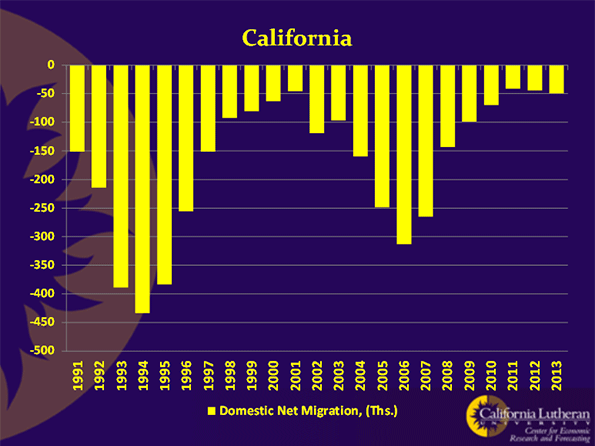
    Workers recognize the changes. They may not know the reasons, but they know the impacts, and they are voting with their feet. Domestic migration — migration between states, — is a good measure of how workers see opportunity. California’s domestic migration, in a dramatic reversal of a 150-year trend, has now been negative for over 20 consecutive years. That is, for over 20 years more people have left California for other states than have come to California from other states. Workers simply haven’t seen opportunity in California. How can this be? Why would people be leaving when jobs are being created in the Silicon Valley?

    The Silicon Valley jobs are rather specific. They require higher skill sets than most workers possess. One consequence is that the Silicon Valley’s prosperity hasn’t helped California’s other workers much. We are left with a situation where California’s tech firms search worldwide for workers, while California workers search for work.

    It didn’t have to be this way. High housing prices and environmental regulations, a result of state policies, have driven away the jobs that could be performed by typical California workers. Those jobs are now in Oregon, Texas, or China.

    A short distance away, in California’s Great Central Valley, there is poverty as persistent, deep, and widespread as anyplace in the United States. A recent report shows that California has three of the 20 fastest growing US cities in terms of jobs. It has four in the bottom 20.

    For a while, at least, the differences between California’s fastest growing regions and its slowest (or declining) areas will grow. In general, coastal areas will see more rapid economic growth than inland ones. Even within these broad regions, there will great heterogeneity. Bakersfield, boosted by a booming oil sector, will see stronger growth than Stockton. San Jose, with its thriving tech sector, will see far more growth than Santa Barbara or Monterey. Furthermore, the best performer among California’s inland cities will probably see faster growth than the slowest growing coastal city.

    On average, California’s economic growth will be far below its potential. In most of the state it will be disappointingly low to dismal, as California’s economy is held back by well-meaning but seriously flawed regulations. At the same time, a few super-performing cities may see spectacular growth, at least for a few years.

    Eventually, even California’s most vibrant economies will slow, gradually strangled by the lack of affordable housing and of an infrastructure necessary to move people from affordable housing to their jobs. People are willing to drive very long distances daily in pursuit of the twin goals of income security and the American dream of a home in the suburbs. The traffic on Highway 14 between Palmdale and Los Angeles reminds us of this twice every working day. But, they need roads, and affordable housing within commuting distance.

    Different growth rates and different levels of economic vitality will exacerbate the vast gulf that exists between California’s wealthiest communities and its poorest. Inequality will increase as California’s fabulously wealthy become ever wealthier, and California’s poor suffer in surprising silence, living on whatever aid we give them, denied the hope and the basic dignity that comes from a job.

    Domestic outmigration will increase, but the people who leave won’t be California’s poorest. Instead, young middle-class people will lead the exodus, as they move to wherever opportunity is more abundant. This, of course, will further increase California’s inequality and decrease its economic vitality.

    We will also see an increase in consumption communities. Already, many of California’s coastal communities are reflexively averse to any new activity that actually creates value, opting instead to become ever more exclusive playgrounds for the very rich. These communities will see rising home prices as they restrict new units, and will see rising demand, a result of ever greater concentrations of wealth worldwide and the unmatched amenities available in Coastal California.

    By contrast, some inland areas will see declining home values and eventually declining populations, as the lack of opportunity drives potential home buyers to places like Phoenix and Houston.

    For many of us, this is a depressing forecast, and it is fair to ask whether or not it is inevitable. It isn’t. Few things are. At a statewide level, I hope that representatives of California’s large and growing minority communities demand policies that support the opportunity that previous generations of Californians enjoyed. Absent such demands, California’s policies are unlikely to change.

    At a local level, cities would do well to eliminate all policies that contribute to economic stagnation. When a business is making locational decisions, it reviews lists of positive and negatives for the candidate communities. No place has only positives, and few places have only negatives. California cities are endowed with one huge positive: California is a wonderful place to live. That’s not enough, though. A city would do well to minimize the list of negatives.

    For businesses, an aggressive minimum wage is a negative, as it raises costs. Uncertainty and delay in a city’s response to an economic proposal increases the risk and costs of proposals. It’s a negative. So is unaffordable housing, as it increases wage demands and makes it harder for businesses to recruit top talent. The best way for a city to encourage the supply of affordable housing is to allow new-home development.

    Finally, areas of economic blight increase crime, raise city costs, reduce city revenues, and are unattractive to businesses considering moving to or expanding in an area. Cities need to be flexible in responses to proposals for these areas. Our work at CERF convinces us that we will need less commercial space in the future. Therefore, almost any proposal for dealing with these areas is preferable to inflexible adherence to existing zoning or plans.

    California cities are constrained by California policy. That doesn’t mean that California cities are without tools for economic development. Almost any California city — no matter which region it is in — is a better place to live than almost any city in, say, Texas. If that can be leveraged by minimized costs, flexibility, and creativity in adapting to the needs of job-creating businesses, a California city, even today, can assist businesses creating opportunity for its citizens

    This is the second part of a two-part report. Bill Watkins is a professor at California Lutheran University and runs the Center for Economic Research and Forecasting, which can be found at clucerf.org

    Flickr photo by Aude Lising: The Central California Coast, viewed from the Pacific Coast Highway — one of California’s unmatched amenities.

  • East of Egan: Success in California is Not Evenly Distributed

    The New York Times ran a Timothy Egan editorial on California on March 6.  The essay entitled Jerry Brown’s Revenge was reverential towards our venerable Governor.  It did, however, fall short of declaring Brown a miracle worker, as the Rolling Stone did last August.  These and other articles are part of an adoring press’s celebratory spasm occasioned by the facts that California has a budget surplus and has had a run of strong job growth.

    Egan at least pauses in his panegyrical prose to mention that all is not perfect in California:

    Without doubt, California has serious structural problems, well beyond the byzantine hydraulic system that allows the state to flourish. For all the job growth, the unemployment rate is one of the highest in the nation. It has unsustainable pension obligations, a bloated public-employee sector led by the prison guard union. And it is so expensive to live here that clashes over the class divide are threatening to get nasty.

    That’s not the worst of it.  Before going there, though, let’s consider Brown’s most celebrated achievement, a budget surplus. 

    California has a budget surplus because of a temporary income tax on its highest earning citizens and because of large capital gains reaped during an amazing year for stocks.  The S&P 500 was up almost 30 percent last year, an event unlikely to be repeated.  California’s tax revenues are excessively dependent on a relatively few wealthy tax payers.  This makes revenues extremely volatile.  When these tax payers do well, Sacramento is flush with cash.  When the high end tax payers don’t do well, Sacramento has very serious problems.

    By increasing California’s reliance on a few wealthy tax payers, Brown’s tax increase made California’s revenues more volatile.  The ongoing bull stock market would have generated higher tax revenues for California without the tax increase.  It generated even more with the tax increase.  When a bear market comes, the state will again face deficits.  This is one reason that Standard and Poors ranks California’s credit as second worst in the country, only above Illinois.

    So far, to his credit and in stark contrast to what we saw in the dot-com boom under Gray Davis, Jerry Brown has, with the exception of his pet project, the high-speed train, effectively resisted the legislature’s knee-jerk impulse to increase long-term spending commitments.  What he has not done is perhaps more important: addressing California’s other financial issues, the ones that are contributing to California’s dismal credit rating.

    California has had several quarters of stronger-than-the-nation job growth, but is still 113,500 jobs below the level in 2007; in contrast Texas is 844,300 jobs above that number.  

    Nor can it be sure that growth will continue. Unfortunately, the day after Egan’s celebratory essay, California’s Economic Development Department announced that the state had lost 31,600 jobs in January.  That’s an initial estimate, and it will be changed, but it’s hard to tell which direction.  The data released with that estimate appear to be a bit of a mess and are internally inconsistent.  We’ve asked for some clarification.

    Regardless of the most recent data point, California’s job performance has been better than expected, and we should all be thankful for that.  However, comparison with the United States average is not the only metric.  Comparison with California’s potential is the correct metric, and there California is underperforming in a big way.  Given all of its advantages, California should be leading the nation in job creation and opportunity.

    California has been averaging about 27,000 new jobs a month over the most recent 12 months for which we have data.  It should be averaging at least 40,000.  This would be slightly more than Texas’ average of 33,900,.  But, it still represents only 3.2 percent job growth, well below Texas’ 3.7 percent job growth rate.

    The state is sitting over estimated oil reserves that are about four times as large as the Bakken Shield, a major contributor to North Dakota’s boom.  Any serious effort to tap that resource would generate huge numbers of jobs.  Many of those jobs would be high wage positions for less educated workers who were hurt the most by the recession.

    California has many advantages over North Dakota, or Texas for that matter, besides oil.  These are well known and include location between Pacific Rim producers and the world’s largest consumer market, ports, workforce, and climate.  Even without oil, we should be doing better.  Policy though, particularly environmental policy, is restraining the state’s job creation.

    Egan makes a big deal of migration.  Here is his first paragraph (emphasis is his):

    Let’s review. Just a few years ago California was a punching bag for conservative scolds — a failed state, profligate with its spending and promiscuous with its ambition. Ungovernable. And everybody’s leaving.

    Later, he returned to the topic:

    Third, the great exodus never happened. Since the dawn of the recession, the state has added about 1.5 million people — almost three Wyomings. And yes, 67,702 people moved from California to Texas in 2012. But 43,005 people moved from Texas to California. (Population growth is not necessarily a good thing, especially in this overstuffed state, but that’s another topic).

    This is really curious.  A whopping 57 percent more people moved from California to Texas than moved from Texas to California, which was the case for decades.  This is an argument that people aren’t leaving California?  California’s population is up 1.5 million?  California’s population growth is mostly a result of California’s fertile young people.  Census data show that California’s domestic migration has been negative for over 20 consecutive years.   It may not be The Great Exodus, but it’s a reversal of about a 150 year of migratory trend.

    Then there is poverty and unemployment.  Poverty, unemployment and lack of opportunity are why California’s domestic migration data is negative.  Lack of opportunity may be hard to measure, but we have lots of data on unemployment and poverty.   Some examples:

    • San Bernardino has the second highest poverty rate of any major U.S. metropolitan areas.  Only Detroit is worse.
    • California, with about 12 percent of the U.S. population, has 34 percent of U.S. welfare recipients.
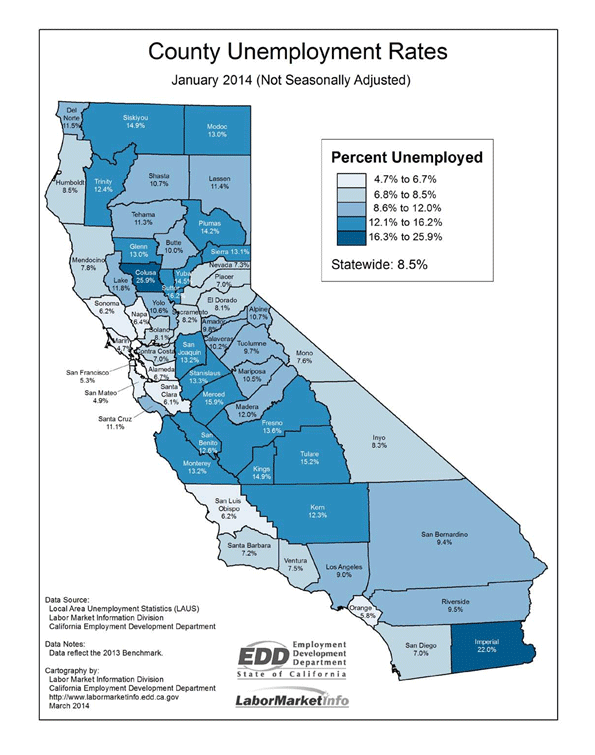
    • Two California counties, the geographically separated Colusa and Imperial, have unemployment rates over 20 percent.
    • Thirty-one of California’s 58 counties have unemployment rates in double digits.

    The geographic distribution of California’s poverty is one reason many people fail to understand California.  Most of California’s poverty is concentrated in regions where the political class —or wayfaring editorialists — seldom venture.  It’s mostly inland, not where most of California’s elite live or travel.  If you stay on the 101 corridor, or hug scenic Route 1, it’s easy to avoid.  You can find it, but you have to have eyes that are open to it, and it helps if you get off the beaten path. 

    Egan wrote his piece in Santa Barbara, where life can be as good as it gets, particularly for the affluent and boomers who bought their homes decades ago.  But, the city of Guadalupe in Santa Barbara County could give him a taste of how the other half lives. Just take a look sometime: it’s about as hardscrabble a town as the Texas town in the movie “The Last Picture Show”.

    California’s poverty is harder to ignore along the 99, but is even more evident in roads like 33 which winds along the eastern side of the coastal range.  Go there, and you will find it hard to believe that you are still in the United States, much less California.  There you will find grinding, hopeless poverty more reminiscent of the Third World than the center of the economic jobs.

    A high speed train won’t help these people.  Neither will Silicon Valley tech jobs, even if they don’t shrink in the inevitable social media shakeout.  Neither will Sacramento, apparently.  Until we start doing something for the state’s huge and struggling working and middle class, and that means creating opportunity for them, we should refrain from congratulating ourselves and each other for our good work.

    Bill Watkins is a professor at California Lutheran University and runs the Center for Economic Research and Forecasting, which can be found at clucerf.org. A slightly different version of this story appeared in CLU Center for Economic Research and Forecasting’s September, 2013 California Economic Forecast.