Tag: Los Angeles

  • A Pill For Los Angeles? Medicating the Megacities

    Los Angeles — and other modern megacities — conjure increasingly unique genetic profiles that point the way to a new medical industry: Call it urbo-pharmaceuticals. Investors are needed.

    Is there a pill that might inoculate us from smog?
    Is there a gene we can target that would make us resistant to resurgent infectious diseases?
    And is there a way to use genetic data to insulate new immigrants from some of the metabolic challenges of living in a new land of plenty?

    Welcome to the slowly emerging world of environmental medicine and its inevitable outgrowth, environmental pharmaceuticals: compounds specifically suited for mitigating the physiological challenges of mega-city life in the 21st century.

    The inchoate drive for such pills — disparate, proceeding in entrepreneurial fits and starts — is fueled by twin facts.

    First: Inflammation, the chronic-over-firing of the body’s immune system, now sits at the core of almost all scientific discussion of chronic diseases, diseases that persist despite thirty years of lifestyle advice, medication and surgical intervention.

    Second: Urban environments today are physiologically inflammatory beyond belief, their brew of fumes, crowding, germs and bad food wreaking all kinds of internal damage and prompting no end of lifelong medical problems. As Dr Marc Reidl, a specialist in respiratory disease at UCLA puts it, “Mega city life is an unprecedented insult to the immune system.”

    The consequent diseases — asthma and COPD, heart disease, diabetes, alcohol and drug addiction — are costly and life-sapping. They are accentuated by the huge inflows of young populations, many from poor rural environments, from Mexico to the Middle East. These new migrants bring their own unique pathogens, and their own unique vulnerabilities. Poverty fuels excess consumption of cheap fruits and sugars, pushes people into smog-proximate neighborhoods and pest-filled homes, and drives them to unhealthful behaviors. And certain genes — most notably the well-studied “hungry gene” — exacerbate the reaction. Consider:

    Asthma and COPD, considered among the world’s top medical concerns, seem to be activated by special sets of genes, some of which accentuate the impact of smog (along with tobacco smoke, the principle culprit in the industrialized world). Other genetic profiles seem to mitigate it. Researchers at the University of Southern California have identified both versions.

    In the Latino population, mutations in liver genes, particularly one well-known one named CYP450, seem not only to fuel alcohol abuse, but also to accentuate some of its gravest consequences: fatty liver disease and cirrhosis.

    Heart disease, as well as problem pregnancies, uncontrolled diabetes, and even sleep apnea, are increasingly driven not just by the traditional devils of unhealthy lifestyle and poverty, but by genes activated by uniquely urban pathogens and concentrated diesel and auto exhaust.

    Genes governing stress responses may be at the root of why traditional antibiotics do not work within the germy reality of big cities. For years, speaking the words “genes,” “immigrants,” and “public health” was the proverbial ticket to a social and political nether-land. It was almost as bad as talking about obesity. It is still a messy brew.

    Yet outside of “nannyism” (not necessarily such a bad thing), or trying to scare away any new migrants (which is), what can be done? One tack might be to take a cue from modern pharmacology’s attempt to develop a pill for Metabolic Syndrome, the debilitating mix of diabetes, high blood pressure and high cholesterol now prevalent in most developed nations. Can we design an urban poly-pill, one built specifically for the inflammatory storms of the mega-city? And can we point it at what might be called the big three: the impairment of respiration, metabolism and cardio vascular processes?

    UCLA’s Riedl, a specialist in respiratory disease, has zeroed in on oxidative stress — the damage caused by unstable, burned-up nutrient particles in the blood stream. He knew that anti-oxidant supplement regimes have been an overwhelming bust, most of them weak and not very good at targeting the body’s native anti-oxidant systems. Then came a number of insights made possible by genetics. Perhaps the most important was a molecule dubbed GSTM1. It is deeply implicated in fighting oxidative stress from smog and other pollutants. Riedl traced the pathway upstream and found that it was driven by another gene product called Nrf-2.

    Then he decided to pharmaceuticalize one molecule derived from broccoli sprouts, sulphoraphane, crafting a concoction using concentrates of the vegetable mixed with daikon root essence. The result was a compound he could try out in various concentrations in humans, then measure whether its effect on Nrf-2 were, in the lexicon of pharmaceutical development, “dose dependent.” It was. The next step will be to test how well it works in people exposed to constant high levels of smog.

    Though the path to any therapy remains long and arduous, Riedl holds a picture in his mind of one possible future. “The Holy Grail for us is if we could identify the population sub group that is most likely to have the mutation that impairs Nrf-2, and who are environmentally vulnerable —say, people who live close to freeways — and essentially do targeted chemotherapy for environmental insults.”

    Among urban woes, metabolic disorders are particularly troublesome. The NIH has singled out type 2 diabetes and fatty liver disease as the two biggest factors driving hospitalization, amputations and prescription drug use. Their effect on health care expenditure is huge and growing. Treatment — let alone prevention — has proved vexing.

    Two promising compounds are under serious study. The first is the grape skin compound known as Resveratrol. Though mainly known for its claim to extend mammalian lifespan, its true value is quietly emerging in diabetes treatment, where early clinical trials showed promising results but, unfortunately, several safety issues.

    And Metformin, a diabetes drug originally synthesized from the French lilac plant, may have huge protective benefits for urbanites. Researchers at UCLA Riverside have used microchip arrays to discover that it activates liver genes that dampen high insulin levels and vascular inflammation.

    At USC, one of the world’s leading centers for studying diabetes and liver diseases, scholars have pinpointed a gene that, when activated, causes fatty liver disease, another potential urbo-drug target. As Michael Goran, the head of USC’s diabetes research, notes: “In Mexican Americans there is mutation in a gene called PNPLA1 which is related to an elevation in liver fat which could be related to increased diabetes risk and definitely [is] related to longer term increase in liver disease; this mutation is highly prevalent in Hispanics/Mexican Americans; moreover, in our own research we have just discovered that: a) the effect of this gene is manifested very early in life and b) the effect of this gene on increasing liver fat is promoted by high sugar intake.”

    What about the heart? UCLA heart researcher Alan Fogelman, the dean of modern HDL research, has two compounds in small clinical trials that would help the body restore its ability to make good cholesterol, a process increasingly undermined by the smog, virii and bad food of mega-cities. Both are peptides — short, protein-like molecules — that target specific gene products activated by chronic inflammation, which can include everything from the flu to sleep apnea to unchecked diabetes. The compounds are being developed by Bruin Pharma, a commercial venture in which Fogelman is a principal and an officer.

    What are his HDL peptide’s chances? “It is so early to try to tell something like that,” he says. “We have no idea where that effort will take us, or whether it will hit the target we hope. We have to wait for the trials.”

    Yet waiting, especially when it requires patience and foresightedness, is something we as a society seem incapable of, especially when dealing with complicated public health issues. But what if there were a faster, cheaper way? Urbo-pharmaceuticals might be one ticket. After all, we are patient and forgiving when it comes to pills and the time, cost and uncertainty that comes with their development.

    Chalk that up to the ease-seeking nature of humans, something for which there is no pill, but which, in itself, might drive us to invest in a poly pill for modern life.

    Greg Critser’s new book is Eternity Soup: Inside the Quest to End Aging (Random/Harmony 2010).

    Photo by ilmungo / Luigi Anzivino, Los Angeles from the top of Temescal Canyon Trail, “…taken not at sunset, but at 11AM… that pretty peach-colored layer in the sky is the famous LA smog.”

  • Mass Transit: The Great Train Robbery

    Last month promoters of the Metropolitan Transit Authority’s Los Angeles rail projects, both past and future, held a party to celebrate their “success.” Although this may well have been justified for transit-builders and urban land speculators, there may be far less call for celebration among L.A.’s beleaguered commuters.

    Despite promises that the $8 billion invested in rail lines over the past two decades would lessen L.A.’s traffic congestion and reshape how Angelenos get to work, the sad reality is that there has been no increase in MTA transit ridership since before the rail expansion began in 1985.

    Much of the problem, notes Tom Rubin, a former chief financial officers for the MTA’s predecessor agency, stems from the shift of funding priorities to trains from the city’s more affordable and flexible bus network. Meanwhile, traffic has gotten worse, with delay hours growing from 44 hours a year in 1982 to 70 hours in 2007.

    Sadly, this situation is not unique to Los Angeles. In cities across the country where there have been massive investments in light rail–from the Portland area to Dallas and Charlotte, N.C., and a host of others–the percentage of people taking transit has stagnated or even declined. Nationwide, the percentage of people taking transit to work is now lower than it was in 1980.

    None of this is to argue that we should not invest in transit. It even makes sense if the subsidy required for each transit trip is far higher than for a motorist on the streets or highways. Transit should be considered a public good, particularly for those without access to a car–notably young people, the disabled, the poor and the elderly. Policy should focus on how we invest, at what cost and, ultimately, for whose benefit.

    In some regions with large concentrations of employment, downtown major rail systems often attract many riders (although virtually all lose lots of money). The primary example would be the New York City area, which is one of only two regions (the other being Washington, D.C.) with over one-fifth of total employment in the urban core. In the country as a whole barely 10% of employment is in the city; and in many cities that grew most in the 20th century, such as Dallas, Miami, Los Angeles and Phoenix, the central business district’s share falls well under 5%.

    Some other urban routes–for example between Houston’s relatively buoyant downtown and the massive, ever expanding Texas Medical Center–could potentially prove suitable for trains. But most transit investments would be far more financially sustainable if focused on more cost-efficient methods such as rapid bus lanes, which, according to the Government Accountability Office, is roughly one-third the cost of light rail.

    Making the right choices has become more crucial during the economic downturn, even in New York City. The city and the federal government continue to pour billions into a gold-plated Second Avenue subway but now plan to cut back drastically on the bus service that serves large numbers of commuters from the outer boroughs and more remote parts of Manhattan.

    Ultimately the choice to invest in new subways and light rail as opposed to buses reflects both a class bias and the agenda of what may best described as the “density lobby.” The people who will ride the eight-mile long Second Avenue subway, now under construction for what New York magazine reports may be a total cost of over $17 billion, are largely a very affluent group. The new subway line will also provide opportunity for big developers to build high-density residential towers along the route. In contrast, the bus-riders, as the left-of-center City Limits points out, tend to be working- and middle-class residents from more unfashionable, lower-density districts in the Bronx, Queens, Brooklyn and Staten Island.

    The proposals for High Speed Rail–a favorite boondoggle of the Obama administration and some state administrators–reveals some of the same misplaced fiscal priorities. California’s State Treasurer, Democrat Bill Lockyer, has lambasted the proposed HSR line between Los Angeles and the Bay Area, suggesting the state may not be able to sell private investors on between $10 billion and $12 billion in bonds without additional public subsidies.

    Other prominent Democrats as well as the State Auditor’s office have challenged the promoters’ claims about the viability of the system and its potential drain on more reasonable priced transit project.

    This issue funding priorities was raised recently by the current administrator of the Federal Transportation Authority, Peter Rogoff, who questioned the wisdom of expanding expensive rail and other transit projects when many districts “can’t afford to operate” their own systems. He noted that already almost 30% of all existing “transit assets” are in “poor or marginal condition.”

    Ultimately we need to ask what constitutes transit’s primary mission: to carry more people to work or to reshape our metropolitan areas for ever denser development. As opposed to buses, which largely serve those without access to cars, light rail lines are often aimed at middle-class residents who would also be potential buyers of high-density luxury housing. In this sense, light rail constitutes a critical element in an expanded effort to reshape the metropolis in a way preferred by many new urbanists, planners and urban land speculators.

    The problem facing these so-called visionaries lies in the evolving nature of the workplace in most parts of the country, where jobs, outside of government employment, are increasingly dispersed. Given these realities, transit agencies should be looking at innovative ways to reach farther to the periphery, in part to provide access to inner-city residents to a wider range of employment options. Considering more than 80% of all commuter trips are between areas outside downtown, priority should be given to more flexible, less costly systems such as rapid commuter bus lines, bus rapid transit, as well as subsidized dial-a-ride and jitney services that can work between suburban centers.

    If reducing energy use and carbon emissions remains the goal, much more emphasis should be placed as well on telecommuting. In many cities that have invested heavily in rail transit–Dallas, Denver and Salt Lake City, for example–the percentage of people working from home is now markedly larger than those taking any form of mass transit. Since the approval of the Dallas light rail system in the 1980s, for example, the transit share of work trips has dropped from 4.3% to 2.1%; the work-at-home share has grown from 2.3% to 4.3%.

    In fact, people who work from home now surpass transit users in 36 out of 52 metropolitan areas with populations over 1 million–and receive virtually no financial backing from governments. Yet if New York, home to roughly 40% of the nation’s transit commuters, was taken out of the calculations, at-home workers already outnumber the number of people taking transit to work; and since 2000 their numbers have been growing roughly twice as fast as those of transit riders.

    Clearly we should not spend our ever more scarce transit resources on a nostalgia crusade to make our cities function much the way they did in the late 1800s. Instead, we need to construct systems reflecting the technology and geographic realities of the 21st century and place our primary focus on helping people, particularly those in need, find efficient, economically sustainable ways to get around.

    This article originally appeared at Forbes.com.

    Joel Kotkin is executive editor of NewGeography.com and is a distinguished presidential fellow in urban futures at Chapman University. He is author of The City: A Global History. His newest book is The Next Hundred Million: America in 2050, released in February, 2010.

    Photo: Michael | Ruiz

  • Transit in Los Angeles: Celebrating the Wrong Thing

    Los Angeles area transit officials celebrated 20 years of urban rail at a Staples Center event on July 23. Over the past 20 years, Los Angeles has opened 2 metro (subway) lines, 4 light rail lines and two exclusive busways (though apparently busways aren’t worth celebrating). Surely, there is no question but that Los Angeles has been successful in opening a lot of new transit infrastructure.

    At the same time, however, The Los Angeles Times reported that Professor James Moore of the University of Southern California, blames the disproportionate financial attention paid to rail projects reduced transit ridership by 1.5 billion (with a “b”) over the same period. The reason is, as Tom Rubin put it, is that many more people can be carried for the same money on buses, “Had they run a lot of buses at low fares, they could have doubled the number of riders.” Rubin was chief financial officer of the Southern California Rapid Transit District, one of the two predecessors of the present transit agency (MTA). The other was the Los Angeles County Transportation Commission, to which I was appointed to three terms.

    Transportation experts were also quoted to the effect that the rail system has done little to reduce traffic congestion or increase the use of mass transit much beyond the level in 1985, when planning for the Metro Blue Line began. Indeed. Traffic congestion has gotten much worse, and traffic volumes have increased materially. Our recent article showed that transit market shares had declined.

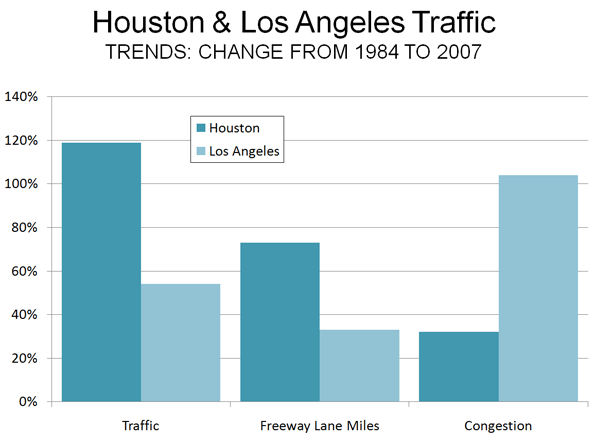
    These results are in stark contrast to Houston, which in 1984 had the worst traffic congestion in the nation. Houston set about to solve the problem by expanding its roadway capacity. Since 1984, Houston’s traffic grew twice as fast as that of Los Angeles, and population grew three times as fast (at least in part because many Californians were moving to Texas). Houston also added freeway mileage at double the percentage rate of Los Angeles. The reward was an increase in traffic congestion less than one-third that of Los Angeles (Figure). The most recent INRIX Scorecard shows Los Angeles traffic congestion to be more than 2.5 times as intense as Houston’s.

    Spending money on the right things makes a big difference. One can only wonder how different things might have been if Los Angeles had invested in the capacity people need (more roads) rather than in politically correct transit facilities that have no potential to reduce traffic congestion or to improve mobility and economic performance.

    There is a lesson from Los Angeles experience both for other areas and other government functions. The test of government performance is outputs, not inputs. Thus, it is appropriate to celebrate large transit market share increases or significant improvements in student achievement, not how many miles of rail are built or how much money is spent on education.
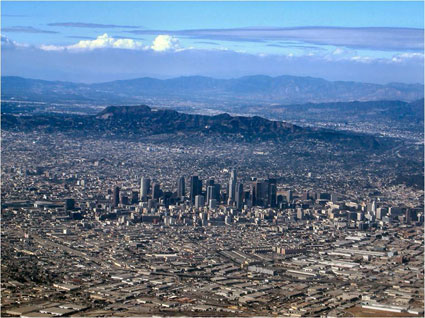
    Photograph: Los Angeles and the San Fernando Valley (by the author)

  • The Decline and Revival of an American Suburb

    In 1952, a white Protestant couple from Pasadena, California along with their newly born first child, moved 22 miles east to a small town called Covina. There, among acres of open space and endless rows of orange, lemon, and avocado trees, the young family was able to purchase a plot of land and build a brand-new home with swimming pool for a total of $20,000.

    Not far away, in an unincorporated area of Los Angeles County straddled by the towns of La Puente, Baldwin Park and West Covina, a Mexican-American Catholic couple from central Los Angeles with two small daughters purchased a newly built 3-bedroom, 2-bath home with a large backyard for $15,000. The young husband had served in the Navy during World War II, allowing the couple to buy their home with the help of the G.I. Bill. The year was 1956.

    The two couples featured are my paternal and maternal grandparents. Both were young families of the prosperous post-war years claiming their stake on the middle class American Dream. My paternal grandfather worked as a sales representative for Drackett Products (the creators of Drano and Windex- now part of S.C. Johnson & Son) while my maternal grandfather worked as unionized welder at an aerospace plant in Burbank. Both grandmothers were career stay-at-home moms.

    The place they chose to call home is the San Gabriel Valley- a sprawling expanse east of Los Angeles comprised of 47 independent municipalities and unincorporated areas. Today, the region is a demographically diverse melting pot of more than 2 million residents. To a casual visitor heading east towards the Inland Empire on one of the Valley’s three main east-west arteries (the 210, 10 and 60 freeways), the separate municipalities-with names like Glendora, Rosemead, and Duarte-are virtually indistinguishable. Aside from Pasadena, the oldest city in the Valley and famous for its Rose Parade and accompanying Rose Bowl Game, most San Gabriel Valley cities are largely forgettable in terms of architecture or town planning.

    Such failings in the built environment were not a consideration back in the 50s and 60s. My father describes his childhood setting as ‘heaven on earth’ where he could ride his bike with friends for miles from his home exploring rolling hills, untouched rivers and endless citrus groves.

    My mother describes her childhood neighborhood as what Life magazine once dubbed ‘kidsville. She recalls the neighborhood kids playing a variety of games outside in the street after school. Most often, she would not even be allowed inside the house until 5 pm when dinner was promptly served. On special occasions, her parents would take her and her siblings, my aunt and uncle, to a new fast-food joint called In-N-Out Burger. The now iconic chain had their first location literally just around the corner from their home.

    By the mid 1970s, both of my parents had left the San Gabriel Valley for another valley in Northern California where they met and later got married. My younger sister and I were raised in the Bay Area’s Silicon Valley, but we would still make the drive down to Southern California at least once a year to visit relatives.

    This trip always prompted mixed feelings from my parents.

    My father later explained to me that over the course of 25 years the San Gabriel Valley had devolved from an idyllic bedroom community to a crowded and polluted assortment of endless strip-malls. The year he left, 1973, had one of the worst air-pollution levels on record. Most days it was impossible to even see the majestic San Gabriel Mountains towering over the Valley. Sometimes, my father tells me, his high school football practices had to be canceled due to the inability of the players to catch their breath.

    Today the air-quality is significantly improved (thanks in large part to the introduction of catalytic converters to automobiles).

    The demographic make-up is also drastically different. My mother’s childhood street, which was about 50-50 split between Mexican-Americans and white Americans is now predominately populated by Central American immigrants. Long gone are the children playing on the street and neighbors socializing with each other. Now, most homes have unkempt front lawns surrounded by chain-link fences and windows and doors with security bars on them. On commercial streets nearby, strip malls are dominated by small restaurants and grocery stores with signs in Spanish catering to the local Latino community.

    In the neighboring city of West Covina, the present demographics are markedly more mixed. About half of the population is of Hispanic origin while the remainder is split between white and Asian. The Asian influx to West Covina is a recent phenomenon, taking place over the past two decades. This is physically visible in several strip malls throughout the city catering to Chinese immigrants and Chinese Americans.

    The growing Asian population is part of a larger trend in the greater San Gabriel Valley region. Already, cities in the western part of the Valley, including Alhambra, Monterey Park, San Gabriel, and even the upscale enclave of San Marino, are majority Asian. Die-hard foodies of Southern California claim this area has the most authentic Chinese food in North America.

    I can’t blame my parents for wondering what happened to the suburban utopia of their youth. Many other Baby Boomers across the U.S. probably share similar sentiments about the communities where they grew up.

    Yet if the dream seems endangered, or even delusional, to many sophisticated Americans, many other people, particularly immigrants from outside of America’s borders, want a piece of it.

    Ultimately these newcomers may be the ones to save suburbs like those in the San Gabriel Valley. They are the ones now starting businesses, improving their houses, and building the new cultural institutions. This may not be the suburbia of my parent’s childhood but it is not the doomed dystopia imagined by many urbane observers.

    These newly energized suburbs will also not depend as much on the center city. More residents now work closer to home, and fewer commute to the core of Los Angeles, which has lost hundreds of thousands of jobs over the past decade.

    Instead these towns are reviving along the lines of ‘suburb as village’, building on now underutilized downtown areas with charming mid-century structures that once served as commercial hubs for their respective towns. A growing emphasis on locality, as well as a renewed interest in civic identity, may help these places find their individual character once again – even if the signs of revival may be in Mandarin or Spanish as well as English.

    Adam Nathaniel Mayer is a native of California. Raised in Silicon Valley, he developed a keen interest in the importance of place within the framework of a highly globalized economy. Adam attended the University of Southern California in Los Angeles where he earned a Bachelor of Architecture degree. He currently lives in China where he works in the architecture profession. His blog can be read at http://adamnathanielmayer.blogspot.com/

    Photo by BurlyInTheBay

  • Stagnation in the City of Angels: Whatever Happened to Ideas?

    It’s only been a couple of years since a red-hot real estate market had our city riding high. The market turned out to be a bubble, of course, and it eventually burst. Gone is the giddiness that comes when folks convince themselves that real estate or high tech stocks or any other trend or commodity can defy gravity and continue upward forever.

    Yet giddiness isn’t the only thing that’s been lost. Ideas have disappeared from the political landscape of Los Angeles.

    That’s particularly unfortunate because there’s plenty of work to be done after bubbles burst—everything from big efforts on the macro-economic level to the everyday challenges of mending lives torn asunder by financial strains. Local government can play a key role in such efforts. That means that politics is part of the picture—and that means that our city’s politicians have a chance to help by coming up with new ideas on how to spur a recovery.

    Yet our recovery is dragging along in Los Angeles. The federal government’s own struggles and the dire straits faced by state officials surely complicate the job at the local level, but those don’t fully explain the malaise we’re living through right now.

    It’s more likely that our city suffers from a dearth of ideas because our politicians became addicted to the red-hot real estate market. It’s looking more and more as though that became their one and only idea. They skimmed off the rising tide of real estate, used the money to buy political points, and stopped thinking about any new ideas.

    It worked for 10 years or so. The values of homes and other properties went up, and so did the city’s revenue. Developers paid fees to build residential and commercial units, buyers paid higher property taxes in the rising market, homeowners borrowed against their houses and spent freely, paying sales taxes along the way.

    All of the action sent streams of revenue to various levels of government, and much of the money found its way to the city’s coffers. Local politicians used the money to take care of donors with favorable deals, satisfy labor unions by expanding payrolls and paychecks for city employees, and provide basic services to enough voters to maintain the status quo.

    Now the revenue streams have dwindled, and there’s not enough for our politicians to finance their old scheme.

    There have been many reactions to our city’s challenges, but not much in the way of ideas. Our politicians have jumped from budget projection to budget projection, cutting here, threatening to cut there. Outside City Hall is a different story, as the populace begins to sense that this is all reaction with no basic idea. Whatever happened last week means nothing this week because the next budget report could prompt any sort of reaction from the politicians. There are no guiding principles or declared values—no ideas—for our city.

    This became clear to me when I realized that our City Councilmembers and our mayor used to send out all sorts of press releases back in the days of the real estate boom. There were notices that some project had been completed or another had just started. They almost always involved the expenditure of city funds, and went on about the politician who flipped whatever switches made the money flow.

    Now the money has dried up, and press releases are few and far between.

    That makes sense—if you accept the premise that spending money is the basis of any and all ideas when it comes to public policy.

    The truth is that more ideas are needed when there’s no money to spend. Yet I can’t remember the last time I saw a press release about an idea from the mayor or a City Councilmember on how to save money without cutting jobs or programs. I don’t recall any notices of a new idea that will maintain services without adding costs. I haven’t seen any communications that indicate our politicians have come up with any new ideas to meet the challenges our city now faces.

    It appears that we have an entire generation of politicians who see spending money as the whole idea of government.

    Well, we’re out of money.

    We need to know if our politicians have any other ideas.

    And they shouldn’t worry if they’re all out—voters are getting a few ideas of their own.

    Jerry Sullivan is the Editor & Publisher of the Los Angeles Garment & Citizen, a weekly community newspaper that covers Downtown Los Angeles and surrounding districts (www.garmentandcitizen.com).

    Photo by: AndrewGorden

  • The Myth of the Back-to-the-City Migration

    Pundits, planners and urban visionaries—citing everything from changing demographics, soaring energy prices, the rise of the so-called “creative class,” and the need to battle global warming—have been predicting for years that America’s love affair with the suburbs will soon be over. Their voices have grown louder since the onset of the housing crisis. Suburban neighborhoods, as the Atlantic magazine put it in March 2008, would morph into “the new slums” as people trek back to dense urban spaces.

    But the great migration back to the city hasn’t occurred. Over the past decade the percentage of Americans living in suburbs and single-family homes has increased. Meanwhile, demographer Wendell Cox’s analysis of census figures show that a much-celebrated rise in the percentage of multifamily housing peaked at 40% of all new housing permits in 2008, and it has since fallen to below 20% of the total, slightly lower than in 2000.

    Housing prices in and around the nation’s urban cores is clear evidence that the back-to-the-city movement is wishful thinking. Despite cheerleading from individuals such as University of Toronto Professor Richard Florida, and Carole Coletta, president of CEOs for Cities and the Urban Land Institute, this movement has crashed in ways that match—and in some cases exceed—the losses suffered in suburban and even exurban locations. Condos in particular are a bellwether: Downtown areas, stuffed with new condos, have suffered some of the worst housing busts in the nation.

    Take Miami, once a poster child for urban revitalization. According to National Association of Realtors data, the median condominium price in the Miami metropolitan area has dropped 75% from its 2007 peak, far worse than 50% decline suffered in the market for single family homes.

    Then there’s Los Angeles. Over the last year, according to the real estate website Zillow.com, single-family home prices in the Los Angeles region have rebounded by a modest 10%. But the downtown condo market has lost over 18% of its value. Many ambitious new projects, like Eli Broad’s grandiose Grand Avenue Development, remain on long-term hold.

    The story in downtown Las Vegas is massive overbuilding and vacancies. The Review Journal recently reported a nearly 21-year supply of unsold condominium units. MGM City Center developer Larry Murren stated this spring that he wished he had built half as many units. Mr. Murren cites a seminar on mixed-use development—a commonplace event in many cities over the past few years—as sparking his overenthusiasm. He’s not the only developer who has admitted being misled.

    Behind the condo bust is a simple error: people’s stated preferences. Virtually every survey of opinion, including a 2004 poll co-sponsored by Smart Growth America, a group dedicated to promoting urban density, found that roughly 13% of Americans prefer to live in an urban environment while 33% prefer suburbs, and another 18% like exurbs. These patterns have been fairly consistent over the last several decades.

    Demographic trends, including an oft-predicted tsunami of Baby Boom “empty nesters” to urban cores, have been misread. True, some wealthy individuals have moved to downtown lofts. But roughly three quarters of retirees in the first bloc of retiring baby boomers are sticking pretty close to the suburbs, where the vast majority now reside. Those that do migrate, notes University of Arizona Urban Planning Professor Sandi Rosenbloom, tend to head further out into the suburban periphery. “Everybody in this business wants to talk about the odd person who moves downtown, but it’s basically a ‘man bites dog story,’” she says. “Most retire in place.”

    Historically, immigrants have helped prop up urban markets. But since 1980 the percentage who settle in urban areas has dropped to 34% from 41%. Some 52% are now living in suburbs, up from 44% 30 years ago. This has turned places such as Bergen County, N.J., Fort Bend County, Texas, and the San Gabriel Valley east of Los Angeles into the ultimate exemplars of multicultural America.

    What about the “millennials”—the generation born after 1983? Research by analysts Morley Winograd and Mike Hais, authors of the ground-breaking “Millennial Makeover,” indicates this group is even more suburban-centric than their boomer parents. Urban areas do exercise great allure to well-educated younger people, particularly in their 20s and early 30s. But what about when they marry and have families, as four in five intend? A recent survey of millennials by Frank Magid and Associates, a major survey research firm, found that although roughly 18% consider the city “an ideal place to live,” some 43% envision the suburbs as their preferred long-term destination.

    Urban centers will continue to represent an important, if comparatively small, part of the rapidly evolving American landscape. With as many as 100 million more Americans by 2050, they could enjoy a growth of somewhere between 10 million and 20 million more people. And in the short run, the collapse of the high-end condo market could provide opportunity for young and unmarried people to move into luxurious urban housing at bargain rates.

    But lower prices, or a shift to rentals, could prove financially devastating for urban developers and their investors, who now may be slow to re-enter the market. And for many cities, the bust could represent a punishing fiscal blow, given the subsidies lavished on many projects during the era of urbanist frenzy.

    The condo bust should provide a cautionary tale for developers, planners and the urban political class, particularly those political “progressives” who favor using regulatory and fiscal tools to promote urban densification. It is simply delusional to try forcing a market beyond proven demand.

    Rather than ignore consumer choice, cities and suburbs need to focus on basic tasks like creating jobs, improving schools, developing cultural amenities and promoting public safety. It is these more mundane steps—not utopian theory or regulatory diktats—that ultimately make successful communities.

    This article originally appeared in the Wall Street Journal.

    Joel Kotkin is executive editor of NewGeography.com and is a distinguished presidential fellow in urban futures at Chapman University. He is author of The City: A Global History. His newest book is The Next Hundred Million: America in 2050, released in Febuary, 2010.

    Photo by miamism

  • Time to Dismantle the American Dream?

    For some time, theorists have been suggesting that it is time to redefine the American Dream of home ownership. Households, we are told, should live in smaller houses, in more crowded neighborhoods and more should rent. This thinking has been heightened by the mortgage crisis in some parts of the country, particularly in areas where prices rose most extravagantly in the past decade. And to be sure, many of the irrational attempts – many of them government sponsored – to expand ownership to those not financially prepared to bear the costs need to curbed.

    But now the anti-homeowner interests have expanded beyond reigning in dodgy practices and expanded into an argument essentially against the very idea of widespread dispersion of property ownership. Social theorist Richard Florida recently took on this argument, in a Wall Street Journal article entitled “Home Ownership is Overvalued.”

    In particular, he notes that:

    The cities and regions with the lowest levels of homeownership—in the range of 55% to 60% like L.A., N.Y., San Francisco and Boulder—had healthier economies and higher incomes. They also had more highly skilled and professional work forces, more high-tech industry, and according to Gallup surveys, higher levels of happiness and well-being. (Note)

    Florida expresses concern that today’s economy requires a more mobile work force and is worried that people may be unable to sell their houses to move to where jobs can be found. Those who would reduce home ownership to ensure mobility need lose little sleep.

    The Relationship Between Household Incomes and House Prices

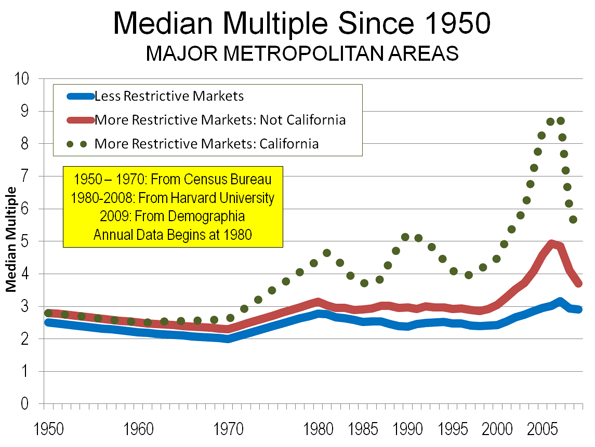
    It is true, as Florida indicates, that house prices are generally higher where household incomes are higher. But, all things being equal, there are limits to that relationship, as a comparison of median house prices to median house prices (the Median Multiple) indicates. From 1950 to 1970 the Median Multiple averaged three times median household incomes in the nation’s largest metropolitan areas. In the 1950, 1960 and 1970 censuses, the most unaffordable major metropolitan areas reached no higher than a multiple of 3.6 (Figure).

    This changed, however, in some areas after 1970, spurred by higher Median Multiples occuring in California.

    William Fischel of Dartmouth has shown how the implementation of land use controls in California metropolitan areas coincided with the rise of house prices beyond historic national levels. The more restrictive land use regulations rationed land for development, placed substantial fees on new housing, lengthened the time required for project approval and made the approval process more expensive. At the same time, smaller developers and house builders were forced out of the market. All of these factors (generally associated with “smart growth”) propelled housing costs higher in California and in the areas that subsequently adopted more restrictive regulations (see summary of economic research).

    During the bubble years, house prices rose far more strongly in the more highly regulated metropolitan areas than in those with more traditional land use regulation. Ironically many of the more regulated regions experienced both slower job and income growth compared to more liberally regulated areas, notably in the Midwest, the southeast, and Texas.

    Home Ownership and Metropolitan Economies

    The major metropolitan areas Florida uses to demonstrate a relationship between higher house prices and “healthier economies” are, in fact, reflective of the opposite. Between August 2001 and August 2008 (chosen as the last month before 911 and the last month before the Lehman Brothers collapse), Bureau of Labor Statistics data indicates that in the New York and Los Angeles metropolitan areas, the net job creation rate trailed the national average by one percent. The San Francisco area did even worse, trailing the national net job creation rate by 6 percent, and losing jobs faster than Rust Belt Pittsburgh, St. Louis, and Milwaukee.

    Further, pre-housing bubble Bureau of Economic Analysis data from the 1990s suggests little or no relationship between stronger economies and housing affordability as measured by net job creation. The bottom 10 out of the 50 largest metropolitan areas had slightly less than average home ownership (this bottom 10 included “healthy” New York and Los Angeles). The highest growth 10 had slightly above average home ownership (measured by net job creation). Incidentally, “healthy” San Francisco also experienced below average net job creation, ranking in the fourth 10.

    Moreover, housing affordability varied little across the categories of economic growth (Table).

    Net Job Creation, Housing Affordability & Home Ownership
    Pre-Housing Bubble Decade: Top 50 Metropolitan Areas (2000)
    Net Job Creation: 1990-2000 Housing Affordability: Median Multiple (2000) Home Ownership: Rate 2000
    Lowest Growth 10  7.4%                                2.8 62%
    Lower Growth 10 14.9%                                3.1 63%
    Middle 10 22.8%                                3.2 64%
    Higher Growth 10 30.9%                                2.6 61%
    Highest Growth 10 46.9%                                2.9 63%
    Average 24.7%                                2.9 62%
    Calculated from Bureau of the Census, Bureau of Economic Analysis and Harvard Joint Housing Center data.
    Metropolitan areas as defined in 2003
    Home ownership from urbanized areas within the metropolitan areas.

    Home Ownership and Happiness

    If Gallup Polls on happiness were reliable, it would be expected that the metropolitan areas with happier people would be attracting people from elsewhere. In fact, people are fleeing with a vengeance. During this decade alone, approximately one in every 10 residents have left for other areas.

    • The New York metropolitan area lost nearly 2,000,000 domestic migrants (people who moved out of the metropolitan area to other parts of the nation). This is nearly as many people as live in the city of Paris.
    • The Los Angeles metropolitan area has lost a net 1.35 million domestic migrants. This is more people than live in the city of Dallas.
    • The San Francisco metropolitan area lost 350,000 domestic migrants. Overall, the Bay Area (including San Jose) lost 650,000, more people than live in the cities of Portland or Seattle.

    Why have all of these happy people left these “healthy economies?” One reason may be that so many middle income people find home ownership unattainable is due to the house prices that rose so much during the bubble and still remain well above the historic Median Multiple. People have been moving away from the more costly metropolitan areas. Between 2000 and 2007:

    • 2.6 million net domestic migrants left the major metropolitan areas (over 1,000,000 population) with higher housing costs (Median Multiple over 4.0).
    • 1.1 net domestic migrants moved to the major metropolitan areas with lower house prices (Median Multiple of 4.0 or below).
    • 1.6 million domestic migrants moved to small metropolitan areas and non-metropolitan areas (where house prices are generally lower).

    An Immobile Society?

    Florida’s perceived immobility of metropolitan residents is curious. Home ownership was not a material barrier to moving when tens of millions of households moved from the Frost Belt to the Sun Belt in the last half of the 20th century. During the 2000s, as shown above, millions of people moved to more affordable areas, at least in part to afford their own homes.

    Under normal circumstances (which will return), virtually any well-kept house can be sold in a reasonable period of time. More than 750,000 realtors stand ready to assist in that regard.

    Of course, one of the enduring legacies of the bubble is that many households owe more on their houses than they are worth (“under water”). This situation, fully the result of “drunken sailor” lending policies, is most severe in the overly regulated housing markets in which prices were driven up the most. Federal Reserve Bank of New York research indicates that the extent of home owners “under water” is far greater in the metropolitan markets that are more highly restricted (such as San Diego and Miami) and is generally modest where there is more traditional regulation, such as Charlotte and Dallas (the exception is Detroit, caught up in a virtual local recession, and where housing prices never rose above historic norms, even in the height of the housing bubble). Doubtless many of these home owners will find it difficult to move to other areas and buy homes, especially where excessive land use regulations drove prices to astronomical levels.

    Restoring the Dream

    There is no need to convince people that they should settle for less in the future, or that the American Dream should be redefined downward. Housing affordability has remained generally within historic norms in places that still welcome growth and foster aspiration, like Atlanta, Dallas-Fort Worth, Houston, Indianapolis, Kansas City, Columbus and elsewhere for the last 60 years, including every year of the housing bubble. Rather than taking away the dream, it would be more appropriate to roll back the regulations that are diluting the purchasing power and which promise a less livable and less affluent future for altogether too many households.

    Note. Among these examples, New York is the largest metropolitan area in the nation. Los Angeles ranks number 2 and San Francisco ranks number 13. The inclusion of Boulder, ranked 151st in 2009 seems a bit curious, not only because of its small size, but also because its advantage of being home to the main campus of the University of Colorado. Smaller metropolitan areas that host their principal state university campuses (such as Boulder, Eugene, Madison or Champaign-Urbana) will generally do well economically.

    Photograph: New house currently priced at $138,990 in suburban Indianapolis (4 bedroom, 2,760 square feet). From http://www.newhomesource.com/homedetail/market-112/planid-823343

    Wendell Cox is a Visiting Professor, Conservatoire National des Arts et Metiers, Paris. He was born in Los Angeles and was appointed to three terms on the Los Angeles County Transportation Commission by Mayor Tom Bradley. He is the author of “War on the Dream: How Anti-Sprawl Policy Threatens the Quality of Life.

  • L.A.’s Economy Is Not Dead Yet

    “This is the city,” ran the famous introduction to the popular crime drama Dragnet. “Los Angeles, Calif. I work here.” Of course, unlike Det. Sgt. Joe Friday, who spoke those words every episode, I am not a cop, but Los Angeles has been my home for over 35 years.

    To Sgt. Friday, L.A. was a place full of opportunities to solve crimes, but for me Los Angeles has been an ideal barometer for the city of the future. For the better part of the last century, Los Angeles has been, as one architect once put it, “the original in the Xerox machine.” It largely invented the blueprint of the modern American city: the car-oriented suburban way of life, the multi-polar metropolis around a largely unremarkable downtown, the sprawling jumble of ethnic and cultural enclaves of a Latin- and Asian-flavored mestizo society.

    Yet right now even the most passionate Angeleno struggles to feel optimistic. A once powerful business culture is sputtering. The recent announcement of Northrop Corp.’s departure to suburban Washington was just the latest blow to the region’s aerospace industry, long our technological crown jewel. The area now has one-fourth as many Fortune 500 companies as Houston, and fewer than much-smaller Minneapolis or Charlotte, N.C.

    Other traditional linchpins are unraveling. The once thriving garment industry continues to shift jobs overseas and has lost much of its downtown base to real estate speculators. The port, perhaps the region’s largest economic engine, has been mismanaged and now faces severe threats from competitors from the Pacific Northwest, Baja, Calif., and Houston. Although television and advertising shoots remain strong, the core motion picture shooting has been declining for years, with production being dispersed to such locations as Toronto, Louisiana, New Mexico, Michigan, New York and various locales overseas.

    Once a reliable generator of new employment, over the past decade L.A. has fared worse than any of the major Sun Belt metros–including hard-hit Phoenix–losing over 167,000 jobs between 2000 and 2009. Historic rival New York notched modest gains, while the rising big metro competitors, Dallas and Houston, enjoyed strong and steady growth. L.A. may not be Detroit, and probably never will be, but its once proud and highly diversified industrial base is eroding rapidly, losing one-fifth of all its employment since 2004. In contrast to the rest of the country, unemployment still continues to rise.

    To give you an idea how much L.A. has sunk, look to this year’s Forbes best city rankings, which measures both short- and mid-term job growth. Once perched in the upper tier of major cities, Los Angeles now ranks a pathetic 59th out of 66 large metro areas, far below not only third-place Houston and fourth-place Dallas but also New York and even similar job-losing giants like San Francisco and Philadelphia.

    It takes a kind of talent to sink this low given L.A.’s vast advantages: the best weather of any major global city, the largest port on this side of the Pacific, not to mention the glamour of Hollywood, the Lakers and one of the world’s largest and most diverse populations of creative, entrepreneurial people.

    Jose de Jesus Legaspi, a prominent local developer, pins much of the blame for this on what he describes as “a parochial political kingdom”–with Antonio Villaraigosa, mayor since 2005, wearing the tinsel crown. A sometimes charming pol utterly bereft of economic acumen, Villaraigosa is a poor manager who is also highly skilled at self-promotion. His idea of building an economy revolves around subsidizing downtown developers and pouring ever more funds into the pockets of public sector workers. No surprise then that L.A. suffers just about the highest unemployment rate of any of the nation’s 10 largest cities outside Detroit. One in five county residents receive some form of public aid.

    But the real power in L.A. today is not so much Villaraigosa but what the Los Angeles Weekly describes as a “labor-Latino political machine,” whose influence extends all the way to Sacramento. These politicians represent, to a large extent, virtual extensions of the unions, particularly the public employees.

    The rise of the Latino-labor coalition does stir some pride among Hispanics, but it has proved an economic disaster for almost everyone who doesn’t collect a government paycheck–L.A.’s city council is the nation’s highest paid–or subsidy. Although perhaps not as outrageously corrupt as the Chicago machine, it is also not as effective. L.A.’s version manages to be both thuggish and incompetent.

    According to an analysis by former Mayor Richard Riordan, the city’s soaring pension liabilities will grow by an additional $2.5 billion by 2014, by which date the city will probably be forced to declare bankruptcy.

    So is the city of the future doomed for the long term? Not necessarily. Although Latino politicians and “progressive” allies strive to derail entrepreneurialism, our grassroots remains stubbornly entrepreneurial. This is particularly true of Latino and other immigrant businesspeople in Los Angeles. In 2006, for example, roughly 10% of the foreign born population was self-employed, almost twice the percentage of the native born.

    To be sure, much of this activity takes place in smaller area municipalities–Burbank, Glendale, Lynwood, Monterey Park–that are mercifully outside the reach of the City of Los Angeles, which accounts for somewhat less than half of L.A. County’s 10 million people. But as Legaspi, who came to L.A. from Zacatecas, Mexico, in 1965, points out, ethnic enterprises–Armenian, Iranian, Israeli, Korean, Chinese as well as Mexican and Salvadoran–continue to thrive even within the city limits. You rarely find in L.A. the kind of desolation found in dying cities like Detroit or Cleveland or even large swaths of New York or Chicago.

    All this suggests there’s still hope for Los Angeles to blossom further as a hub for international trade, global culture and fashion. But to achieve that goal the city needs a government that will nurture its grassroots rather than stomp or extort them. “Los Angeles is a potential great world city, but it needs to be ruled like a world city,” Legaspi points out. Until that happens, our putative city of the future will exist more as dreamscape than reality.

    This article originally appeared in Forbes.com.

    Joel Kotkin is executive editor of NewGeography.com and is a distinguished presidential fellow in urban futures at Chapman University. He is author of The City: A Global History. His newest book is The Next Hundred Million: America in 2050, released in Febuary, 2010.

    Photo by k.landerholm

  • LA the Least Gentrified Major City?

    Los Angeles has been “gentrified” and made more stable in many of its areas by immigrant settlement, but the phenomenon of Anglo “gentrification” – what used to be “yuppies” or their more contemporary counterparts (original “yuppies” are now in their 50s) upgrading a formerly “bad” neighborhood by pushing up rents and squeezing out existing relatively poor folks – is rarer in Los Angeles than in almost any other American city.

    The closest thing to it has occurred in a few “paleo-urbanist” beach communities. (“Paleo-urbanist” means planned to New Urbanist specifications, but nearly a century ago!) And I think the reason for it has to do with the massive projects by the Irvine Company especially in the 60s and 70s. These projects, plus the nearby existence of Newport Beach – already a “watering spot” for the WAS (WASP but including Catholics, this being California) – plus the riots of 1965, plus the perception that the air in the Irvine and Newport region was less polluted at a time when smog was worse than now, led to a massive secessio patriciorum, a secession of the patricians, It was a physical manifestation of Christopher Lasch’s The Revolt of the Elites. Corporate headquarters relocated en masse. Second homes near Newport Bay often became first homes. Many of the people that might otherwise be gentrifiers in Los Angeles were removed to the first great Edge City, at the head of Newport Bay.

    Los Angeles proper ultimately recovered from the Great Secession. It did so with the help of immigrants on the one hand, and the entertainment industry on the other. In days of old “Hollywood” and “Los Angeles” had been two separate cities occupying the same space. Outsiders who were concerned with the film industry often didn’t refer to “LA” at all, but to “Hollywood” or “The Coast.” “LA” was the rather bourgeois city that happened to occupy the same physical space.

    I remember, for example, when Los Angeles magazine was socially conservative enough to declare, “Why is it they never organize against the popular smut [pornography] – movies like Beach Party, for instance?” This is unimaginable now. I also remember how few were the movie stars in attendance at the openings of the major Music Center (now LA Performing Arts Center) in 1964 and 1967.

    It is now recognized that Hollywood is at the center of cultural life in Los Angeles. The two largest political parties in the state are the Hollywood Democrats and the Eastside LA Democrats, with quite different social priorities. The third party, the Republicans, is desperately trying to hold on to its veto on taxation and the budget. As a matter of fact, the terms Westside and Eastside are used a lot more now. When I lived in Hancock Park in my high school years, I had somewhat of a perception that I was in the exact middle. Wilshire Boulevard, the grand prestigious street of Los Angeles, had, because of foolish zoning, a strip of vacant lots where it went by the Hancock Park residential district (not to be confused with the city park of the same name, two miles west, where LACMA and the Page Museum are}. These lots were not built on until the 70s, when condos were allowed there.

    The so called “Park Mile” did provide a separation between the Miracle Mile on one side and the Wilshire Center – not in those days Koreatown, and in fact a serious rival to Downtown – but the separation between West and East has grown sharper as the Miracle Mile has faded a bit, and Koreatown is what it is and not a rival of Downtown any more. The perceived border between Westside and Eastside LA seems to run near Vine Street, through Old Hollywood and Hancock Park.

    Pasadena and Santa Monica, both singularly uncool places 40 years ago, have become among the coolest parts of the city. Remarkably, Pasadena and nearby areas were the main source of the secessio patriciorum of 40 years ago. The vacuum has been filled in a very interesting way!

    In contrast, downtown San Diego feels a lot like downtown Denver, except with palm trees and water. Both of those downtowns fill up on weekends at night with hard-partying young Anglos, not exactly to be seen on Broadway in LA at any hour. If there was a secessio patriciorum in San Diego, it was only to the UCSD area near La Jolla, much closer. If the secessio had gone, say, to Carlsbad, and upper class San Diegans had relocated to Carlsbad and La Costa en masse, downtown San Diego might be the ethnic wonderland Downtown LA now is. Carlsbad may be 30 miles away but the few Carlsbadians I know seem a lot more loyal to San Diego than OCers are to Los Angeles. Who knows?

    Howard Ahmanson of Fieldstead and Company, a private management firm, has been interested in these issues for many years.

  • Governance in Los Angeles: Back to the Basics

    Few would want to be in Los Angeles Mayor Antonio Villaraigosa’s shoes. The Mayor, a tireless ally of public employee unions through his career is in the uncomfortable position of being forced to choose between his allies and the taxpayers. To his credit, as hard as it is, the Mayor seems inclined to favor the interests of the citizens who the city was established to serve in preference to the interests of those who are employed to serve the people. But the circumstances place the Mayor of having to approach the city’s unions with an inappropriateness that lays bare fundamental flaws in the public sector collective bargaining arrangements that have emerged over the past one-half century. Noting that the unions have a choice between layoffs and cutting pay, the Mayor told The Wall Street Journal I was a union leader now. Rather than lay off workers and cut services, I’d agree to a pay cut.

    The Mayor has been relegated to asking the city’s unions to make decisions that should only be made by the city itself. The Mayor has asked the unions to accept pay cuts, so that impending public service cuts can be minimized. In effect, the unions are being asked to make a fundamental policy choice that should be the city’s alone to make. The city of Los Angeles, the Mayor and the city council, are the legal policymaking body for the city of Los Angeles. There is no state statute or provision of the city charter that grants policy making authority to others.

    Yet, under the public sector labor bargaining system that has emerged, the city may have no choice, unless it is willing to file Section 9 bankruptcy to void the union contracts and impose a solution that favors the interests of the citizenry. A predecessor, former Mayor Richard Riordan has called for such a filing. Short of that, perhaps the city should require some sort of a “sovereignty” clause in the next round of negotiation that permits labor contract provisions to be altered during emergency situations, so that public service levels can be preserved.

    Whatever the solution, the union public policy authority is an ill-gotten gain. This is not to suggest that the unions are wrong for having exercised the power; that is only natural. However, they should never have been able to gain such a position.

    It is fundamentally wrong for the city of Los Angeles and countless other municipal jurisdictions around the nation, to have abdicated its policy authority over recent decades. There is a need for a new public employment paradigm in which the incentives of governance favor the interests of the households that make up the cities, towns and counties.