Tag: middle class

  • The Precariat Shoppe

    The precariat is a term coined to describe the segment of the population that lives without security or predictability. These days it often refers to the former American middle class that’s currently experiencing reduced circumstances. There’s always been a precariat, but it usually includes a minor subset of the population that no one really likes or cares about. Indentured Irish servants, black slaves, Jewish and Italian sweatshop workers, Mexican field hands, Puerto Rican cleaning ladies… It’s a long list. People are up in arms now because the “wrong people” have fallen in to the precariat that didn’t used to “belong” there. There’s been a sudden realization that sometimes the structure of the economy itself institutionalizes their personal decline. Shocking! I’m not a political animal so I’ll leave those discussions to others to hash out. Instead, I’m interested in how people adapt to the circumstances they find themselves in.

    We’re all familiar with the ice cream man whose truck rolls around with the happy music playing on hot summer days. This one is in Detroit – and it’s an ice cream lady. She bought an old delivery vehicle, did a bit of hand painting, fitted it with chest freezers, and opened for business. It’s a fast, low cost, and flexible way to get a business off the ground even in the most challenging economic environments.

    The ubiquitous food truck fills the gap between the cost, complexity, and risk of opening a brick and mortar restaurant vs. working for someone else. A well constructed food truck isn’t necessarily cheap, but it’s within the reach of many more people than anything in a building. This one is in Los Angeles.

    Here’s a twist on the mobile shop theme that’s a direct result of rising commercial rents. This woman ran a successful second hand clothing boutique for many years and was driven out when her shop rent hit $5,400 a month. You have to sell a lot of schmatta to make that nut. Now she follows various fairs and pubic gatherings with her merchandise in a repurposed school bus. She goes directly to where her customers are most likely to find her. As I’ve heard many times from shopkeepers around the world – it’s not how much money you earn, it’s how much you have left over after all the thieves are paid.

    Here’s a mobile veterinary clinic. Dogs, cats, horses… As the cost of a medical degree, insurance, and real estate have skyrocketed even doctors are taking a long hard look at the whole medical office building situation. The transition from a practice with a full team of professionals to a solo gig in a tricked out custom van can be described as a positive lifestyle change, but it’s almost certainly about money.

    I stumbled on this mobile grocery store complete with fresh produce, real bread, and dairy products. The offerings and prices were substantially better than what can be found at the alternative in this location – a classic food desert where people without access to a car have little choice but to buy low quality industrial food-like products at inflated prices at gas stations.

    Down the street I found a similar grocery truck. I chatted with the family that runs the business. There was a need in the community to bring in groceries as well as an opportunity to make money. The usual chain stores on the main arterial road don’t always work well for either customers or potential shopkeepers. The trucks do. They arrive exactly when and where they’re needed and stock what people want. I noticed health department certificates and Weights and Measures seals. Both trucks were Grade A.

    Here’s a mobile woodworker’s tool shop. These are specialty items not typically found in most hardware stores. This man has a relationship with various brick and mortar lumber yards who find his presence good for business. Social media alerts customers of his schedule. Mobile shops have the ability to specialize and cover a wider territory more economically than a stationary establishment burdened with overhead and a limited static customer base.

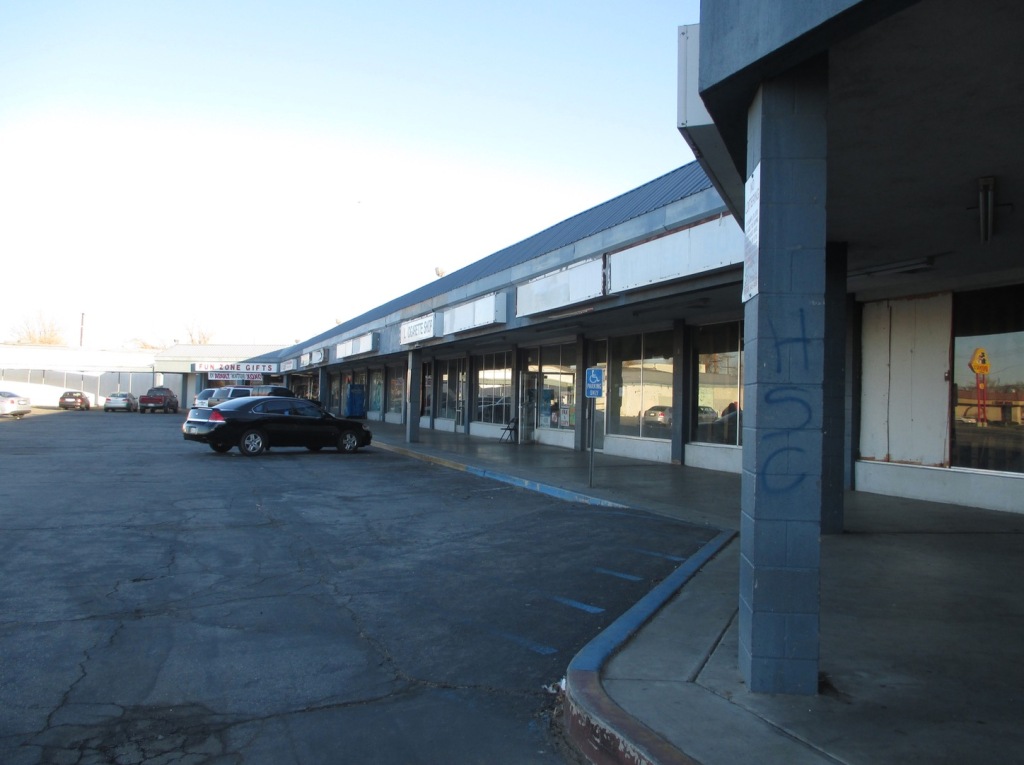
    The irony here is that all around the parking lots that host occasional mobile vendors are empty buildings that once housed chain pharmacies, banks, and such. Sometimes new buildings are constructed to house updated versions of the same stores in the same town. Sometimes there’s simply less need for physical operations as activity migrates to the interwebs. But repurposing the vacated spaces is hard. The size, configuration, and cost of these places is fundamentally at odds with the creation of new small scale mom and pop enterprises. The numbers don’t add up. I’ve had nearly everyone I talked to tell me some version of the same story. The combination of expenses, regulations, and the culture of distant corporate management is all agressively hostile to their efforts. And taking on a single employee is often the difference between making money and failing within the first year.

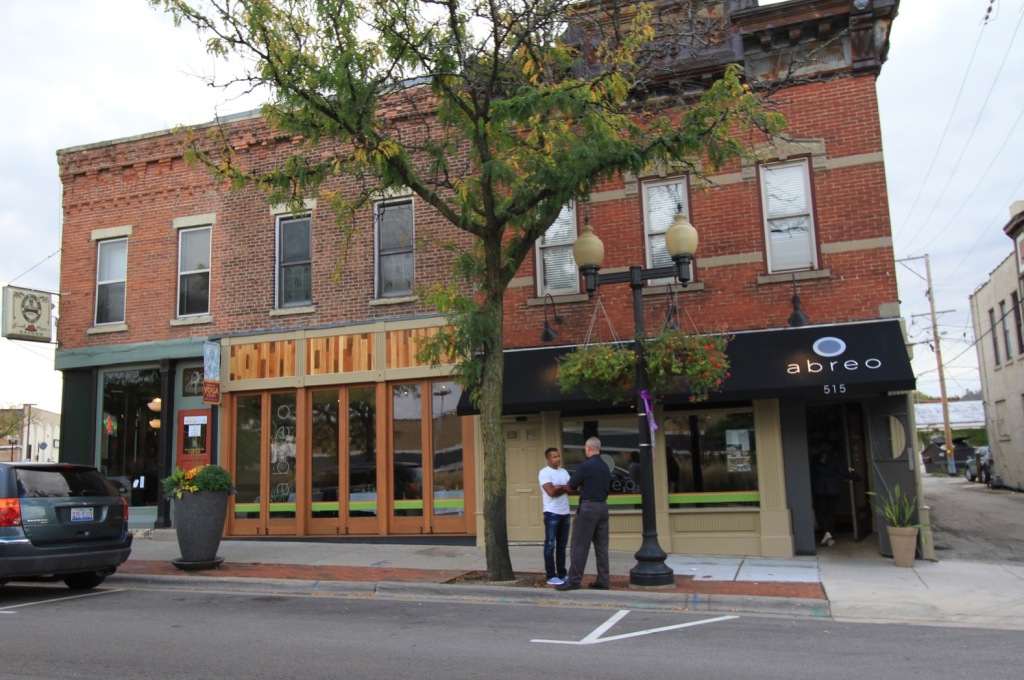
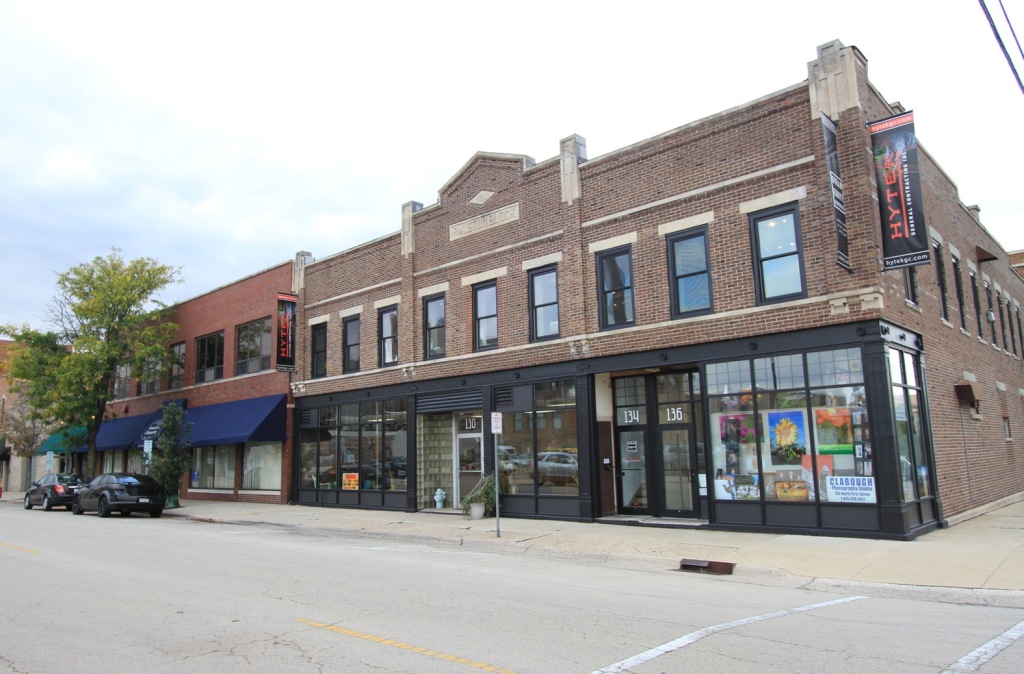
    Here’s one example of the challenges of opening a brick and mortar shop even if you have a generous budget. A prosperous California winery decided to open a tasting room in town to promote its products. The building had been a family paint store since the 1950s. The 2008 financial crash forced it to close. The new owners gave the old nondescript concrete block building a designer facelift. But it was a bumpy road. The climate controlled warehouse in the back was subject to a design review board that spent months rejecting the proposed color of the structure. White was preferred by the owner since it reflected heat most effectively. Evidently pure white was not in keeping with the character of the community. There was a back and forth with the oversight committee over various shades of off white, beige, and creme anglaise. Each time the committee rejected a color the process had to start all over again which delayed the opening of the shop by several weeks – which all costs money.

    The fire marshal insisted on the installation of this bit of plumbing that cost $65,000. I can’t think of anything more flammable than 1950s era paint – not even wine – yet somehow the building managed not to burn for sixty odd years. But no new business could open in this spot until this valve was installed. And then there was the requirement that each seat and stool in the tasting room have a corresponding parking spot on site while not interfering with the ability of a giant fire truck to completely encircle the entire property.

    Here’s the other end of the spectrum. A mother and daughter sell cold drinks at a busy bus stop from an ice chest. Totally ADA compliant!

    But the award for creative entrepreneurial capitalism goes to this mobile video game kiosk that regularly parks outside a San Francisco bar on weekend evenings. Comfortably liquified patrons settle in to folding chairs and play electronic games on the sidewalk. Free! (But please keep the tips coming.) It’s been in the same spot for so long the bar owners must not mind. This is how you work a side hustle when you’re part of the precariat.

    This piece first appeared on Granola Shotgun.

    John Sanphillippo lives in San Francisco and blogs about urbanism, adaptation, and resilience at granolashotgun.com. He’s a member of the Congress for New Urbanism, films videos for faircompanies.com, and is a regular contributor to Strongtowns.org. He earns his living by buying, renovating, and renting undervalued properties in places that have good long term prospects. He is a graduate of Rutgers University.


  • Postcards From the Zombie Apocalypse

    I’m regularly accused of being a doomer whenever I point out the obvious – that many aspects of how we’ve organized our affairs over the last several decades aren’t meant to last. So they won’t. The end of Jiffy Lube and Lean Cuisine isn’t The End. Civilization will carry on without them, I assure you. But when it’s suggested that our current set of arrangements won’t last forever people immediately imagine Mad Max, as if no other alternative exists. Things are going to change. They always have and they always will. The future will just be different. That’s absolutely not the same as saying the world is coming to an end. Clear eyed individuals who are paying attention can start to get a feel for who the new winners and losers are likely to be and place themselves in the best possible situation ahead of the curve. That’s a pragmatist’s view – not a doomer’s.

    It helps to explore previous versions of these regularly occurring historical shifts. Think of them as postcards from the last few rounds of the Zombie Apocalypse. Here’s a small farm town in rural Nebraska. Its population peaked in the 1920s. The period between World War I and the Great Depression was an especially prosperous time for such towns as commodity prices were high and technological innovation (the telephone, radio, automobiles, tractors, etc.) created an enormous amount of new wealth and opportunity. The 1920s was also an era of rampant unsustainable practices of all kinds that lead to the ruined soils and draughts of the Dustbowl and the collapse of speculative credit based financial institutions. The population of this town began to decline in the 1930s and is currently down to a few dozen souls.

    Remnants of some of that early twentieth century technology still litter pastures on the edge of town. One resourceful farmer organized these old car carcasses into a makeshift corral for his livestock.

    It’s possible to connect the dots from rural Nebraska to Detroit where those very same vintage vehicles were manufactured all those decades ago. Detroit peaked in population, economic power, and political influence in 1950. Today huge swaths of Motown look remarkably similar to the abandoned farms and small towns of the prairie. Entire city blocks are now cleared of people and buildings. The Zombie Apocalypse arrived there too. If small scale agriculture was made redundant by mechanization and industrial scale production, then industry itself was hammered by other equally powerful forces. Everything has a beginning, middle, and end.

    The most recent iteration of the Zombie Apocalypse has already begun to unfold in some places. Suburbia was exactly the right thing for a particular period of time. But that era is winding down. The modest tract homes and strip malls built after World War II  are not holding up well in an increasing number of marginal landscapes. I have been accused of cherry picking my photo ops, particularly by people who engage in their own cherry picking when discussing the enduring value of prosperous suburbs. But there’s too much decay in far too many places to ignore the larger trend. The best pockets of suburbia will carry on just fine. But the majority of fair-to-middling stuff on the periphery is going down hard.

    The desire to push farther out and build ever more upscale suburban developments in increasingly remote locations is palpable. That’s what a significant proportion of the population desires on some level. But in the same spots – often next to each other – is ample evidence that there’s something profoundly wrong.

    Not all farm towns died. Not all industrial cities collapsed into ruin. Not all suburbs will fail… But the external forces at work are going to favor some places much more than others moving forward. The trick is to understand what those forces are before everyone else does and position yourself to benefit instead of getting whacked by the shifts. Would you have rather sold your house in Detroit in 1958 when things were still pretty good, or wait until 1967 when the panicked herd began to stampede? Would it have been better to buy property in the desert in 1970 and take advantage of a wave of growth for a few decades, or buy now at the top of that cycle and slide down from here on out?

    The future drivers of change will be the same as the previous century – only in reverse. The great industrial cities of the early twentieth century as well as the massive suburban megaplexes that came after them were only possible because of an underlaying high tide of cheap abundant resources, easy financing, complex national infrastructure, and highly organized and cohesive organizational structures. Those are the elements of expansion.

    But once the peak has been reached there’s a relentless contraction. The marginal return on investment goes negative as the cost of maintaining all the aging structures and wildly inefficient attenuated systems becomes overwhelming. The places that do best in a prolonged retreat from complexity are the ones with the greatest underlying local resource base and most cohesive social structures relative to their populations. The most complex places with the most critical dependencies will fail first as the tide recedes.

    The next Zombie Apocalypse will relentlessly dismantle superficial decorative landscapes and highly leveraged economies of scale. Take away the twelve thousand mile just-in-time supply chains, heavy debt loads, and limitless cheap resources and you get a very different world. Over the long haul Main Street has a pretty good chance of coming back along with the family farm. But the shorter term in-between period of adjustment to contraction is going to be rough as existing institutions attempt to maintain themselves at all costs.

    This piece first appeared on Granola Shotgun.

    John Sanphillippo lives in San Francisco and blogs about urbanism, adaptation, and resilience at granolashotgun.com. He’s a member of the Congress for New Urbanism, films videos for faircompanies.com, and is a regular contributor to Strongtowns.org. He earns his living by buying, renovating, and renting undervalued properties in places that have good long term prospects. He is a graduate of Rutgers University.

  • Why the Greens Lost, and Trump Won

    When President Trump pulled out of the Paris climate accords, embraced coal, and stacked his administration from people from fossil-fuel producing states, the environmental movement reacted with near-apocalyptic fear and fury. They would have been better off beginning to understand precisely why the country has become so indifferent to their cause, as evidenced by the victory not only of Trump but of unsympathetic Republicans at every level of government.

    Yet there’s been little soul-searching among green activists and donors, or in the generally pliant media since November about how decades of exaggerated concerns—about peak oil, the “population bomb,” and even, a few decades back, global cooling—and demands for economic, social, and political sacrifices from the masses have damaged their movement.

    The New Religion and the Next Autocracy

    Not long ago, many greens still embraced pragmatic solutions—for example substituting abundant natural gas for coal—that have generated large reductions in greenhouse gas emissions. Rather than celebrate those demonstrable successes, many environmentalists began pushing for a total ban on the development of fossil fuels, including natural gas, irrespective of the costs or the impact on ordinary people.

    James Lovelock, who coined the term “Gaia,” notes that the green movement has morphed into “a religion” sometimes marginally tethered to reality. Rather than engage in vigorous debate, they insist that the “science is settled” meaning not only what the challenges are but also the only acceptable solutions to them. There’s about as much openness about goals and methods within the green lobby today as there was questioning the existence of God in Medieval Europe. With the Judeo-Christian and Asian belief systems in decline, particularly among the young, environmentalism offers “science” as the basis of a new theology.

    The believers at times seem more concerned in demonstrating their faith than in passing laws, winning elections or demonstrating results. So with Republicans controlling the federal government, greens are cheering Democratic state attorney generals’ long-shot legal cases against oil companies. The New York TimesThomas Friedman has talked about dismissing the disorder of democracy as not suited to meeting the environmental challenges we face, and replacing it with rulers like the “reasonably enlightened group of people” who run the Chinese dictatorship.

    After Trump pulled the U.S. out of the Paris climate accord, China was praised, bizarrely, as the great green hope. The Middle Kingdom, though, is the world’s biggest and fastest grower emitter, generating coal energy at record levels. It won’t, under Paris, need to cut its emissions till 2030. Largely ignored is the fact that America, due largely to natural gas replacing coal, has been leading the world in GHG reductions.

    Among many greens, and their supports, performance seems to mean less than proper genuflecting; the Paris accords, so beloved by the green establishment, will make little impact on the actual climate, as both rational skeptics like Bjorn Lomborg and true believers like NASA’s James Hanson agree. In this context, support for Paris represents the ultimate in “virtue signaling.” Ave Maria, Gaia.

    The California Model

    The cutting edge for green soft authoritarianism, and likely model after the inevitable collapse of the Trump regime, lies in California. On his recent trip with China, Brown fervently kowtowed to President Xi Jinping. Brown’s environmental obsessions also seems to have let loose his own inner authoritarian, as when he recently touted “the coercive power of the state.”

    Coercion has its consequences. California has imposed, largely in the name of climate change, severe land use controls that have helped make the state among the most unaffordable in the nation, driving homeownership rates to the lowest levels since the 1940s, and leaving the Golden State with the nation’s highest poverty rate.

    The biggest losers from Brown’s policies have been traditional blue collar, energy-intensive industries such as home building, manufacturing, and energy. Brown’s climate policies have boosted energy prices and made gas in oil-rich California about the most expensive in the nation. That doesn’t mean much to the affluent Tesla-driving living in the state’s more temperate coast, but it’s forced many poor and middle-class people in the state’s less temperate interior into “energy poverty,” according to one recent study.

    That, too, fits the climatista’s agenda, which revolves around social engineering designed to shift people from predominately suburban environments to dense, urban and transit dependent ones. The state’s crowded freeway are not be expanded due to a mandated “road diet,” while local officials repeatedly seek to reduce lanes and “calm traffic” on what are already agonizing congested streets. In this shift, market forces and consumer preferences are rarely considered, one reason these policies have stimulated much local opposition—and not only from the state’s few remaining conservatives.

    California’s greens ambitions even extend to eating habits. Brown has already assaulted the beef producers for their cattle’s flatulence. Regulators in the Bay Area and local environmental activists are proposing people shift to meatless meals. Green lobbyists have already convinced some Oakland school districts to take meat off the menu. OK with me, if I get the hamburger or taco-truck franchise next to school when the kids get out.

    Sadly, many of these often socially harmful policies may do very little to address the problem associated with climate change. California’s draconian policies fail to actually do anything for the actual climate, given the state’s already low carbon footprint and the impact of people and firms moving to places where generally they expand their carbon footprint. Much of this has taken on the character of a passion play that shows how California is leading us to the green millennium.

    Goodbye to the Family

    An even bigger ambition of the green movement—reflecting concerns from its earliest days—has been to reduce the number of children, particularly in developed countries. Grist’s Lisa Hymas has suggested that it’s better to have babies in Bangladesh than America because they don’t end up creating as many emissions as their more fortunate counterparts. Hymas’ ideal is to have people become GINKs—green inclinations, no kids.

    Many green activists argue that birth rates need to be driven down so warming will not “fry” the planet. Genial Bill Nye, science guy, has raised the idea of enforced limits on producing children in high-income countries. This seems odd since the U.S. already is experiencing record-low fertility rates, a phenomenon in almost all advanced economies, with some falling to as little as half the “replacement rate” needed to maintain the current population. In these countries, aging populations and shrinking workforces may mean government defaults over the coming decades.

    The demographic shift, hailed and promoted by greens, is also creating a kind of post-familial politics. Like Jerry Brown himself, many European leaders—in France, Germany, Sweden, the United Kingdom, and the Netherlands—are themselves childless. Their attitude, enshrined in a EU document as “no kids, no problem” represents a breathtaking shift in human affairs; it’s one thing to talk a good game about protecting the “next generation” in the collective abstract, another to experience being personally responsible for the future of another, initially helpless, human being.

    Do As We Say, Not How We Live

    The pressing need to change people’s lives seems intrinsic now to green theology. Without penance and penalties, after all, there is no redemption from original sin. In the process, it seems to matter little if we undermine the great achievements of our bourgeois economy—expanded homeownership, greater personal mobility, the ability to rise to a higher class—if it signals our commitment to achieve a more earth-friendly existence.

    The left-wing theorist Jedidiah Purdy has noted that “mainstream environmentalism overemphasizes elite advocacy” at the expense of issues of economic equity, a weakness that both Trump and the GOP have exploited successfully, particularly in the Midwest, the South, and Intermountain West. Some greens object even to the idea of GDP growth at a time when most Americans are seeing their standard of living drop. No surprise then that the green agenda has yet to emerge from the basement of public priorities, which remain focused on such mundanities as better jobs, public safety, and decent housing.

    To further alienate voters, many green scolds live far more lavishly than the people they are urging to cut back. Greens have won over a good portion of the corporate elite, many of whom see profit in the transformation as they reap subsidies for “green” energy, expensive and often ineffective transit and exorbitant high-density housing. Most notable are the tech oligarchs, clustered in ultra-green Seattle and the Bay Area, who depend on massive amounts of electricity to run their devices, but have reaped huge subsidies for green energy.

    The tech oligarchs have little interest in family friendly suburbs, preferring the model of prolonged adolescence in largely childless places like college campuses and San Francisco. Oligarchs such as Mark Zuckerberg live in spacious and numerous houses, even while pressing policies that would push everyone without such a fortune to downsize. Richard Branson, another prominent green supporter, may not like working people’s SUVs, but he’s more than willing to sponsor climate change events on a remote Caribbean island reachable only by private plane. One does not even need to plumb the hypocrisy of Al Gore’s jet-setting luxurious lifestyle.

    In the manner of Medieval indulgences these mega emissions-generators claim to pay for their carbon sins by activism, buying rain forests and other noble gestures. Hollywood, as usual, is particularly absurd, with people like Leonardo di Caprio flying in his private jet across country on a weekly basis. Living in Malibu, Avatar director James Cameron sees skeptics as “boneheads” who will have “to be answerable” for their dissidence, suggesting perhaps a shootout at high noon.

    In the end, the greens and their wealthy bankrollers may find it difficult to prevail as long as their agenda makes people poorer, more subservient, and more miserable; this disconnect is, in part, why the awful Donald Trump is now in the White House. Making progress on climate change, and other environmental concerns, remains a critical priority, but it needs to explore ways humans, through ingenuity and innovation, can meet these challenges without undermining what’s left of our middle class and faded democratic virtue.

    This piece originally appeared on the Daily Beast.

    Joel Kotkin is executive editor of NewGeography.com. He is the Roger Hobbs Distinguished Fellow in Urban Studies at Chapman University and executive director of the Houston-based Center for Opportunity Urbanism. His newest book is The Human City: Urbanism for the rest of us. He is also author of The New Class ConflictThe City: A Global History, and The Next Hundred Million: America in 2050. He lives in Orange County, CA.

    Photo by Joe Flood, via Flickr, using CC License.

  • Can California Survive a Tech Bust?

    California’s economic revival has sparked widespread notions, shared by Jerry Brown and observers elsewhere, that its economy — and policy agenda — should be adopted by the rest of the country. And, to be sure, the Golden State has made a strong recovery in the last five years, but this may prove to be far more vulnerable than its boosters imagine.

    The driver of the latest California “comeback,” the Silicon Valley-San Francisco tech boom, is beginning to slow in terms of both job growth and startup activity. The most recent job numbers, notes Chapman University economist Jim Doti, show that employment growth in the information sector has slowed over the past year from almost 10 percent to under 2 percent. Particularly hard-hit is high-tech startup formation, which is down by almost half from just two years ago.

    This slowdown extends also to the professional business services sector, which has become increasingly intertwined with tech. In a recent survey of professional business service growth for Forbes magazine, economist Mike Shires and I found that last year Silicon Valley and San Francisco growth rates were considerably lower than those in boomtowns such as Nashville, Tenn.; Dallas, San Antonio and Austin, Texas; Orlando, Fla.; Salt Lake City and Charlotte, N.C. With the exception of Orange County, the rest of Southern California performed below the national average.

    The historical perspective

    Historically, California’s great strength was the diversity of its economy, stretching from high-tech and aerospace to finance, entertainment, energy, basic manufacturing and homebuilding. Yet, during the most recent boom, the growth of high-wage job growth largely took place in one region — the Bay Area — while other sectors generally stagnated or shrank.

    Silicon Valley and its urban annex, San Francisco, have brilliantly expanded the scope of the digital revolution. Google and Apple have become the world’s most valuable companies, and the Valley, along with Puget Sound in the state of Washington, account for four of the 10 wealthiest people on the planet, and virtually all of the self-made billionaires under 40.

    This success has masked greater problems in the rest of the state. Southern California, home to over half the state’s population, has seen only modest high-wage job growth, both in tech and business services, since 2000.

    Read the entire piece at The Orange County Register.

    Joel Kotkin is executive editor of NewGeography.com. He is the Roger Hobbs Distinguished Fellow in Urban Studies at Chapman University and executive director of the Houston-based Center for Opportunity Urbanism. His newest book is The Human City: Urbanism for the rest of us. He is also author of The New Class ConflictThe City: A Global History, and The Next Hundred Million: America in 2050. He lives in Orange County, CA.

    Photo by Coolcaesar at the English language Wikipedia [GFDL or CC-BY-SA-3.0], via Wikimedia Commons

  • Inequality and the 2016 Election Outcome: A Dirty Secret and a Dilemma

    The presidential election of 2016 occurred at the crest of a national debate over economic inequality,  deeply researched by economists and sociologists since the 1990s, widely perceived to have risen sharply since the 1970s, and a focus of the first serious left-wing insurgency the Democratic Party in four decades, that of Bernie Sanders. Can class and inequality help explain the election result?  The answer appears to be that they can, quite strongly, but in ways that may seem surprising.

    After Donald Trump’s unexpected victory, Hillary Clinton notably blamed Vladimir Putin, Julian Assange and James Comey.  Clinton-friendly commentators fumed against sexism, racism and the other prejudices of the white working class. A book entitled “Shattered” by two journalists put the onus on the data-driven ineptitude of Clinton’s campaign team.  The legal analyst Jeffrey Toobin called attention to vote suppression (through voter ID laws and by other means) especially in Wisconsin and Michigan, and an analysis of turnout by race, conducted by three political science professors and an analyst at Demos, confirmed that had the 2012 black turnout prevailed in 2016, Clinton rather than Trump would have been elected.

    The election was so close that any of these arguments might be considered valid, up to a point. Even so, simple calculations can put some of them into perspective.  For instance, a study showed that about nine percent of Obama’s 2012 voters went over to Trump. If that is correct, then considerably less than five percent of all voters moved from Obama to Trump, when one considers new voters and those who were no longer voting in 2016, while   about half that proportion went from Romney to Clinton.  Another study of voter attitudes in 2016 found no reason even to measure the effect of late-breaking news on vote-switching from Obama to Trump, as opposed to the economy, immigration, “Muslims,” misogyny or perhaps simple dislike of Hillary Clinton. 

    Still, such a verdict begs two important questions:  Why was the election so close in the first place?  And, did economic inequality have anything to do with the outcome?

    To address these issues, two facts need to be borne in mind.  First, rising economic inequality is   subject to common forces across the entire land-mass and population of the country.  It’s a national phenomenon, as most people perceive and measure it.   But American presidential elections are resolved through winner-take-all in the Electoral College, a constitutional confection of the states. So what happens at the national level in the economy is expressed – if at all – in politics at the level of the state.  So to find meaning in this relationship, we need to find a connection between levels or movement of inequalities and the election outcome at the level of the individual states.

    Coefficients of economic inequality across households within states have been available from the Bureau of Economic Analysis on an annual basis only since 2000.  Before that, sample sizes in the Current Population Survey made measuring inequality in small states problematic, since a state with population of (say) half a million might have as few as one hundred households represented in a national sample survey of 60,000 families.  So data at the required level of detail were available only from the decennial census.  This raised an issue of comparative measurement through time, especially since election years coincide with census years only once every two decades.

    To deal with this issue, Travis Hale and I used the detailed annual measures of the Employment and Earnings database of the Bureau of Labor Statistics to construct annual measures of pay inequality that could be calibrated to the Census measures of income inequality, and we showed that these measures generate reliable annual estimates of state-level income inequality back to 1969.  In recent weeks Jaehee Choi has extended Hale’s measures by a decade to 2014, giving us an uninterrupted panel matrix of 2295 inequality measures for 51 states (including DC) over 45 years.

    There are two ways to look at this data.  One is to compare election outcomes to the current level of inequality in each state, and to ask: did the more egalitarian states have a tendency to choose one candidate over the other? The other approach, accessible only through a data set of the type just described, is to look at changes in inequality over time, and to ask, did states where inequality grew more have a tendency to choose one candidate over the other?  Economists are especially drawn to the second approach, because it washes out (“controls for”) differences in the level of inequality across states that may be due to some timeless historical factors. For instance, a state with large cities and wealthy industries (such as international banking) is likely to have a baseline of inequality quite different from a wheat- or corn-growing state on the Great Plains.

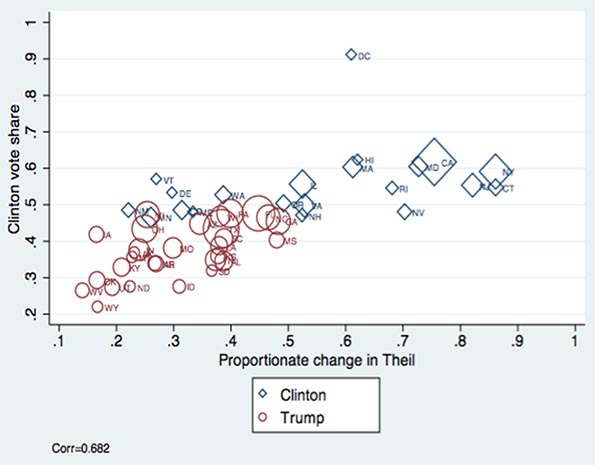
    In this case, both approaches generate a similar, striking result. A simple correlation between the level of inequality in each state and the vote share of one candidate in that state is 0.60.  And the correlation between inequality changes and vote share is even higher:  about 0.69 for the case of the changes from 1990 to 2014; depending on base year chosen the correlation fluctuates up to a maximum of about 0.71.  This means that a large share of the election outcome across the states can be explained solely by the relative degree of rising inequality within each state over a quarter-century, give or take.

    A somewhat surprising result

    Using our measure of pay inequality, which avoids any distortion associated with making a conversion to income inequality measures, the fourteen states with the largest increases in inequality after 1990 without exception voted for Hillary Clinton.1 These fourteen included almost all of the large states that Clinton carried, including California, New York, New Jersey, Massachusetts, Virginia and Illinois. The largest Clinton state below the top fourteen is Washington, and after that, Minnesota (which she carried by whisker); the others include Vermont and Delaware, small states embedded in regions (New England, the Mid-Atlantic) where the increase of inequality was much larger than it was in the states themselves. Vermont is not immune from economic change in New York or Massachusetts, nor is Delaware unaffected by events in New Jersey or Maryland.

    Conversely, the seven states with the smallest increase in inequality, and ten of the lowest twelve, all voted for Donald Trump.  These included Wyoming, West Virginia, Oklahoma, Utah, North Dakota, Montana, Alaska, Indiana, Nebraska and Kentucky, as well as the critical Obama-to-Trump states of Ohio and Michigan. In the middle range, we find a series of states that were (or, in the case of Georgia, might have been) competitive including Wisconsin and Pennsylvania, Florida, and North Carolina.

    The correspondence of inequality-change to the election outcome is almost uncanny.

    A plausible explanation emerges with a moment’s thought.  Clinton-majority states are characterized by high-income enclaves of finance, technology, insurance and government contracts, which often exist alongside large low-income minority and immigrant communities, sufficiently separated by geography and political boundary lines to be almost autonomous from each other. Both of these communities vote Democratic, yet out of highly differing political and social interests; the former perhaps most of all for reasons of social liberalism and environmentalism; the latter out of economic interest and historical alliances on civil rights and immigration.  Where they together predominate, Democrats prevail.

    Trump-majority states are largely middle class, and in the swing states they have industrial communities that once employed unionized black workers but have been for decades in decline    increasing the relative weight of the rural, conservative and white.  Where (as in the South, but also Wisconsin, Michigan and Ohio) these states are racially polarized, election manipulation and vote suppression may have accelerated the political and demographic trend. The shift to Trump, in this analysis, occurred in those states left behind by the takeover of the commanding heights of the national economy by finance and technology, and the shift away from manufacturing.  

    Meanwhile, across the South, a parallel shift is underway in the opposite direction – in Georgia, Arizona, North Carolina, and Texas. This shift is incomplete, and it is not yet very far advanced.  But it leans toward a new coalition of pro-trade business elites, an increasing socially-liberal professional class, and an expanding minority vote, strongly buttressed by the immigrant Hispanic community. While attention in the 2016 election focused on the states that defected to Trump, three of these states moved noticeably in Clinton’s direction, relative to where they had been in 2012. 

    To the extent that this analysis can help foretell the future, the fate of the Democratic Party hangs on a strategic choice. Democrats can seek to recapture the decayed industrial states they lost last year, but might regain with a more populist program. That will be the Sanders strategy in 2020, and it will surely be the strategy of any populist competitor. If Trump falls flat and his working class supporters are disaffected in four years, this may be the quick road back to the White House.  But it may fall short, because the Democratic base in those states is eroding, and the challenge of mobilizing sufficient voters to overcome a growing demographic disadvantage will deepen as the years pass. 

    The other choice, is for the Democrats to ride the demographic drift in the South and Southwest, where inequality is likely to rise as the post-industrial economy shifts there. In that case, they can hope to make up for mid-western losses without dramatic change in the political orientation inherited from the Clintons. The party would then eventually return to electoral predominance on an arc of states running south from Virginia and east from southern California. 

    The problem with this strategy is that it will not work in the near term, because it will require a shift in the linchpin state of Texas, which gave Clinton just 43.2 percent of her vote.  This was a distinct improvement over 2012, and came with a Democratic sweep in Harris County, the nation’s third largest. But it’s too early to say it foretells a statewide tipping point in 2020, and perhaps not even in 2024.  And the dilemma is that the alternative, a move to full-throated populism– perhaps the only reasonable strategy for 2020 – could poison the well in the South and Southwest for later years.

    There are, of course, many reasons to be cautious about placing too much weight on any single variable; the political science literature has seen a fair number of forecasting models come and go. Still, the relationship of inequality change to election outcomes seems strong, and rooted in a certain amount of political common sense.  And it has the appeal of paradox:  as each party achieves its stated agenda, the political fortunes of the other party improve.

    Of course, we have already seen that Republicans have no real interest in delivering their promised manufacturing revival.  Sadly, a similar logic holds on the Democratic side.  Given even a slight hope that Hillary Clinton’s political strategy was not wrong but premature, there is little doubt that the powerful forces behind the Democrats will opt for a perpetual coalition based on grotesque inequalities, and on the fostering of false hopes among the brown and the black.

    Figure:  Changing Inequality 1990-2014 and the Clinton vote share, 2016, by state
    Each state is weighted by its electoral votes.  Calculations by Jaehee Choi and James Galbraith.

    Change in Inequality 1990-2014 and the Election Outcome, 2016, by State.
    State Change in Pay Inequality 1990 to 2014 (Theil measure), Index Number, 1990 =100 Trump / Clinton Clinton Percentage
    Connecticut 186.4 C 54.6%
    New York 179.6 C 59.0%
    New Jersey 176.7 C 55.5%
    California 172.7 C 61.7%
    Rhode Island 169.4 C 54.4%
    Maryland 168.8 C 60.3%
    Nevada 167.6 C 47.9%
    Hawaii 161.3 C 62.2%
    Massachusetts 160.7 C 60.0%
    District of Columbia 159.4 C 90.9%
    Illinois 149.8 C 55.8%
    Virginia 149.1 C 49.8%
    Oregon 148.1 C 50.1%
    New Hampshire 147.5 C 46.8%
    Georgia 146.7 T 45.9%
    Mississippi 146.7 T 40.1%
    North Carolina 144.2 T 46.2%
    Florida 141.4 T 47.8%
    Washington 139.3 C 51.8%
    Pennsylvania 138.8 T 47.9%
    Louisiana 138.7 T 38.4%
    Wisconsin 138.5 T 46.5%
    Kansas 138.3 T 36.1%
    Alabama 137.4 T 34.4%
    South Carolina 137.3 T 40.7%
    Tennessee 136.2 T 34.7%
    Texas 135.1 T 43.2%
    South Dakota 134.7 T 31.7%
    Maine 132.2 C 47.8%
    Missouri 131.9 T 38.1%
    Colorado 131.8 C 48.2%
    Arizona 131.4 T 45.1%
    Idaho 129.6 T 27.5%
    Delaware 128.8 C 53.4%
    Arkansas 127.3 T 33.7%
    Minnesota 126.4 C 46.4%
    Ohio 126.1 T 43.6%
    Michigan 126.0 T 47.3%
    Kentucky 125.3 T 32.7%
    Nebraska 124.4 T 33.7%
    Vermont 124.3 C 56.7%
    Indiana 123.3 T 37.8%
    Alaska 123.0 T 36.6%
    New Mexico 122.1 C 48.3%
    Montana 121.5 T 35.7%
    North Dakota 120.3 T 27.2%
    Iowa 118.9 T 41.7%
    Utah 117.8 T 27.5%
    Oklahoma 116.2 T 28.9%
    West Virginia 116.0 T 26.5%
    Wyoming 114.5 T 21.9%
    Correlation: 0.687

    James Galbraith is an economist, who teaches at the LBJ School of Public Affairs, The University of Texas at Austin, and directs the University of Texas Inequality Project, at http://utip.lbj.utexas.edu.  His most recent book is Inequality: What Everyone Needs to Know (Oxford, 2016).

    Top image by DonkeyHotey (Hillary Clinton vs. Donald Trump – Caricatures) [CC BY-SA 2.0], via Wikimedia Commons

         Using the measure of income inequality gives a slightly different result:  the top eleven states are all Clinton states.
  • Why Socialism Is Back

    Even as Venezuela falls deeper into crisis, and the former Soviet bloc nations groan under its legacy, socialism is coming back, and in a big way. Its key supporters are not grizzled pensioners yearning for Marxist security, but a whole new generation, most of whom have little memory of socialist failure.

    Although the trend is a-historic, it’s not happening in a vacuum. The primary driver is the global ascendency of neo-liberal capitalism, which in virtually all countries has accelerated inequality. This is particularly true in the United States and the United Kingdom, where the gaps between rich and poor are greatest among developed, democratic countries. In these nations, socialist politicians such as Sen. Bernie Sanders and British Labor leader Jeremy Corbyn (pictured) are now political rock stars among young people.

    In the 2016 presidential primaries, Sanders outpolled Donald Trump and Hillary Clinton put together among younger voters, and is now the nation’s most popular politician. His supporters are gradually taking over much of the Democratic Party, state by state. Corbyn, widely portrayed in the media as a walking time electoral bomb, secured for his party 61 percent of the vote among those under 40 in the recent parliamentary elections. It is increasingly possible that this once-marginal figure could someday occupy 10 Downing St. If the 75-year-old Sanders were a decade younger, he would also have an excellent chance of ascending to the White House.

    A Different Kind of Leftism

    Although neither Sanders nor Corbyn can be labeled classic Stalinists, they do represent a radical departure for their respective parties. Both adopt what are generally seen as far left positions, with Corbyn even suggesting that people displaced by London’s Grenfell fire occupy expensive, but unoccupied units, in the city’s rich precincts. Sanders has called for national health care, massive tax increases for the top income earners — with rates upward of 90 percent — and a ban on new fossil fuel development on federal lands.

    This marks a major departure from past progressive politics in both countries. Democrats and Labour have done best by adhering to the center, and calibrating reforms with the demands of the capital markets. Even President Obama, although revered by progressives, was hardly a radical on economic issues. He did little to stop the consolidation of tech industries — which were also key supporters — as his Justice Department failed to press the anti-trust button. He also supported the expansion of free trade codified as Democratic Party orthodoxy during Bill Clinton’s presidency and which are favored by corporate and commercial interests. Tony Blair and his successor, Gordon Brown, also consistently embraced neo-liberal ideologies and courted support among London’s financial elite.

    In contrast, Sanders, a Senate “independent” for most of his career, is a committed socialist who took his honeymoon in, of all places, the communist Soviet Union. He has adopted positions on trade and special visas for tech workers that are closer to those of Donald Trump than Clinton’s. Corbyn’s leftism is even more extreme than Sanders’, embracing long discarded notions of nationalization of industries, massive re-distribution of income as well as a distinctly pro-Palestinian, pro-Third World view common among European leftists.

    The ‘Precariat’ — the Modern Proletariat

    The “Bernie Bros” who made Sanders such a sudden and unlikely political force in 2016 were disproportionately young white voters who swelled the ranks of the precariat — part-time, conditional workers. The numbers of such people is destined to grow with the emerging “gig economy” and the digitization of retail, which could cost millions of working-class jobs. Even university lecturers in Britain, notes the Guardian, fear that their jobs will be “Uber-ised,” a phenomena also seen at American universities.

    For most Americans, the once promising “New Economy” has meant a descent, as one MIT economist  recently put it, towards a precarious position usually associated with Third World countries. Even Silicon Valley has gone from one of the most egalitarian locales in the country to a highly unequal place where the working and middle class have, if anything, done worse (in terms of income) than before the tech boom.

    For its part, the precariat has rational reasons to embrace socialism, particularly if capitalism seems unlikely to meet their needs. The notion of getting a steady, well-paid, full-time job has vanished for an increasing number of young people. Most millennials are not doing as well as their parents did at the same age. The idea of buying a house — once a sure sign of upward mobility — has declined in much of the U.S. for the current generation, particularly on the coasts, and even more so in the U.K., where house prices are higher and incomes lower. The Grenfell fire was not just something that happens to the poor; it could be the future for many young people who may never live in anything much better.

    How Capitalism Is Failing

    “Capitalism,” Lenin noted, “begins in the village marketplace.” Yet Americans are increasingly loath to start a business. There are now more businesses failing than being born, very different than the pattern of the 1980s and 1990s. The dream of starting a business has often been the way out for people with modest educations and means. Without the societal steam valve of entrepreneurship, the alternative for many millennials is in blue-collar or service jobs, where wages have been falling over the past decade.

    Even in the tech world, which represents the largest opportunity for younger people, start-ups have become increasingly rare. This reflects the growing consolidation of the technology sector, which reduces opportunity even in new fields. As one recent research paper demonstrates, “super platforms” such as Facebook, Google, Amazon, and Apple depress competition, squeeze suppliers and drive down salaries, much as the monopolists of the late 19th century did.

    These tech behemoths assert that their success is based utterly on merit, but they have also exploited their structural advantages, as the most ruthless of moguls did. Companies like Amazon have been able to attract investors even with scant profits, an advantage not enjoyed by their competitors, as investors await the rewards of a near-monopoly. Apple and other tech companies have also become adept at avoiding taxes in a way almost impossible for a business on Main Street. As occurs in corrupted systems, insiders usually do best, almost no matter how well they perform; Yahoo’s Marissa Mayer earned $239 million over five years — almost a million a week —  despite failing to revive one of the net’s earliest stars.

    Intersectionality: The Problem Facing Neo-Socialism

    On the surface, the analytics look good for a socialist revival, particularly in the wake of the almost certain failings of Trump’s ersatz populism. A large number of young people, in both Britain and America, have a more favorable view of socialism than capitalism. They never witnessed the failures of the past and they are reeling under present conditions. And given that many older people feel their children face a diminished future, building a majority for socialism is not inconceivable.

    Yet the neo-socialists face a challenge because their potential coalition is fraught. On numerous policy issues, modern progressivism’s interests diverge starkly from those of potential adherents. Corbyn’s multiculturalism and desire to allow more refugees into Britain may win praise on campuses and in left-wing media, but how attractive is this prospect to British working-class voters, many of whom supported Brexit to help cut back on immigration.

    Similar dynamics exists in the U.S. For example, in discussing politics at the Utah AFL-CIO (where I recently spoke), the local president, Dale Cox, suggested that many parts of the progressive agenda — he specifically mentioned opposition to fossil fuel and mineral development — directly threaten the livelihoods of union laborers. Similarly, police unions also feel alienated from progressives who embrace the agenda of groups like Black Lives Matter. Far better, Cox suggested, would be for progressives to focus on improving the lives of working people in ways that really matter, such as expanding opportunities for business and home ownership, health care, and tax reform.

    These economic positions could gain a majority, but not if the progressives maintain their   polarizing embrace of the most radical aspects of social identity and environmental policy. This in particular threatens to undermine working-class support, particularly in the interior states. The leftists’ thinly disguised distaste for how most Americans live in small towns and suburbs does not help make their case. Until the left decides to focus on the everyday issues that matter to people outside their bubble, the dream of the socialist revival will remain a fantasy.

    This piece originally appeared on Real Clear Politics.

    Joel Kotkin is executive editor of NewGeography.com. He is the Roger Hobbs Distinguished Fellow in Urban Studies at Chapman University and executive director of the Houston-based Center for Opportunity Urbanism. His newest book is The Human City: Urbanism for the rest of us. He is also author of The New Class ConflictThe City: A Global History, and The Next Hundred Million: America in 2050. He lives in Orange County, CA.

    Photo by paulnew (https://www.flickr.com/photos/paulnew/28243001503) [CC BY 2.0], via Wikimedia Commons

  • The Grenfell High-Rise Fire: A Litany of Failures?

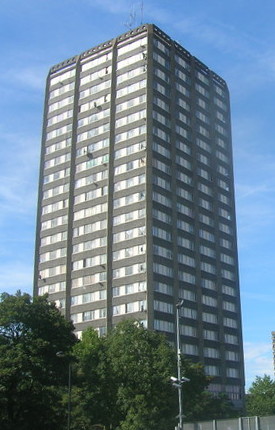
    At this writing, the London (Kensington) Grenfell high-rise fire has taken a confirmed 58 lives, with an unknown number missing and many more sent to hospitals. The 24 story low income housing tower block caught fire on Wednesday, June 14. It was virtually all consumed, as shown in the photograph above.

    There is much to be concerned about here. This building was not owned by any of those private developers who politicians seem to blame for every all that’s wrong with housing in severely unaffordable Britain. The building, now a burned out shell, is owned by the affluent Royal Borough of Kensington and Chelsea (a local government unit within the Greater London Authority).

    This is how the structure appeared before the recent refurbishment (photo by R Sones).

    Government Failure?

    It is not as if the council had not been warned. The Grenfell Action Group has been monitoring problems at Grenfell Tower on behalf of tenants for years. On June 15, they published a blog with links to their previously expressed concerns about fire safety in the building, including one entitled KCTMCO Playing with Fire that details the frustrations of dealing with the Council’s tenant manager. The post, from last November included called the conditions, including the management of the KCTMO (Royal Borough of Kensington and Chelsea Tenant Management Organisation) and the Borough "a recipe for a future major disaster." Of course, that’s how it turned out.

    There is talk of criminal proceedings, and doubtless the private contractor who installed the cladding (exterior building facing) currently thought to have spread the fire quickly will be at greatest risk. However, the installation was procured by the KCTMO, the agent of the RBKC Borough Council, including an approved award to the contractor. Further, all of this was related to a refurbishment of the building, in which the RBKC did not require include installation of sprinklers, which would have "prevented the fire from developing." The Royal Borough of Kensington and Chelsea council is being barraged with criticisms, including from members of Parliament, for its administration of the Grenfell Tower over recent years.

    A Great Planning Disaster?

    Worse, in a larger sense, the Grenfell fire may turn out to be one of the world’s great planning disasters. One headline put it this way: "Report: Grenfell Tower Fire May Have Been Caused By Panelling Installed To Make Rich Neighbors Happy." Only slightly less incendiary was The Independent headline, which read "Grenfell Tower cladding that may have led to fire was chosen to improve appearance of Kensington block of flats."

    According to planning documents obtained by The Independent:

    “Due to its height the tower is visible from the adjacent Avondale Conservation Area to the south and the Ladbroke Conservation Area to the east,” … “The changes to the existing tower will improve its appearance especially when viewed from the surrounding area.”

    The Independent also reported that the planning document made repeated references to the "appearance of the area" and that this was the "justification for the material used on the outside of the building, which has since been claimed to have contributed to the horror." The materials were chosen, according to the planning document "to accord with the development plan (our emphasis added) by ensuring that the character and appearance of the area are preserved and living conditions of those living near the development suitably protected,”

    One expert indicated apparent frustration at the use of flammable cladding materials: "We are still wrapping postwar high-rise buildings in highly flammable materials and leaving them without sprinkler systems installed, then being surprised when they burn down."

    The extent and spread of the fire was unusual for a high rise building. London Fire Commissioner Dany Cotton told The Engineer: “This is an unprecedented situation, with a major fire that has affected all floors of this 24 storey building, from the second floor up. In my 29 years with London Fire Brigade I have never seen a fire of this nature.” According to the Evening Standard: "…flames engulfed the block from the second floor upwards “within seconds”

    Concern in Australia

    While the Grenfell fire’s severity has been attributed to the flammable cladding installed during renovation, similar cladding is being used on new high rise buildings elsewhere. For example, according to The Age the Melbourne Fire Brigade found that the fire at the contemporary LaCrosse building ignited external wall cladding, which quickly spread to the top of the building through the "combustible material located in the wall structure." Two days after the Grenfell fire, The Guardian ("Former fire chief says Melbourne’s Lacrosse Tower still poses risk") reported that the cladding had still not been replaced, though the building has been reoccupied. Peter Rau, a former Melbourne Fire Brigade Chief told The Guardian that "he would not allow his children to live there."

    Australians may have plenty of reason to be concerned. Planning policies throughout Australia have sought to convince households to live in central city high-rises, seeking to entice them from their preferred suburban detached housing. In a June 15 story, The Age ("London tower fire could happen here: Australian buildings cloaked in flammable cladding") reported that Australian buildings are clad in "millions of square meters" of flammable cladding. This is not a new problem. According to The Age building code authorities were advised of the problem seven years ago.

    Tony Recsei, President of Save Our Suburbs in Sydney expressed concern in a  Sydney Morning Herald letter. Referring to the New South Wales government policy that seeks to increase high rise living, Recsei said "But this calamity starkly reveals there can be long-term consequences. It is to be hoped that the Greater Sydney Commission will seriously consider all the implications of its current strategy of imposing density quotas onto local neighborhoods."

    The extent of the concern in Australia is indicated in this video and article from news.com.au.

    New Zealand and the United States

    Even in New Zealand, where officials recently strengthened external materials fire regulations, the government asked local authorities to check buildings constructed before the regulatory reform to see if there are any with combustible cladding.

    According to the Times of London, the cladding used on Grenfell Tower has been illegal in the United States for five years.

    Further Developments in London

    Meanwhile, back in London, there remains considerable anger. London Mayor Sadiq Kahn visited the site on June 16 was questioned and heckled by survivors. On the same day, Prime Minister Theresa May also visited the scene and was criticized for meeting only with emergency services personnel, but not with any residents.

    The fatality count could go much higher. Fears of a building collapse are slowing inspection efforts. Metropolitan Police Commander Stuart Cundy told The Independentthat "he hoped the death toll would not be in “triple figures”.

    No Clean Hands?

    Of course, final assessments will have to await more formal inquiries. But there is plenty of reason to be concerned. Save the fire brigade, which has been roundly praised for its work, including being on the scene within six minutes, there may be no clean hands. Cities, from the days of ancient Rome, have been vulnerable to fiery disasters like this one; policies that encourage densification while failing to provide adequate safety procedures are creating the potential for more such disasters.

    Grenfell fire photo by Natalie Oxford.

    Wendell Cox is principal of Demographia, an international public policy and demographics firm. He is a Senior Fellow of the Center for Opportunity Urbanism (US), Senior Fellow for Housing Affordability and Municipal Policy for the Frontier Centre for Public Policy (Canada), and a member of the Board of Advisors of the Center for Demographics and Policy at Chapman University (California). He is co-author of the "Demographia International Housing Affordability Survey" and author of "Demographia World Urban Areas" and "War on the Dream: How Anti-Sprawl Policy Threatens the Quality of Life." He was appointed to three terms on the Los Angeles County Transportation Commission, where he served with the leading city and county leadership as the only non-elected member. He served as a visiting professor at the Conservatoire National des Arts et Metiers, a national university in Paris.

  • The New American Heartland: Renewing the Middle Class by Revitalizing the Heartland

    This is the introduction to a new report written by Joel Kotkin and Michael Lind with a team of contributors. Download the full report (pdf) here.

    The greatest test America faces is whether it can foster the kind of growth that benefits and expands the middle class. To do so, the United States will need to meet three challenges: recover from the Great Recession, rebalance the American and international economies, and gain access to the global middle class for the future of American goods and services.

    The fulcrum for meeting these challenges is the combination of industries and resources concentrated in the New American Heartland, the center of the country’s productive economy. Traditionally, the Heartland has been defined as the agriculturally and industrially strong Midwest, alone or perhaps together with the Upper Plains. However, the geographic distribution of US manufacturing and energy extraction has expanded through the growth of new manufacturing zones, largely in Texas, the South and the Gulf Coast.

    Our map of the New American Heartland includes not only the Midwest and Upper Plains, but portions of all the Gulf States — Texas, Louisiana, Mississippi, Alabama, Florida — and the non-coastal southern states of Georgia, Tennessee, and Arkansas.

    It comprises most of the US between the Rocky Mountains and the Appalachians.

    The New Heartland incorporates the old Midwest and much of the South. Alongside it, the new continental periphery consists of the mountain and desert spine of North America from Mexico through to Canada, a region that is likely to remain thinly populated and devoted to resource extraction, tourism and wilderness preservation.

    While every region contributes to American prosperity, the New American Heartland has the potential to play an outsized role in powering economic growth in the twenty-first century.

    Download the full report (pdf) here.

  • The Springfield Strategy

    I just enjoyed an adventure in Springfield, Massachusetts with Steve Shultis and his wife Liz of Rational Urbanism. Steve does a far better job of describing his town and his philosophy than I ever could, but my interpretation can be summed up with an analogy about an old college room mate.

    At the end of my first year at university I was approached by an engineering student who asked if he could be my room mate next year. We didn’t know each other particularly well and didn’t have much in common, but he seemed harmless enough. I shrugged. Sure. We went our separate ways over the summer and in September he appeared at my door. After a few months of successfully sharing accommodations I asked him why he came to me when most guys in his situation would have gone in a very different direction. He explained.

    The average college freshman tends to have an adolescent understanding of what a good independent life might be like. Young men are motivated by peculiar impulses and the siren song of the frat house calls. Beer. Parties. Girls. Sports cars. The prestige of hanging out with rich kids, athletes, and really popular older guys. He said that was usually a big mistake. The furniture is made of plastic milk crates. The place smells like a locker room. People eat ramen and cold day old pizza out of the box. They wear flip flops in the shower because no one has ever cleaned the bathroom. Ever. And when you bring a girl home there are a dozen bigger richer guys with fancier cars than you hovering around. You sit there trying to get your romance on with posters of naked women taped to the walls next to a collection of empty bottles. And you pay extra for all this… It’s just not a great situation.

    Then he made a sweeping motion with his hand indicating our apartment. A pleasing mixture of antiques and modern pieces. Smells like lemons. When he brings a girl home I’m in the kitchen cooking brisket and home made bread. Soft lighting. Ella Fitzgerald is playing in the background. No competition. And it’s cheaper. For him, doing the unorthodox and socially uncomfortable thing was just… rational.

    Back to Springfield. Steve took a version of the same strategy. He and his family live in a gracious four story French Second Empire mansion. The place is huge and everywhere you look there’s a level of detail and quality you can’t find in any home built today. There’s a legal apartment on the lower level that they use as a guest suite.  I looked up the address on a real estate listing site and he paid less for this house than many people spend on their cars. His family has a quality of life and a degree of financial freedom that none of his suburban piers can comprehend.

    Most people load themselves up with massive amounts of debt in order to live the way they believe they’re supposed to. You wouldn’t want to put your kids in a substandard urban school with the wrong element. You wouldn’t want to buy a house that never appreciated in value. You wouldn’t want to have to explain to your friends, family, and co-workers that you live in a slum with poor black people and Puerto Ricans. And where do you park?! It’s so much “better” to soak yourself in debt to buy your way in to the thing you believe you can’t live without.

    A walk around the block brought us to the family doctor, numerous great places to eat, and one of the best little Italian grocery stores I’ve seen in years.

    A few more blocks and we arrived at the civic center, museum district, and numerous pubic parks. Like most older downtown areas Springfield experienced decades of depopulation and disinvestment with white flight to the suburbs and out migration to the sun belt. As the years passed and the economy shifted once again some downtowns boomed, but it was a winner-take-all scenario in Boston, New York, and San Francisco that hasn’t touched second and third tier towns farther afield. Springfield is half empty, but the full half is amazing and spectacularly affordable.

    If you’re looking for a large fully detached home with a yard Springfield has an abundance. These elegant homes are right on the edge of downtown within bicycle distance. This is an excellent alternative to suburban living for families with children who appreciate urban amenities. Homes like these close to Boston sell for millions. In Springfield they sell for pennies on the dollar.

    I like to poke around the ugly parts of town in search of hidden nuggets. The most interesting people tend to need two things: affordable property and a lightly regulated environment. It helps if absolutely no one with any authority cares about the location.

    Gasoline Alley is the old industrial corridor that supplies Springfield with fuel and associated services. More than a few of the older buildings are no longer viable for their original purposes. Lo and behold, the void is being filled with good music, food and drink.

    As much as I appreciate the “creative class’ and the importance of “third places” at the end of the day towns need to be productive before anything else can be supported. Local indoor food production is a viable business model in Springfield. It costs 56¢ to grow a head of lettuce hydroponically and it sells for $3. At first I questioned the level of electricity and other inputs associated with this kind of cultivation. Isn’t it just cheaper and easier to grow things in the ground with sunlight? Turns out… not so much most of the year in Massachusetts.  The alternative is bringing veggies in from California and Florida in refrigerated trucks. That involves far more energy and creates a critical dependency on systems locals have no control over. This particular entrepreneur can’t keep up with demand for his products.

    That takes me to another point that no one seems to be talking about these days. Towns like Springfield were once the economic engines of their day. They managed to engage in national and international trade while doing so in an intensely local manner. The primary resources used for commerce and industry were readily at hand: hydro power from rivers, wood from abundant forests, and minerals from local quarries. And raw materials and finished products were transported along the canal system using nothing more than a mule pulling a barge. If you’re looking for an environmental, renewable, durable, and resilient economic base you could do a lot worse than re-inhabiting the mothballed facilities in a place like Springfield.

    This piece first appeared on Granola Shotgun.

    John Sanphillippo lives in San Francisco and blogs about urbanism, adaptation, and resilience at granolashotgun.com. He’s a member of the Congress for New Urbanism, films videos for faircompanies.com, and is a regular contributor to Strongtowns.org. He earns his living by buying, renovating, and renting undervalued properties in places that have good long term prospects. He is a graduate of Rutgers University.

  • Father of the Bernie Sanders Presidency

    President Trump’s elite-managed populism opens a path for a more genuine version.

    On the usual political spectrum, there are left and right, people who call themselves progressive or conservative, socialist/social democrat or capitalist. But these labels seem to mean less today than in the past. The Trump phenomenon highlighted another divide that has little to do with the historic left and right. Crudely speaking, we can call it coastal vs. non-coastal, urban vs. rural, ethnically diverse vs. more homogeneous, elitist vs. populist. This at least is the way the dominant media sees it.

    (click chart to enlarge)

    At the same time, the old labels are not completely dead. So if we try to overlay the new on the old and to categorize the Trump following, we could say that some of the old guard conservatives joined forces with the new rural populists. This is a little complicated and barely makes sense given that the former include some of the elites, in other words the very same people who have angered the populists for the past decade. Many people who want lower taxes and free trade and globalization voted for the same person, Donald Trump, as did people who want import tariffs and restrictions on the flows of people, capital and goods. Some of the same people who survived in 2008 thanks to Wall Street bailouts voted for the same candidate as did people who are still seething over the bailouts.

    donald_trump_official_portraitWhen a human construct no longer makes sense because it is the product of decades of layering of one strain over another, it may be better to restart with a clean slate and to find new models to explain the present.

    Our own favorite model is to hypothesize that the country has drifted away from laissez-faire for several decades and that it has been moving towards socialism. The current interregnum is the time when cronies rule the land. Starting around 1990, cronyism corrupted laissez-faire, an unsurprising evolution since laissez-faire is never pure anyway. And later cronyism heralded its own final mutation into socialism. The case we made in The Bridge from Laissez-faire to Socialism is that socialism is not the system that replaces capitalism, but the system that replaces one form of cronyism with another. The sequence therefore is laissez-faire to the first form of cronyism to the second form of cronyism.

    The older form of cronyism claims to be capitalistic (thus the oft-seen oxymoron “crony capitalism”) and the newer form claims to be egalitarian but they are essentially the same, except for the identities of the cronies at the top who extract the most wealth for themselves and their friends. Because egalitarianism is usually less efficient at managing wealth, there may also be a smaller number of cronies under socialism, which makes the infighting among its leaders that much more bitter and savage.

    Feel the Bern 2020

    On this theory and on current trends then, Bernie Sanders would be elected President of the United States in 2020.

    This may look like a bold assertion, mitigated only by the fact that Senator Sanders is already aged 75 today. If he were elected in 2020, could he remain in office until the age of 83? Very possible, given the medical profession’s ability to keep us alive and functioning well into our eighties. For example, another socialist, Robert Mugabe of Zimbabwe, is now 93 and intends to run for another five-year term in 2018.

    At any rate, voters will not care about the Senator’s age, just as they did not care about candidate Trump’s own shortcomings. What will matter to them is that candidate Sanders will be the flag bearer leading in his wake a younger Vice-President and a slew of new generation Democrats who will be just as eager to undo four years of Trump/Pence as Trump/Pence have been to undo eight years of Obama/Biden.

    To every action, there is an equal or, in the case of politics, a greater reaction. When President Obama alienated half of the electorate by passing the Affordable Care Act through unorthodox procedures, the seed for the Tea Party and then for the rise of Trump was planted. And Trump has already planted the seed for Sanders or of his young charismatic political heir, whoever he or she may be. Or, if that seed was already planted thanks to Senator Sanders’ own strong showing during the campaign, the President’s recent actions have provided a truckload of nutritious fertilizer. The anti-Trump blowback so far does not look like a slow growing plant.

    The President’s Barbell Strategy

    Although he has styled himself a populist, Mr. Trump is mainly a populist when he fires messages on Twitter or when he holds rallies in rural settings, places where he would otherwise rarely venture except perhaps to play golf. But when he goes back to New York, Washington or Mar-a-Lago, he is once again surrounded through his own choice by the same usual East Coast elites who for three decades have thrived at the courts of the Bushes, the Clintons and the Obamas.

    President Trump’s entourage is more elitist than populistic. Even the unconventional Steve Bannon graduated from Harvard Business School and was a one-time banker, and cannot therefore claim the life story of an authentic populist. Team Trump’s populism is not truly organic, but looks instead like posturing and voyeurism, like that of investment bankers occupying the most expensive seats at a Bruce Springsteen concert. It can be very enjoyable for the elite to glimpse the world of the working class, so long as they are never at risk of becoming a part of it.

    The President’s barbell strategy of on the one hand giving lip service to blue-collar populism while on the road, and on the other hand appointing some of the same people that a dyed in the wool elitist would have also appointed, has paid off very nicely so far. It is however inherently unstable and unsustainable except under the scenario of a thriving economy. To his credit, Mr. Trump knows this, which is why he will be holding a rally for his base every so often as a way to tell them that he has not forgotten them, even though finance and energy billionaires happen to be among his favorite people in the world. Normally, only a casuist would attempt to square this circle but the President’s distinct genius has enabled him to pull if off so far.

    It will be interesting to see for how long this magical balancing act can be maintained. An easy answer would be: until the next economic slowdown. It is fine to play both sides as long as things are improving, or expected to be improving soon. People believe what they want to believe. But failure to deliver for the thriving elite or for the suffering working class will turn either or both into potent Trump adversaries. And this is how an opening would be created for Senator Sanders.

    TRiUMPh of the Cronies

    Sanders-021507-18335- 0004But why Sanders?

    Instead of attacking cronyism, the endemic problem of our age, as a true populist might do, President Trump has instead given it a strong new lease on life. In truth, whether Hillary Clinton or Donald Trump prevailed last November, the die had been cast that the winner would represent the culmination of cronyism in its ultimate triumph. Both Mrs. Clinton and Mr. Trump have crony credentials that exceed those of former presidents. Therefore, the election of POTUS 45 probably signaled the end of something and not the beginning of something, notwithstanding Mr. Trump’s new-dawn declarations to the contrary.

    For evidence of cronyism’s final ascent to the seat of power, consider again Mr. Trump’s selections for cabinet and advisory positions. Several are successful operators in business activities that are often associated with cronyism, in this case narrow sub-sectors of energy, finance, law and real estate. What differentiates them is not their success, which by itself would be admirable, but their success in cracks of the laissez-faire economy that are extractive or rent-seeking and largely reliant on government dealing and connections, which is less admirable.

    The New York Times reported the following on 15 April 2017:

    President Trump is populating the White House and federal agencies with former lobbyists, lawyers and consultants who in many cases are helping to craft new policies for the same industries in which they recently earned a paycheck.

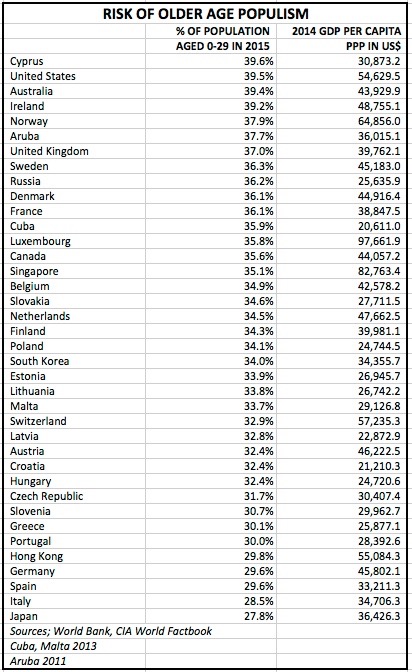
    Socialism’s day would come in four years because Mr. Trump has misread the economic tea leaves and has ascribed the moribund economy to an excess of taxes and regulations instead of to the true culprit, which is deteriorating demographics. As a consequence his efforts to ignite another Reagan style boom and to create 25 million new jobs are unlikely to succeed. Mr. Sanders is one of the most vocal critics of cronyism and his speech will be rich with I-told-you-sos if President Trump’s impending deregulation of Wall Street leads to another financial crisis on top of a weaker economy.

    After being disappointed by both Obama and Trump, the struggling working class and shrinking middle class will be ready to try yet another new thing. Electing a socialist will be the boomers’ last hurrah and the millennials rose-tinted dream of a new paradise finally blanketing the earth. Joel Kotkin recently noted:

    The millennials —arguably the most progressive generation since the ’30s—could drive our politics not only leftward, but towards an increasingly socialist reality, overturning many of the very things that long have defined American life.

    and further:

    The long-term hopes of the American left lie with the millennial generation. The roughly 90 million Americans born between 1984 and 2004 seem susceptible to the quasi socialist ideology of the post-Obama Democratic Party. They are also far more liberal on key social issues—gender and gay rights, immigration, marijuana legalization—than any previous generation. They comprise the most diverse adult generation in American history: some 40 percent of millennials come from minority groups, compared to some 30 percent for boomers and less than 20 percent for the silent and the greatest generations.

    Millennials’ defining political trait is their embrace of activist government. Some 54 percent of millennials, notes Pew, favor a larger government, compared to only 39 percent of older generations. One reason: Millennials face the worst economic circumstances of any generation since the Depression, including daunting challenges to home ownership. More than other generations, they have less reason to be enamored with capitalism.

    Sanders’ Math

    As to Senator Sanders’ math in 2020, it should be remembered that Mr. Trump carried two pivotal states, Michigan and Wisconsin, by very narrow margins in the general election and that Mr. Sanders won both of these states in the primaries. It would not take a lot for both to tip to Mr. Sanders in a possible Sanders-Trump showdown in 2020.

    screen-shot-2017-02-27-at-12-34-45-pm

    The addition of Ohio or Pennsylvania, both of which were won by Trump in 2016 and by Obama in 2008 and 2012, would be sufficient to secure Mr. Sanders victory if no other states changed sides in 2020 vs. 2016.

    As noted in So You Want a Revolution, the United States is one of many richer countries at risk of older age populism. These countries have relatively older populations (only 40% or less of the population aged 0-29) and higher GDP per capita ($20,000+).


    Demographics, combined with breakthrough innovations and strong institutions, have made America very wealthy in recent decades. We are now at a critical juncture and at risk of squandering our prosperity by focusing on a wrong set of problems and by empowering the wrong leaders, Trump and stage 1 cronyism that will lead to Sanders and stage 2 cronyism, or socialism.

    Sami Karam is the founder and editor of populyst.net and the creator of the populyst index™. populyst is about innovation, demography and society. Before populyst, he was the founder and manager of the Seven Global funds and a fund manager at leading asset managers in Boston and New York. In addition to a finance MBA from the Wharton School, he holds a Master’s in Civil Engineering from Cornell and a Bachelor of Architecture from UT Austin.

    Bernie Sanders photo by Michael Vadon [CC BY-SA 2.0], via Wikimedia Commons.