Tag: middle class

  • Legal but Still Poor: The Economic Consequences of Amnesty

    With his questionably Constitutional move to protect America’s vast undocumented population, President Obama has provided at least five million immigrants, and likely many more, with new hope for the future. But at the same time, his economic policies, and those of the progressive wing of the Democratic Party, may guarantee that many of these newly legalized Americans will face huge obstacles trying to move up in a society creating too few opportunities already for its own citizens, much less millions of the largely ill-educated and unskilled newcomers.

    Democratic Party operatives, and their media allies, no doubt see in the legalization move a step not only to address legitimate human needs, but their own political future. With the bulk of the country’s white population migrating rapidly to the GOP, arguably the best insurance for the Democrats is to accelerate the racial polarization of the electorate. It might be good politics but we need to ask: what is the fate awaiting these new, and prospective, Americans?

    In previous waves of immigration, particularly during the early 20th Century, there were clear benefits for both newcomers and the economy. A nation rapidly industrializing needed labor, including the relatively unskilled, and, with the help of the New Deal and the growth of unions, many of these newcomers (including my own maternal grandparents) achieved a standard of living, which, if hardly affluent, was at least comfortable and moderately secure.

    Demand for labor remained strong during the big immigrant wave of the 1980s until the Great Recession. The country was building houses at a rapid clip, which required a large amount of immigrant labor. Service industries, particularly before the onset of digital systems, such as ipads for ordering, that replace human staff in fast-food restaurants, tend to hotels and provide personal services, although often at low wages.

    More recently, this wave of undocumented migration has diminished, as economic prospects, particularly for the low-skilled, have weakened. Yet the undocumented population remains upwards eleven million. Largely unskilled and undereducated, roughly half of adults 25 to 64 in this population have less than a high-school education compared to only 8 percent of the native born. Barely ten percent have any college, one third the national rate.

    This workforce is being legalized at a time of unusual economic distress for the working class. Well into the post-2008 recovery, the country suffers from rates of labor participation at a 36 year low. Many jobs that were once full-time are, in part due to the Affordable Care Act, now part-time, and thus unable to support families. Finally there are increasingly few well-paying positions—including in industry—that don’t require some sort of post-college accreditation.

    Sadly, the legalization of millions of new immigrants could make all these problems worse, particularly for Latinos already here and millions of African-Americans.

    African-American unemployment is now twice that of whites. The black middle class, understandably proud of Obama’s elevation, has been losing the economic gains made over the past thirty years.

    Latino-Americans have made huge strides in previous decades, but now are also falling behind, with a gradual loss of income relative to whites. Poverty among Latino children in America has risen from 27.5 percent in 2007 to 33.7 percent in 2012, an increase of 1.7 million minors.

    Logically, many Latinos and African-Americans might suspect that amnesty won’t be a great deal for them. There are occasional signs of disquiet. A recent Pew survey found that not only half of all whites, but nearly two-fifths of African Americans and roughly even a third of Hispanics approved of increased deportations of the undocumented. A Wall Street Journal-NBC poll found that well less than half of Latinos supported the President’s action.

    This ambivalence may reflect the reality that legalization of the undocumented may be felt hardest in those places, such as California, that have attracted the most newcomers, and also have highly developed welfare states. Today public agencies in Los Angeles, with an estimated one million undocumented immigrants, are bracing from large increases in the demand for state provided services.

    One LA Supervisor estimates the County, facing “an already impossible fiscal dilemma,” will need to spend an additional $190 million, without hope of federal compensation, on the newly legalized population. Ultimately, the newest migrants will be competing with existing residents—particularly poorer ones—not only for jobs but also social services.

    The President’s action on immigration requires a profound shift in economic policy, particularly in the large urban centers where most undocumented are clustered, to avoid creating a squeeze on scarce jobs and services. But Obama’s other big agenda—addressing climate change—has slowed the expansion of fossil fuel development. Meanwhile, it’s the energy sector that creates precisely the kinds of high-paying blue collar jobs, averaging upwards of $100,000 annually, that immigrants might be eager to fill and could give low unskilled workers a foothold into the middle class.

    Similarly, efforts by Obama’s allies at Federal agencies like HUD to encourage dense housing and discourage suburban growth means far less construction employment, one of the largest generators of good blue collar jobs and opportunities.

    Ironically, the places where the cry for amnesty has been the loudest—New York, San Francisco, Los Angeles, and Chicago—also tend to be those places that have created the least opportunity for the urban poor. This is in part due to the fact that these areas have tended to de-industrialize the most rapidly, discourage fledgling grassroots businesses through high taxes, environmental and housing, regulations.

    Whatever their noble intentions, these cities generally suffer the largest degree of income inequality, notes a recent Brookings study. In fact, according to an analysis by Mark Schill at the Praxis Strategy Group, African-American incomes in New York are barely half those of whites and, in San Francisco somewhat below half. In contrast, cities with broader economies like Dallas and Houston, have black populations earning sixty five percent of white incomes. Similarly, Latinos in Boston, New York, Philadelphia and San Francisco do far worse, relative to incomes, than their Sunbelt counterparts, compared to whites.

    These trends could worsen in precisely those areas with the biggest concentrations of undocumented immigrants covered by Obama’s executive order.

    Take, for example, the borough of the Bronx in New York City. The most Latino of all New York’s counties, in the Bronx, roughly one in three households live in poverty, the highest rate of any large urban county.

    In the country. It’s doubtful that legalization absent job growth will improve conditions , as it adds more potential claimants for local benefits without creating new income sources.

    For reasons that can’t be purely economic, most Latino political leaders, and much of the group’s electorate, are in favor of policies that, over time, could doom prospects for Those who receive amnesty. Of course, there are other factors that play into support for these policies, like the emotional pull to reunite families, but whatever their appeal such measures could leave the very people they are meant to help as legal paupers.

    My adopted home region of Southern California has seen an almost 14% drop in high-wage blue-collar jobs since 2007. Deindustrialization has continued, and construction employment lagged, even while the country as a whole, sparked by more secure and now cheaper energy supplies, has seen industrial production improve since 2010.

    Herein lies the great dilemma then for the advocates of amnesty. In much of the country, and particularly the blue regions, they will find very few decent jobs but often a host of programs designed to ease their poverty. The temptation to increase the rolls of the dependent—and perhaps boost Democratic turnouts—may prove irresistible for the local political class.

    So what should we do under these circumstances? Constitutional arguments aside, there do seem to be some better ways to create conditions for upward mobility among newcomers.

    Higher minimum wages may help some of the legal residents, but arguably at the cost of new jobs for others including the newly amnestied. However popular with most voters, such redistributive measures will not address the fundamental economic challenge posed by amnesty.

    Perhaps a sounder strategy would be to adopt policies that encourage broad-based economic growth, including energy, manufacturing, logistics and home construction. This would, of course, require some moderation of regulatory standards, particularly in reference to climate change.

    The President’s recent deal with China, which essentially allows the Chinese to keep boosting emissions until 2030 while we reduce ours steeply, could make things worse. In some states like California, where the global warming consensus is beheld with theological rigidity, “green,” anti-suburban policies largely guarantee that most of the urban poor will never enter the middle class. In San Francisco, Boston and New York, the percentage of Latino and black homeowners is roughly one-third to one-half that seen in redder regions like Houston, Dallas, Phoenix and Atlanta.

    In essence, the deepest blue states have created the worst of all conditions for the urban poor, and will be particularly tough on undocumented residents granted amnesty.

    All this suggests that, if we are to make new Americans economically successful, we need to concentrate not on racial redress but find ways to spark broad based economic growth. Increasing use of inexpensive natural gas, for example, would not only help continue to reduce emissions but would spark an industrial expansion that would create more blue collar jobs. Similarly, policies that allowed for affordable, energy efficient new homes could create not only more blue collar employment possibilities, but a brighter future for young families, many of whom are themselves immigrants or their children.

    The current amnesty could benefit both the country overall as well as recent immigrants if it is tacked to a broad based economic growth strategy. But that doesn’t seem to be in the cards. Instead, continuing policies that inhibit broad-based economic growth are increasing the numbers of Americans who must depend on government, not the economy, to take care of themselves and their families.

    This piece originally appeared at The Daily Beast.

    Joel Kotkin is executive editor of NewGeography.com and Distinguished Presidential Fellow in Urban Futures at Chapman University, and a member of the editorial board of the Orange County Register. His newest book, The New Class Conflict is now available at Amazon and Telos Press. He is author of The City: A Global History and The Next Hundred Million: America in 2050. His most recent study, The Rise of Postfamilialism, has been widely discussed and distributed internationally. He lives in Los Angeles, CA.
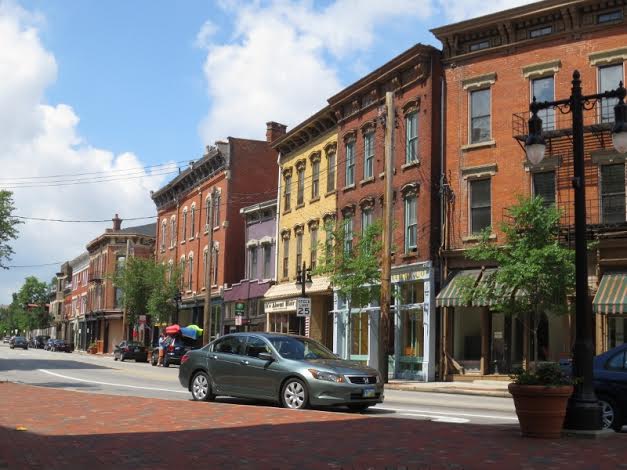
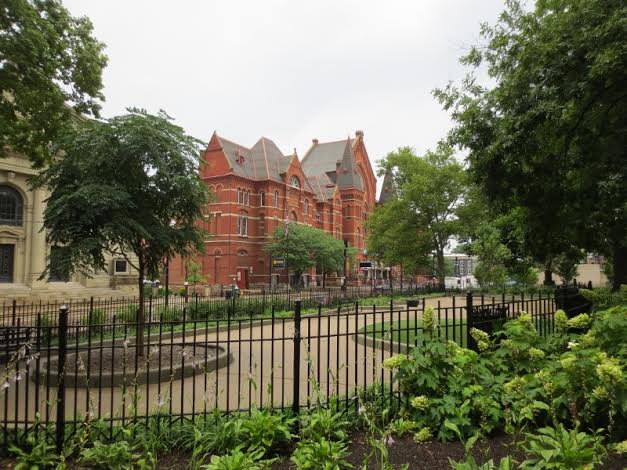
    Photo by telwink

  • The Progressives’ War on Suburbia

    You are a political party, and you want to secure the electoral majority. But what happens, as is occurring to the Democrats, when the damned electorate that just won’t live the way—in dense cities and apartments—that  you have deemed is best for them?   

    This gap between party ideology and demographic reality has led to a disconnect that not only devastated the Democrats this year, but could hurt them in the decades to come. University of Washington demographer Richard Morrill notes that the vast majority of the 153 million Americans who live in  metropolitan areas with populations of more than 500,000  live in the lower-density suburban places Democrats think they should not. Only 60 million live in core cities.      

    Despite these realities, the Democratic Party under Barack Obama has increasingly allied itself with its relatively small core urban base. Simply put, the party cannot win—certainly not in off-year elections—if it doesn’t score well with suburbanites. Indeed, Democrats, as they retreat to their coastal redoubts, have become ever more aggressively anti-suburban, particularly in deep blue states such as California.  “To minimize sprawl” has become a bedrock catchphrase of the core political ideology.   

    As will become even more obvious in the lame duck years, the political obsessions of the Obama Democrats largely mirror those of the cities: climate change, gay marriage, feminism, amnesty for the undocumented, and racial redress. These may sometimes be worthy causes, but they don’t address basic issues that effect suburbanites, such as stagnant middle class wages, poor roads, high housing prices, or underperforming schools. None of these concerns elicit much passion among the party’s true believers.

    The miscalculation is deep-rooted, and has already cost the Democrats numerous House and Senate seats and at least two governorships. Nationwide, in areas as disparate as east Texas and Maine or Colorado and Maryland, suburban voters deserted the Democrats in droves. The Democrats held on mostly to those peripheral areas that are very wealthy—such as Marin County, California or some D.C. suburban counties—or have large minority populations, particularly African-American.

    This is not surprising since the policies and predilections of President Obama and his team are based on a largely exaggerated urban mythology. Former HUD Secretary Shaun Donovan, for example, has declared the move to the suburbs is “over.” People are, he has claimed, “moving back into central cities and inner ring suburbs.” To help foster this trend, administration policies at HUD and other agencies have been designed to fulfill Donahue’s vision of getting Americans out of their suburban homes and cars and into apartments and trains. These policy initiatives include large “smart city” grants for dense development, restrictions on new building, the promotion of high-speed rail links that would supposedly reconcentrate economic activity in the urban core. The administration’s strong support for regional governments, and its attempts to force suburbs to diversify their populations (even though they are already where minorities increasingly move) are thinly disguised efforts to promote densification and put the squeeze on suburban growth.

    Yet, as census data and electoral returns demonstrate, the demographic realities are nothing like what Donahue and the administration insist. The last decennial census showed, if anything, that suburban growth accounted for something close to 90 percent of all metropolitan population increases, a number considerably higher than in the ’90s. Although core cities (urban areas within two miles of downtown) did gain more than 250,000 net residents during the first decade of the new century, surrounding inner ring suburbs actually lost 272,000 residents across the country. In contrast, areas 10 to 20 miles away from city hall gained roughly 15 million net residents.

    Since 2010, suburban growth has slowed as young people, hampered by a weak economy and tougher mortgage standards, have not been able to buy houses. But while population growth in the same time period has been roughly even between the suburbs and core cities,  the suburban population, which is so much larger to start with, has continued to expand at a faster rate . According to demographer Morrill, since 2010 the suburbs have added 4.4 million people compared to fewer than 2 million in core cities.

    The big problem here is this: the progressives’ war on suburbia is essentially an assault on the preferences of the middle class. Despite the hopes at HUD, the vast majority of Americans—even in most cities and particularly away from the coasts—actually live in single-family homes in low- to mid-density neighborhoods, and overwhelmingly commute by car. If we measure people by how they actually live, notes demographer Wendell Cox, more than 80 percent of those in metropolitan areas have what most would consider a suburban life style.

    Contrary to the conventional wisdom, there is nothing intrinsically “progressive” about hating suburbs. It was, after all, President Franklin Roosevelt who believed that dispersion and homeownership would make the country much stronger. “A nation of homeowners, of people who own a real share in their land, is unconquerable,” he maintained. This notion of favoring policies that allowed for middle-class and eventually working-class people to own their own homes and a patch of grass was shared by Harry Truman, John Kennedy, and Bill Clinton, all of whom were fairly successful in winning over suburban voters.

    Suburbanites are not intrinsically Republican. Clinton, noted political analyst Bill Schneider, shared suburban voters’ skeptical view of government’s ability to address problems, and won 47 percent of the suburban vote in 1996. Barack Obama, running as a conciliatory pragmatist in 2008, did even better with some 50 percent. This performance was aided by the growing proportion of racial minorities, including African Americans, who had moved to the suburbs.

    But as Obama’s administration took shape, suburban support began to ebb. In 2012, Obama lost the suburbs to Romney  by a two-point margin. In this year’scongressional elections the GOP edge grew to 12 points in the suburbs, which accounted for a majority of the electorate. The  Democrats won by 14 percent in the more urban areas, but these accounted for barely one-third of the total vote. The result was a thorough shellacking of the Democratic party from top to bottom.

    Yet even these numbers do not express how critical suburban voters were this year. Much of urban America, particularly in places like Phoenix, Houston, and Las Vegas, is primarily suburban. They have multiple employment centers and the vast majority of commuters take to the roads. Democrats did not do so well in these cities this year, although the party continues to dominate more traditional inner cities dominated by apartment dwellers and mass transit riders. Some hopeful conservative commentators have noted a slight increase in GOP votes in some inner cities, but the percentages are still laughably pathetic.

    This can be seen in GOP wins in the governor’s races. Michigan’s Republican Governor Rick Snyder got 6.8 percent of the vote in Detroit. Successful Illinois challenger Bruce Rauner won only 20 percent of Chicago’s take, even in the face of gross mismanagement by his Democratic opponent. And Maryland’s Larry Hogan won about 22 percent in Baltimore. In all these elections, it was the suburbs—not paltry gains in the cities—that made the difference. Rauner’s election, for example, was based largely on a 60 percent margin in Chicago’s swing “collar counties.” Boston’s suburbs, particularly in the more working class south, helped assure the gubernatorial election of GOP candidate Charles Baker in this bluest of blue states. Suburban voters also played a huge role in the Republicans’ biggest win—the Texas governorship—giving GOP candidate Greg  Abbott almost two-thirds of their votes.

     Much the same suburban swing can be seen in the critical senatorial races races where the Democrats lost seats. Iowa Republican Joni Ernst lost the city vote but won 58 percent of suburban electorate, almost equaling her show in the rural areas. In Colorado, Corey Gardner also secured a large majority among suburban voters, who accounted for roughly half the total electorate. Finally, in the upset of Senator Kay Hagan in North Carolina, successful GOP candidate Thom Tillis ran even better in the suburbs—with some 57 percent of the vote—than he did in the supposedly hardcore conservative countryside.

    But the best way to see the suburban impact is to look at the House races. Among the 12 seats that Republicans took from the Democrats, half were located in solidly suburban areas. These included districts surrounding such cities as Raleigh, N.C.; Salt Lake City, which elected black Republican Mia Love; Miami, in a predominately Latino area; Las Vegas, in a suburban district that went for Obama in 2012; and eastern Long Island. The powerful shift in suburban voting also appears to have cost the Democrats two seats in the president’s home state—one in the northern suburbs of Chicago and the other in southern Illinois communities adjacent to St. Louis, a district that has been in Democratic hands for three decades.

    So what does this mean for 2016 and beyond? To be sure, the key Democratic urban-centric constituencies—millennials, single women, minorities—likely will turn out in bigger numbers in the next election. But ultimately their numbers will be somewhat balanced by rural and small town voters, who will continue to support conservatives overwhelmingly. Ultimately there is only one truly contested piece of political turf in this country—the suburbs—and who wins there takes the whole enchilada.

    There are those, even slightly deluded Republicans, who believe the country is becoming “more urban” and that therefore the suburban edge will mean less in the years ahead. Yet since 2011 the most rapid growth in country, as noted by Trulia’s Jed Kolko, continues to be in the suburbs and exurbs. Some urban cores have recovered nicely, but most often the surrounding city areas have continued to see slow or negative growth.

    Nor is this trend likely to reverse in the near future. As Millennials head into their thirties, survey data suggests that most are looking for single family houses and most favor suburban locations where increasingly they will be joined by   immigrants and minorities. And virtually all the fastest growth urban regions—Houston, Dallas-Ft. Worth, Phoenix, Charlotte—remain largely suburban in form and character, while growth is much slower in the more traditional legacy cities such as San Francisco, New York, or Boston.

    None of this suggests that that Republicans can take suburban votes for granted. The suburbs are changing in ways that could help progressives, notably by becoming more heavily minority and Millennial. The preferences of these new arrivals will differ from those of previous suburban generations—particularly their views on immigration, the need for open space and cultural liberalism. That said, how likely is it that these new suburbanites will embrace progressive ideologues who continually diss the very places they have chosen to live?

    The  progressive “clerisy” and their developer allies may wish to destroy the suburban dream, but they will not be able to stay in office for long with such attitudes. America remains, and likely will remain, a predominately suburban nation for decades to come. This demographic reality means that whoever wins the suburban vote in 2016 and beyond will inherit the political future.

    This piece originally appeared at The Daily Beast.

    Joel Kotkin is executive editor of NewGeography.com and Roger Hobbs Distinguished Fellow in Urban Studies at Chapman University, and a member of the editorial board of the Orange County Register. His newest book, The New Class Conflict is now available at Amazon and Telos Press. He is author of The City: A Global History and The Next Hundred Million: America in 2050. His most recent study, The Rise of Postfamilialism, has been widely discussed and distributed internationally. He lives in Los Angeles, CA.
    Suburbs photo by Bigstock.

  • California’s Southern Discomfort

    We know this was a harsh recession, followed by, at best, a tepid recovery for the vast majority of Americans. But some people and some regions have surged somewhat ahead, while others have stagnated or worse.

    Greater Los Angeles fails to make the grade. In per capita growth of gross domestic product since 2010, according to analyst Aaron Renn, our region ranks a very mediocre 38th out of 52 metro areas, with a measly 1.5 percent, well below the national average of 3.8 percent. It places behind up-and-comers among the Texas cities, Oklahoma City and some tech-oriented clusters – Silicon Valley ranked second, after Houston. These places have growth rates roughly twice those of the Southland.

    When we wanted to drill down to the more local level, and analyze what is happening by county, we needed to go to the Census Bureau, as opposed to the Bureau of Economic Analysis, where we could glean what is happening in our communities. Our analysis is based on those figures, and neither of us hopes the Southern California region continues to stagnate or decline.

    Poverty

    One of the saddest results of the Great Recession and the weak recovery has been the expansion of poverty across the country. The poverty rate among the country’s 52 largest metropolitan areas, according to the most recent census numbers, grew from 14.9 percent in 1999 to 15.8 percent in 2013, a 7 percent rise. At least one-quarter of that rise has taken place since the recovery began.

    Southland politicians, like those in much of California, often decry income inequality and poverty, but they have not been very effective in combatting it. The region has had higher-than-average poverty for well over a decade, and things have not gotten better recently. Since 2009, the Los Angeles region, which includes Orange County, has seen its poverty rate grow by 1.8 percent, 80 percent higher than the national norm. The area ranked 47th out of 52 in terms of increased poverty. Riverside-San Bernardino saw a similar jump, 1.7 percent, in poverty.

    The scale of the poverty problem in the Southland is much greater than many imagine. When we broke down the figures, Los Angeles County remained the area with the highest concentration of poverty. L.A. saw a slight reduction in poverty from 1999-2010, but has moved in the other direction more recently. From 2010-13, poverty in L.A. County rose from 17.5 percent to 18.9 percent, an 8 percent increase. Poverty now afflicts a considerably larger portion of the population of Los Angeles than it did in 1999.

    But if Los Angeles County endures the largest pocket of poverty, there’s not much for the surrounding counties to shout about. San Bernardino and Riverside counties have each seen rapid 20 percent increases in their poverty rates since 1999; in fact, San Bernardino’s 19.1 percent poverty rate is slightly higher than that of Los Angeles County.

    Orange County fares better, but the curse of poverty is spreading even here. Although its 13.5 percent poverty rate lies below the national average, the ranks of the O.C. poor have jumped 30 percent relative to the entire population since 1999. The expansion of poverty as a share of the population has grown by more than 10 percent since 2010.

    Low Income Growth and High Housing Prices: A Bad Combination

    As befits a region with relatively low GDP growth, incomes in Southern California have stagnated. Median household incomes have dropped in every county in the region, including Ventura and Orange, whose residents boast median household incomes above $70,000, well above the $50,000 range found in Los Angeles, San Bernardino and Riverside. Since 2010, the biggest income drops have happened in the Inland Empire, where real incomes have fallen by nearly 7 percent. Los Angeles also has experienced a drop, with real incomes down 3 percent since 2010.

    For the most part, the more-affluent suburban counties have done better, consistent with the two-speed U.S. economy. Orange and Ventura enjoy median household incomes a full $20,000 above those of Los Angeles County and the Inland Empire. This is after the smaller 2.1 percent reduction (2010-13) in Orange County real incomes. Real incomes have recovered, albeit slightly, only in Ventura. The biggest hit has been concentrated in those parts of Southern California – Los Angeles County and the Inland Empire – historically most dependent on blue-collar professions in manufacturing, logistics and construction. These are, for the most part, also the most heavily Latino and African American areas of the region.

    So, why can’t the Southland replicate the economic boom in the San Francisco Bay Area? Simply put, the Los Angeles region is not the Bay Area, or Seattle. The share of Los Angeles’ jobs that are tied to manufacturing and logistics is twice that of the San Francisco area. Our population is far less well-educated, particularly in the Inland Empire and much of Los Angeles County, and is also far more heavily African American and Latinogroups that have fared particularly poorly. Nationwide, Latino poverty rates, notes a recent Pew study, stand at 28 percent, the highest for any ethnic group.

    Alongside the stagnant economy, growing Latino poverty – which is really the key challenge for Southern California – also reflects a high cost of living. This is most profound in terms of housing costs. Overall, the Southland counties – most notably Los Angeles and Orange – suffer among the highest housing cost burdens, relative to income, than virtually anywhere in the country.

    This can be seen by looking at what parts of the country have the highest percentages of people paying more than 50 percent of pretax income for housing. According to the Center for Housing Policy and National Housing Conference, 39 percent of working households in the Los Angeles metropolitan area spend more than half their incomes on housing, a somewhat higher rate than in the pricier San Francisco and New York areas and much higher than the national rate of 24 percent of households spending more than half of income on housing, itself far from tolerable.

    New Policy Imperatives

    Our current mix of state and local policies are neither reviving the regional economy nor reducing poverty. One key reason is that the current political environment – fostered and perpetuated by greens, urban land interests and organized public workers – places little priority on promoting the growth of the tangible economy that tends to employ blue-collar workers. High energy costs, largely due to the state’s Draconian commitment to renewable fuels, are a direct threat to any kind of industrial growth, while highly restrictive housing policies slow any hope of meeting the needs of renters and prospective homeowners.

    Of course, one could point out that the Bay Area, the one large region in California experiencing above-average income growth, labors under the same progressive policy regime. But the Bay Area, particularly San Francisco, is already largely deindustrialized and its population far more attractive to digitally based companies. It boasts a far larger pool of venture capital, and a unique network to support tech.

    A Google or an Apple can easily move its energy-hungry arrays of computer servers to less-expensive states, along with its device manufacturing. The more grass-roots based, small-business-oriented Southland economy is far less able to adapt to regulatory strictures from Sacramento.

    Southern California leaders clearly need to understand that the region is not winning under the current policy environment in the state. Steps to re-energize our basic industries and restart new housing, particularly single-family housing desired by most young families, need to be taken. Other steps, from reforming the schools and rebuilding basic infrastructure to modernizing higher education, also are imperative. At risk is not just a comfortable way of life, but also the legacy of opportunity that has been so critical to this region from its earliest days, a legacy now at extreme risk.

    This piece first appeared at the Orange County Register.

    Joel Kotkin is executive editor of NewGeography.com and Roger Hobbs Distinguished Fellow in Urban Studies at Chapman University, and a member of the editorial board of the Orange County Register. His newest book, The New Class Conflict is now available at Amazon and Telos Press. He is author of The City: A Global History and The Next Hundred Million: America in 2050. His most recent study, The Rise of Postfamilialism, has been widely discussed and distributed internationally. He lives in Los Angeles, CA.
    Wendell Cox is principal of Demographia, an international public policy and demographics firm. He is co-author of the “Demographia International Housing Affordability Survey” and author of “Demographia World Urban Areas” and “War on the Dream: How Anti-Sprawl Policy Threatens the Quality of Life.” He was appointed to three terms on the Los Angeles County Transportation Commission, where he served with the leading city and county leadership as the only non-elected member. He was appointed to the Amtrak Reform Council to fill the unexpired term of Governor Christine Todd Whitman and has served as a visiting professor at the Conservatoire National des Arts et Metiers, a national university in Paris.

  • The Demographics That Sank The Democrats In The Midterm Elections

    Over the past five years, the Democratic Party has tried to add class warfare to its pre-existing focus on racial and gender grievances, and environmental angst. Shortly after his re-election in 2012, President Obama claimed to have “one mandate . . . to help middle-class families and families that are working hard to try to get into the middle class.”

    Yet despite the economic recovery, it is precisely these voters, particularly the white middle and working classes, who, for now, have deserted the Democrats for the GOP, the assumed party of plutocracy. The key in the 2014 mid-term elections was concern about the economy; early exit polls Tuesday night showed that seven in 10 voters viewed the economy negatively, and this did not help the Democratic cause.

    “The Democrats have committed political malpractice,” says Morley Winograd, a longtime party activist and a former top aide to Vice President Al Gore during the Clinton years. “They have not discussed the economy and have no real program. They are offering the middle class nothing.”

    Winograd believes that the depth of white middle- and working-class angst threatens the bold predictions in recent years about an “emerging Democratic majority” based on women, millennials, minorities and professionals. Non-college educated voters broke heavily for the GOP, according to the exit polling, including some 62% of white non-college voters. This reflects a growing trend: 20 years ago districts with white, working-class majorities tilted slightly Democratic; before the election they favored the GOP by a 5 to 1 margin, and several of the last white, Democratic congressional holdovers from the South, notably West Virginia’s Nick Rahall and Georgia’s John Barrow, went down to defeat Tuesday night.

    Perhaps the biggest attrition for the Democrats has been among middle-class voters employed in the private sector, particularly small property and business owners. In the 1980s and 1990s, middle- and working-class people benefited from economic expansions, garnering about half the gains; in the current recovery almost all benefits have gone to the top one percent, particularly the wealthiest sliver of that rarified group.

    Rather than the promise of “hope and change,” according to exit polls, 50% of voters said they lack confidence that their children will do better than they have, 10 points higher than in 2010. This is not surprisingly given that nearly 80% state that the recession has not ended, at least for them.

    The effectiveness of the Democrats’ class warfare message has been further undermined by the nature of the recovery; while failing most Americans, the Obama era has been very kind to plutocrats of all kinds. Low interest rates have hurt middle-income retirees while helping to send the stock market soaring. Quantitative easing has helped boost the price of assets like high-end real estate; in contrast middle and working class people, as well as small businesses, find access to capital or mortgages still very difficult.

    The Republicans made gains in states in New England and the upper Midwest where the vast majority of the population, including the working class, remains far whiter than the national norm of 64% Anglo, such as Massachusetts, where a Republican was elected governor, Michigan, Arkansas and Ohio. Anglos constitute 89% of the population in Iowa and 93% in the former working-class Democratic bastion of West Virginia, two states where the Republicans picked up Senate seats. In Colorado, another big Senate pickup for the GOP, some 80% of the electorate is white. In Kentucky, where Senator Mitch McConnell won a surprisingly easy re-election, only 11% of voters were non-white, down 4% from 2008.

    A more intriguing danger sign for Democrats has been the surprisingly strong GOP performance among the educated professionals that embraced Obama early on. This can be seen in gubernatorial victories in deep blue Massachusetts and Maryland,  and a close race in Connecticut; in all three states concerns over taxes have shifted some voters to the GOP. Voters making over $100,000 annually broke 56 to 43 for the GOP, according to NBC’s exit polls. College graduates leaned slightly toward the Republicans, but among white college graduates the GOP led by a decisive 55 to 43 margin.

    In Colorado, Senator-elect Cory Gardner, like many successful GOP candidates, also did well with middle-income voters (annual salaries between $50,000 and $100,000), who basically accounted for his margin of victory. These are voters that some Republicans are targeting to instigate a new “tax revolt,” like the one that helped catapult Ronald Reagan into the presidency. The potential may be there if the Republicans can wake up from their blind instinct to protect large corporations and big investors. Certainly Obama’s call for higher income taxes on the wealthy has alienated small business owners and professionals, though barely impacting tech oligarchs, whose wealth is taxed at far lower capital gains rates.

    It can be argued that changing demographics will make this year’s blowout a temporary setback. Among Latinos, a key constituency for the Democrats’ future, economic hardships and disappointment at the Democrats’ failure to achieve immigration reform have blunted but hardly reversed voting trends. This year, according to exit polls, Latinos remained strongly Democratic, but down from the nearly three-quarters who supported President Obama in 2012 to something slightly less than two-thirds.

    One encouraging sign for Republicans: Texas Governor-elect Abbott won 44% of the Hispanic vote.

    Perhaps the more serious may be shifts among millennials, a generation that, for the most part, stands most in danger of proleterianization. Once solidly pro-Democratic, this generation has become increasingly alienated as the economy has failed to produce notable gains. In states across the country, the Republican share of millennial votes grew considerably. According to exit polls, their deficit with voters under 30 has shrunk to 13%. The Republicans actually won among white voters under 30, 53% to 44%, even as they lost 30- to 44-year-olds, 58 to 40. If these trends hold, the generation gap that many Democrats saw as their long-term political meal ticket may prove somewhat less compelling.

    If they are losing the middle and working classes, and even some millennials, what are the Democrats left with? They did best in states like California and New York, where there is a high concentration of progressive post-graduates and non-whites, and where many of the sectors benefiting most from the recovery have thrived, notably tech, financial services, and high-end real estate.

    Yet these areas of strength could also prove a problem for the Democrats. A party increasingly dominated by progressives in New York, Los Angeles, the Bay Area and Seattle may embrace the liberal social and environmental agenda that captivates party’s loyalists but is less appealing to the middle class. Unless the Democrats develop a compelling economic policy that promises better things for the majority, they may find their core constituencies too narrow to prevent the Republicans from enjoying an unexpected, albeit largely undeserved, resurgence.

    This piece originally appeared at Forbes.

    Joel Kotkin is executive editor of NewGeography.com and Roger Hobbs Distinguished Fellow in Urban Studies at Chapman University, and a member of the editorial board of the Orange County Register. His newest book, The New Class Conflict is now available at Amazon and Telos Press. He is author of The City: A Global History and The Next Hundred Million: America in 2050. His most recent study, The Rise of Postfamilialism, has been widely discussed and distributed internationally. He lives in Los Angeles, CA.

    Illustration by Flickr user DonkeyHotey.

  • Choosing Fortune Over Freedom

    “If the 19th [century] was the century of the individual (liberalism means individualism), you may consider that this is the ‘collective’ century, and, therefore, the century of the state.”

    Benito Mussolini, “The Doctrine of Fascism” (1932), translated by Barbara Moroncini.

    Where goes the 21st century? Until recently, it could be said that, with the defeat of fascism, in 1945, followed by the collapse of the Soviet Union about a half century later, that we had seen the demise of what the Italian dictator Mussolini envisioned as “a century of authority.” But, now, liberalism’s global triumphal march, as was so brazenly predicted in some corners just two decades ago, seems to have slowed, and may even be going into reverse.

    Increasingly, authoritarian regimes are rising around the world, led by a pesky, resource-rich Russia and a new full-blown superpower, China. Today, few regimes are becoming more democratic, and many, such as Turkey, are evolving toward one-party, voter-blessed, autocracies. These regimes, like their fascist and communist antecedents, often show a kind of contempt for the messy work of pluralistic decision-making and constitutional restraint.

    Elections, long iconic for Americans, are increasingly beside the point. The regimes in Russia and Iran, like that of Turkey, can claim voter mandates, even if their electoral process is twisted by government control of the media and occasional outright repression. Adolf Hitler liked to boast that he, too, took power in Germany in 1933 through legal means.

    But, China, the most important authoritarian country, has little pretense of free elections, so it has become inconceivable that anyone other than the Communist Party will be in control for the foreseeable future. For Chinese whose concerns extend beyond material benefit to such concepts as secure property rights, artistic, political or religious freedom, the obvious option is not to agitate but migrate to one of a diminishing number of spots where such rights are guaranteed.

    But most people in China, like their counterparts elsewhere, are more concerned with their well-being than the freedom of a handful of writers, artists or even businesspeople. Having witnessed a remarkable shift from poverty to growing prosperity and power, the Chinese model, rather than seen as anachronistic, has evolved into the gold standard for many countries, particularly in the developing world.

    This is not surprising, given the rapid progress that country has made in recent years. China has expanded its share of global gross domestic product from 2 percent in 1995 to 12 percent in 2012. Its economic model – communist control of thought and politics but welcoming to most enterprise – has vastly outperformed that of the strongest democracies, the United States, the European Union and Japan, particularly in light of the Great Recession. This recalls the 1930s, where Germany’s state-directed economy and that of the Soviet Union seemed to cope far better with the Depression than their Western democratic counterparts.

    As in the 1930s, we are even seeing the emergence of a new authoritarian Axis. We can see this with Turkey’s decision to increase food exports to Russia to make up for sanction-tightened imports from the U.S. and the EU. Argentina, an increasingly authoritarian democracy, is also set to increase food exports to Moscow.

    Right now, the new Axis is changing global politics. Vladimir Putin’s break with the West reflects, in part, his confidence that his nation’s future lies more with the Middle Kingdom than with the whining democracies of the EU. For less-developed countries, it is more compelling to see in the Chinese model the quickest way to achieve a strong economy.

    Even in democratic and pluralistic India, the new government has sought stronger ties to China, under new Prime Minister Narendra Modi, who has a strongly authoritarian bent, which previously worked well in his management of Gujarat state.

    Chinese success has made it painfully clear that globalization of capitalism does not require pluralism or Western standards of legality. Nor has it done much to promote global understanding, in the China Sea or elsewhere in the world. Religious and ethnic divisions are, if anything, ever more pronounced. The failure of the much-heralded Arab Spring to create anything remotely pluralistic epitomizes this trend, leaving the West with the dilemma of selecting which repressive regimes to ally with to defeat even more heinous entities, like Hamas or the Islamic State.

    This rise of authoritarianism is not limited to the developing world. In the West, these tendencies are also getting stronger, and from both right and left. One powerful spur has been the growing sense among a once-comfortable middle class – beset by 15 years of flat or shrinking incomes – that they are being “proletarianized.”

    Such fear leads normally conservative or moderate people to look at more extreme solutions. Historian Eric Weitz notes that such fears abetted the rise of the National Socialist movement in Germany. Today, across Europe, nativist parties, albeit still far less terrifying than the Nazis, are on the upswing, from traditionally liberal and prosperous Scandinavia to increasingly impoverished Greece.

    Ukraine, facing dismemberment by Putin’s Russia, also has seen the rise internally of the neofascist and anti-Semitic Svoboda movement. The most notable example can be found in France, where the National Front’s Marine Le Pen is leading in the polls to become the Fifth Republic’s next president.

    Perhaps the first neoauthoritarian to gain power in Europe, Hungary’s Prime Minister Victor Orban, has suggested that the recession of the past decade marked the end of what he called “the era of liberal democracies.” For Hungary, he claims, inspiration in the future won’t come from America or the rest of the EU, but from such authoritarian countries as China, Russia, Turkey and Singapore.

    Far less discussed has been the rising authoritarianism on the Left. President Obama’s excessive use of federal regulations to circumvent troublesome Republicans in Congress demonstrates a new surge of executive and bureaucratic power. After the November election, there is good reason to suspect that, particularly if his party loses the Senate, the president’s approach in his final two years in office will increasingly resemble Louis XIV’s L’etat c’est moi.

    If the Right’s authoritarian priorities, including those of some elements aligned with the Tea Party, seek to protect traditional culture, values and the middle classes, the Left favors centralized control to redress wrongs done to selected groups – women, gays, undocumented immigrants – through regulation and taxation. Environmental activists, notably those mobilized around climate change, increasingly despair of addressing their concerns through legislative action, where support is often limited, relying mostly on executive action.

    When liberals abandon liberal principles, we lose one of the most important brakes on expanding central power. As we can see already in California and other places, decisions on virtually everything about how we live – from transportation, to housing and, most particularly, how we generate energy – are increasingly being made not by our elected representatives but through the administrative bureaucracy. The notion of “checks and balances,” of getting buy-in from the opposition and dissenters in your own party, means little to those who have found the “truth” and are determined to impose it on everyone else.

    In some ways, Mussolini, executed by his fellow Italians in 1945, may have been more prescient than his enduring image as a posturing buffoon might suggest. In 1934, Mussolini noted that “as civilization becomes more and more complex, individual freedom is more and more restricted.”This was clearly true in the industrial era, but may also characterize our current transition to a post-industrial, information economy.

    This view diverges from the popular wisdom that information technology is inherently liberating. The visionary MIT analyst Nicholas Negroponte maintained that “digital technology” could turn into “a natural force drawing people into greater world harmony.”

    It turns out that technology is not liberating by itself and can be corralled just as easily for authoritarian purposes. The media’s emphasis on young people posting on Facebook in places like Egypt, Iran and Russia gave us a false impression of how those societies operate. Governmental suppression and organized violence subsequently proved more powerful than digital technology. Smartphones, the Internet and the increasing reach of information technology are not sufficient to spawn conditions for pluralistic democracy. As anyone who spends time in China can attest, great things can be achieved without fundamental individual freedom.

    The sad truth is that we may be entering an era where classical liberalism – market capitalism, freedom of speech and safety from government intrusion – may be somewhat in retreat. As during most of world history, pluralistic democracy remains a fragile achievement that thrives only in a relative handful of places. For that reason, we need – more than ever – to cherish it.

    This piece originally appeared at The Orange County Register.

    Joel Kotkin is executive editor of NewGeography.com and Roger Hobbs Distinguished Fellow in Urban Studies at Chapman University, and a member of the editorial board of the Orange County Register. His newest book, The New Class Conflict is now available at Amazon and Telos Press. He is author of The City: A Global History and The Next Hundred Million: America in 2050. His most recent study, The Rise of Postfamilialism, has been widely discussed and distributed internationally. He lives in Los Angeles, CA.
    Benito Mussolini photo by Bundesarchiv, Bild 102-08300 / CC-BY-SA [CC-BY-SA-3.0-de], via Wikimedia Commons

  • Silicon Valley’s Chips off the Old Block

    Silicon Valley long has been hailed as an exemplar of the American culture of opportunity, openness and entrepreneurship. Increasingly, however, the tech community is morphing into a ruling class with the potential for assuming unprecedented power over both our personal and political lives.

    Rather than the plucky entrepreneurs of legend, America’s rising tech oligarchy constitutes a narrow emerging elite. They are primarily beneficiaries of the limited pools of risk capital – nearly half of which is concentrated in Silicon Valley. They also have access to a highly incestuous club of skilled professional managers, lawyers, PR mavens and accountants that counterparts elsewhere are unlikely to enjoy.

    In contrast to the intense competitive environment that defined industries such as semiconductors, disc drives and personal computers in the 1980s, today’s “lords of cyberspace,” as author Katherine MacKinnon describes them, enjoy oligopolistic market shares that would thrill the likes of John D. Rockefeller. Google, for example, accounts for more than two-thirds of the market for Internet search. The fantastic wealth amassed by Bill Gates, like that of the other oligarchs, stems in large part from these kinds of “monopoly” rent; in his case, for consistently mediocre but dominant software.

    Of course, these oligarchs, like feudal lords or rival gangs, sometimes fight among themselves, say, Google versus Apple over operating systems or, increasingly, over hardware segments of the industry. Yet, this struggle between oligarchs is far from a competitive free for all: Together, these two firms provide almost 90 percent of the operating systems for smartphones.

    Faux Progressivism

    Normally, progressives would be expected to decry such concentrations of wealth and power. But Silicon Valley has largely insulated itself from such criticism by taking “progressive” policy stances, notably on climate change, and by cultivating both a “hip” image and close ties to the Obama administration. When Steve Jobs died in 2011 during the Occupy Wall Street movement, the passing of this brilliant, but often ruthless, 0.00001 percenter was openly mourned as if he was a counterculture hero.

    But this should not mask the fact that Silicon Valley entrepreneurs have turned out to be every bit as cutthroat – and odious to the individual – as any industrial group in modern American history. As technologist and author Jaron Lanier has suggested, the current oligarchical ascendency rests not on improving productivity or sparking broad-based growth, but mining the private lives of every consumer in order to reap riches from advertisers.

    Google, while a prime offender, is hardly alone in pursuing violations of privacy. Consumer Reports has detailed Facebook’s pervasive, and often deepening, privacy breaches. Ironically, as one blogger noted, even as Facebook has been loosening privacy restrictions for teenage users of its site, company founder Mark Zuckerberg acquired property around his Palo Alto estate to better-protect his privacy.

    Once seen as a liberating force, the social media firms are morphing into an overweening Big Brother. Apple’s new devices, the tech publication Wired recently noted, are aimed at “building a world in which there is a computer in your every interaction, waking and sleeping.” The ambition for control is remarkable. As Google’s Eric Schmidt put it: “We know where you are. We know where you’ve been. We can, more or less, know what you’re thinking about.”

    Political, social implications

    In the emerging era of the tech oligarchs, the rights of the individual computer user look increasingly like those of farmers or small-business people shipping products by rail at the turn of the 20th century; sitting at a home office or kitchen table, the individual computer user has precious little leverage.

    These odds will be made even longer as Silicon Valley leadership pursues sweeping ambitions to influence the political class. “Politics for me is the most obvious area [to be disrupted by the Web],” suggests former Facebook president Sean Parker.

    The success with which technology assisted President Obama’s re-election effort offers clear support to Parker’s assertion. And, not surprisingly, when Obama’s top aides leave government, several have landed lucrative jobs with the tech elite.

    Some see this ascendency as a positive. One tech booster foresees the old “nexus” between Wall Street and Washington being replaced by one between Silicon Valley and the federal leviathan, which will usher the world into a “new age of abundance, connectivity, innovation and sharing.” This viewpoint is beyond naïve, and closer to delusional.

    We often forget that, despite their green and counterculture allure, the tech oligarchs are, indeed, oligarchs, who live fantastically luxurious and consumptive lives. Google executives, for example, have burned the equivalent of upward of 59 million gallons of crude oil – for many years at subsidized federal rates – from 2007-13 on their private jets, even as they hectored regular consumers to cut back on energy use.

    But nothing so mimics the arrogance and hubris of the tech oligarchs as their largely successful efforts to avoid taxation. Bill Gates had voiced public support for higher taxes on the rich but tech companies, including Microsoft, have bargained over, and legally avoided paying, their own taxes while higher taxes fell on affluent, but hardly megarich, taxpayers.

    Similarly, the founders of Twitter have developed elaborate plans to avoid taxation and protect their suddenly vast estates. Facebook paid no taxes in 2012, despite making a profit of over $1 billion. Apple, which the New York Times described as “a pioneer in tactics to avoid taxes,” has kept much of its cash hoard abroad to keep it away from Uncle Sam.

    The Road to Oligarchy

    Emboldened by their access to individual data, the tech oligarchs could form the core of what a recent report from the professional services giant PWC described as virtual “ministates,” with control over markets and employees that more resemble an Orwellian nightmare than a technological utopia.

    This influence will be enhanced by growing control of the media. In the past, more hardware-oriented companies provided the “pipelines” through which traditional media disseminated their products. But, increasingly, the oligarchs – taking advantage of the online shift – are devastating traditional media. Google’s ad revenue in 2013 surpassed that of newspapers.

    The Valleyites are also moving into the culture business, with both YouTube (owned by Google) and Netflix getting into the entertainment content business. The oligarchs may need to source content from more-established vendors on the East Coast or in Hollywood, but they increasingly will control the financial purse strings as well as the critical pipelines.

    Diminishing benefits to society

    Tech industry boosters, such as UC Berkeley’s Enrico Moretti, claim the new tech oligarchs represent the key to a growing economy and greater regional well-being. This claim, however, is dubious, even in Silicon Valley. Tech companies restrain their employees’ wage growth through informal agreements to prevent poaching of each others’ employees and by importing relatively low-paid “technocoolies” to do their programming. Expanding this category of workers has become a major priority for tech firms – despite a surplus of American IT workers – such as Facebook.

    Rather than enhancing middle-class opportunities, high-technology industries have promoted an economy with sharp divisions between the top employees and low-wage workers in retail and other service industries such as janitors, clerks and cashiers. The mostly white and Asian employees at firms like Facebook and Google enjoy gourmet meals, child-care services, even complimentary housecleaning; but wages for the region’s African-American and large Latino populations, roughly one-third of the total, have actually dropped, notes a 2013 Joint Venture Silicon Valley report. As Russell Hancock, the group’s president, observed, “Silicon Valley is two valleys. There is a valley of haves, and a valley of have-nots.”

    In San Francisco, Silicon Valley companies provide free and more luxurious transport for the privileged few they employ, providing a daily reminder of the growing segregation between rich and poor. Increasingly large sections of the Bay Area resemble a gated community, where much of the working and middle classes fork over a large portion of their incomes in rent and often are forced to commute huge distances to jobs serving the Valley’s upper crust.

    There is no denying that the tech oligarchs will continue to play a critical role in the American economy; and, as Mike Malone, among others, suggests, they likely may become even more dominant in the years ahead. This will not be all bad; the country similarly benefited from the often-ruthless actions of the industrial moguls. But, at some point, the public has to weigh how much power and money can be concentrated in a relative handful of companies and people without posing a threat both to our individual rights and democracy itself.

    This piece first appeared at the Orange County Register.

    Joel Kotkin is executive editor of NewGeography.com and Roger Hobbs Distinguished Fellow in Urban Studies at Chapman University, and a member of the editorial board of the Orange County Register. His newest book, The New Class Conflict is now available at Amazon and Telos Press. He is author of The City: A Global History and The Next Hundred Million: America in 2050. His most recent study, The Rise of Postfamilialism, has been widely discussed and distributed internationally. He lives in Los Angeles, CA.

    Photo by TechCrunch (4S2A2079Uploaded by indeedous) [CC-BY-2.0], via Wikimedia Commons

  • RIP, NYC’s Middle Class: Why Families are Being Pushed Away From the City

    Mayor de Blasio has his work cut out for him if he really wants to end New York’s “tale of two cities.” Gotham has become the American capital of a national and even international trend toward greater income inequality and declining social mobility.

    There are things the new mayor can do to help, but the early signs aren’t promising that he will be able to reverse 30 years of the hollowing out of the city’s once vibrant middle class.

    As the cost of living has skyrocketed while pay has stagnated except for those at the very top, New York has shifted from a place people go to make it to a place for those who already have it made, or whose families have.

    And once here, the rich are indeed getting richer even as the rest of the city is barely holding on.

    Manhattan is now the most unequal county in America (it was 17th in 1980), with a Gini coefficient — which measures the disparity between the richest and poorest residents — higher than that of Apartheid-era South Africa.

    Between 1990 and 2010, the city’s 1% saw their median income shoot up from $452,415 to $716,625 in 2010 dollars, even as the bottom 60% hardly saw their incomes budge at all, according to a recent City University study. The trend precedes Michael Bloomberg, the billionaire mayor who envisioned New York as a “luxury city,” and it won’t be easy for de Blasio to reverse — especially as he rolls out pricey new public-employee contracts and programs like universal pre-K that further expand the city’s dependence on its wealthiest citizens.

    In 2009, the 0.5% of New Yorkers who made $1 million or more accounted for 27% of the city’s income (nearly three times their share nationally), and an even higher share of its tax take. But while the smart set that attends President Obama’s frequent Manhattan fundraisers has prospered, in no small part thanks to low-interest Federal Reserve policies that have helped big banks more than working people, just across the Harlem River roughly one in three Bronx households lives in poverty — making it the nation’s poorest urban county.Over the Bloomberg years, New York was the national leader in both luxury housing and in homelessness — with a 73% jump in the number of homeless families here. Last January, an unprecedented 21,000 children were in the city’s shelter system each night. This year, that number is rising.

    And as the city becomes more economically unequal, it’s also become more racially segregated. Demographer Daniel Herz’ census analysis shows New York is now America’s second most racially divided city, behind only Milwaukee.African-American incomes in New York are barely half those of whites, as compared to nearly 70% in Phoenix and Houston.

    And New York City now has the nation’s single most segregated public school system, according to a devastating report from the Civil Rights Project at UCLA.

    As the 2014 report put it: “In 2009, black and Latino students in the state had the highest concentration in intensely-segregated public schools (less than 10% white enrollment), the lowest exposure to white students, and the most uneven distribution with white students across schools.”

    Nowhere are these divergences more obvious than in nouveau hipster and increasingly expensive Brooklyn. In my parents’ native borough, the average income has actually dropped between 1999 and 2011, despite huge increases of wealth in areas closer to Manhattan.

    Roughly one in four Brooklynites — most of them black or Hispanic — lives in poverty.

    Bloomberg’s notion that if “we can find a bunch of billionaires around the world to move here, that would be a godsend,” with prosperity trickling down, hasn’t panned out, at least for most New Yorkers. The billionaires came, bought and flourished, but the same can not be said for Gotham’s middle and working classes.

    Using Bureau of Economic Analysis data, analyst Aaron Renn estimates that the city’s per capita GDP has grown a bare 2.3% since 2010, below the mediocre 3.8% national rate and behind such traditional hard-luck cases as Buffalo, Cleveland and Baltimore.

    The percentage of New Yorkers living in poverty has actually gone up by 1.1% since 2010, while household income has been flat.

    Rather than forge a more upwardly mobile society, New York epitomizes what Citigroup researchers have labeled a “plutonomy,” an economy and society driven largely by the investment behavior and spending of the uber-rich. This creates great demand for low-end service workers — dog-walkers, baristas and waiters — but not much for New York’s middle or aspiring middle class.

    Adjusting for the cost of living here, the average paycheck in New York is one of the lowest of any major metropolitan area. Put otherwise, working New Yorkers pay a huge premium to live in the five boroughs, one that repels middle-class individuals and families who aren’t compelled to be here.

    The exodus of the middle class has been ongoing for 30 years, with New York by one measure now having the second lowest share of middle-income neighborhoods of America’s 100 largest cities.As the middle class has waned, even exemplars of the celebrated creative class — musicians, artists, writers — find the going increasingly rough, and unrewarding. Laments rock icon Patti Smith: “New York has closed itself off to the young and the struggling. New York City has been taken away from you.”

    This is the dynamic New Yorkers elected de Blasio to fix. And he’s right the reality of rising inequality and, more important, diminishing opportunity, must be confronted.

    Critically — and here de Blasio has better instincts than his predecessor — more emphasis needs to be placed on the outer boroughs. Even if Manhattan remains the prototypical luxury city, the rest of New York can be reinvented as a generator of middle-class jobs and opportunities.

    One approach that’s paid dividends for workers in cities such as Houston, Dallas-Ft. Worth, Nashville and Pittsburgh is to concentrate on diversified economic growth.

    Certainly some middle class jobs could be created by boosting such things as the port and logistics, resuscitating industries such as food processing and specialized household goods, and rolling out policies that encourage, rather than overregulate, smaller firms in the business-service industry.

    But de Blasio’s press to bring in more tax revenue to pay for ambitious new programs, more generous social services and new contracts for city workers have the perverse effect of doubling down on Bloomberg’s bet on the wealthy.

    His ambitious ramping up of green-energy policy could be the straw that breaks the back of what remains of the logistics and manufacturing industries in New York, something that has already occurred in California.

    And his kowtowing to the teachers union and attempted assaults on charter schools threaten to further undermine the effectiveness of public education, something vital to middle and working class residents.

    In fact, the effect of de Blasio’s policies may turn out to be more neo-Victorian than progressive. Rather than new homeowners, the city may see a greater concentration of people dependent on government largesse.

    The poor-door phenomena, with a few lucky members of the lower class winning subsidized units in buildings for the rich, but with separate entrances and no access to luxury amenities, recreates not social democracy but the Victorian upstairs-downstairs society.

    The critical point is this: New York is losing its role as a place of opportunity, and the de Blasio toolbox is unlikely to put back the ladder that’s been pulled up.

    A great city does not only serve the rich, transforming others into their servants or recipients of noblesse oblige. New York need to be, as Rene Descartes described Gotham’s founding city, 17th century Amsterdam, “an inventory of the possible.”

    That must hold true for most New Yorkers, not just for the very rich.

    This piece first appeared at the New York Daily News.

    Joel Kotkin is executive editor of NewGeography.com and Roger Hobbs Distinguished Fellow in Urban Studies at Chapman University, and a member of the editorial board of the Orange County Register. His newest book, The New Class Conflict is now available at Amazon and Telos Press. He is author of The City: A Global History and The Next Hundred Million: America in 2050. His most recent study, The Rise of Postfamilialism, has been widely discussed and distributed internationally. He lives in Los Angeles, CA.
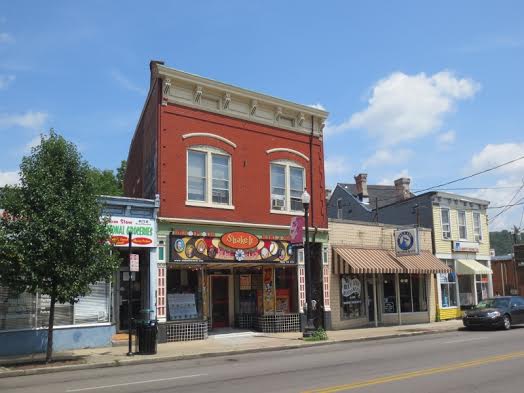
    Photo by Kevin Case from Bronx, NY, USA (Bill de Blasio) [CC-BY-2.0], via Wikimedia Commons

  • Affordable Cities are the New Sweet Spots

    I’ve lived in San Francisco long enough (I’m getting old) that I’ve seen several waves of bright young people arrive, burn out, then move away. For some they were looking for adventure, found it, and then carried on with normal life elsewhere. But for most it was simply a matter of the numbers not adding up. Working a dead end low wage job while sharing a two bedroom apartment with seven room mates is only romantic for so long. I’m fairly inquisitive so I’ve kept up with many of these folks to see how they manage after they leave. I travel a lot and pop in to visit on occasion. The big surprise is that they aren’t moving to the suburbs the way previous generations did when they were done with their youthful excursions in the city.

    Cincy 23  Cincy 3  Cincy 7

    Cincy 2  Cincy 24
    Cincy 25
    Cincy 1

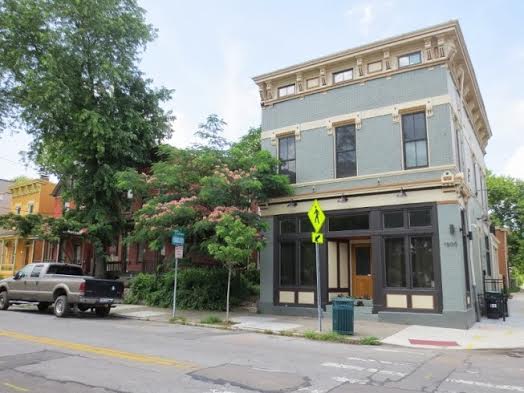
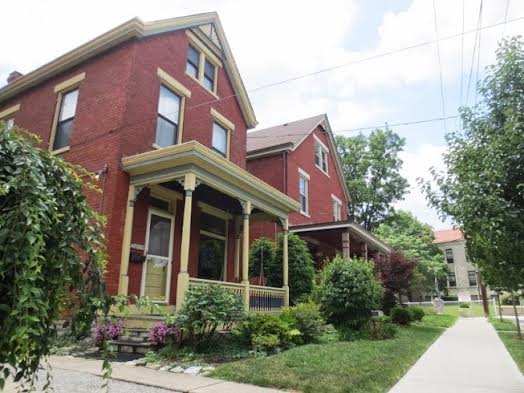
    Instead, they’re seeking out smaller less expensive cities with the same basic characteristics as the pricey places that squeezed them out. I’m very fond of one young couple in particular who spent time in Los Angeles, Baltimore, and Portland before finally settling down and buying a house in Cincinnati. Why Cincinnati? It’s a great town at a fantastic price. They bought a charming four bedroom century old home in an historic neighborhood a couple of miles from downtown for $50,000. Their mortgage is $300 a month. Okay, with tax and insurance it’s more like $500. And it wasn’t a fixer-upper in a slum. It’s a genuinely lovely place with amazing neighbors.

    Cincy 6
    Cincy 5
    Cincy 51 -1
    Cincy 8

    Who needs New Urbanism or Smart Growth when so many amazing old neighborhoods are just sitting out there in under-appreciated and radically undervalued cities all across North America? The Rust Belt has long since hit bottom and has already adjusted to every indignity that the Twentieth Century could throw at it: deindustrialization, race riots, white flight to the suburbs, population shifts to the Sun Belt… Now that the unpleasantness has run its course what’s left are magnificent towns ripe for reinvention. Personally I believe many of the boom towns of the last fifty or sixty years have peaked and are about to enter the kinds of steep decline we currently associate with Detroit – except the dried up stucco and Sheetrock ruins of Phoenix and Las Vegas won’t age as well as the handsome brick buildings of the Midwest.

    Cincy 33
    3 Cincy 34
    4

    Don’t get me wrong. Cincinnati isn’t San Francisco. It isn’t Brooklyn either, although they do have an elegant bridge by the same engineer. If you want to be a Master of the Universe in international finance, or the next super genius computer whiz, or a millionaire movie star you probably need to be in a bigger place. But most of us just want ordinary comfortable rewarding lives surrounded by good people. The big question is pretty simple. Do you want that life to involve a $500,000 mortgage on a bungalow in a coastal city, or a $50,000 place in the Midwest. Will you earn less money in Ohio? Probably. But since your overhead is one tenth the California or New York price you really don’t need the big salary or the stress that comes with it. It’s like moving to the suburbs except you get to live in a great vibrant city instead of a crappy tract house on a cul-de-sac an hour from civilization.

    Cincy 46

    John Sanphillippo lives in San Francisco and blogs about urbanism, adaptation, and resilience at granolashotgun.com. He’s a member of the Congress for New Urbanism, films videos for faircompanies.com, and is a regular contributor to Strongtowns.org. He earns his living by buying, renovating, and renting undervalued properties in places that have good long term prospects. He is a graduate of Rutgers University.

  • How Segregated Is New York City?

    The online reaction to the reports on racial segregation in New York state’s public schools reminded me, yet again, that most people think of New York as an integrated city, and are surprised or incredulous when that impression is contradicted.

    This is somewhat jarring, since virtually every attempt to actually measure racial segregation suggests that New York is one of the most segregated cities in the country. This University of Michigan analysis of 2010 Census data, for example, suggests that New York is the second-most-segregated metropolitan area in the U.S., exceeded only by Milwaukee, and that about 78% of white and black people would have to move in order to achieve perfect integration. (Chicago’s corresponding number is just over 76%, good enough for third place.)

    Why is this so surprising? One obvious reason, I think, is that most people’s conception of New York is limited to about 1/2 of Manhattan and maybe 1/6 of Brooklyn, areas that are among the largest job and tourist centers in the world. As a result, they attract people of all different ethnic backgrounds, especially during the day, even if the people who actually live in those areas tend to be monochromatic. Imagine, in other words, trying to judge racial segregation in Chicago by walking around the Loop and adjacent areas: you would probably conclude that you were in a pretty integrated city.

    But it goes beyond that, I think. Segregation in New York doesn’t look like segregation in Chicago, or a lot of smaller Rust Belt cities. For one, there just aren’t very many monolithically black neighborhoods left in New York. Here, for example, I’ve highlighted every neighborhood that’s at least 90% African American (see note on method at the bottom of this piece):


    NYB90

    Were we to do this in Chicago, half the South and West Sides would be lit up. But in New York, black neighborhoods have become significantly mixed, in particular with people of Hispanic descent. This is a phenomenon Chicagoans are used to in formerly all-white communities – places like Jefferson Park or Bridgeport, which as recently as 1980 were overwhelmingly white, now have very large Latino and Asian populations – but in New York, it’s happened in both white and black neighborhoods.

    That said, white folks in New York have still on the whole declined to move to black areas, except for some nibbling along the edges in Harlem and central Brooklyn. That means that instead of measuring segregation the way we might in Chicago – by looking for very high concentrations of a single ethnic group – it makes more sense to look for the absence of either white or black people.

    Here, then, I’ve highlighted all the places where white people make up less than 10% of the population:


    NYW10

    It’s a lot. And, correspondingly, here are all the places where black people make up less than 10% of the population:


    NYB10

    It’s also a lot. And if we put the two maps together, we see that these two categories cover the overwhelming majority of NYC:


    NY10

    The same pattern holds pretty well if we lower the threshold to no more than 5% white or black:


    NY5

    And there are even a significant number of areas that are truly hypersegregated, with fewer than 2% of residents being either white or black:


    NY2

    Because I now love GIFs, here’s a summary GIF.


    NYSeg

    What does all this tell us? For one, it confirms graphically what the Census numbers suggested, which is that the median black New Yorker lives in a neighborhood with very few white people, and vice versa.

    But it also suggests a racial landscape that looks different from that of Chicago, and lots of other American cities, in important ways. In particular, where Chicago has a relatively simple racial geography – white neighborhoods at various levels of integration with Hispanics and Asians to the north and northwest, black and Hispanic neighborhoods to the south and west, with only a few small islands like Hyde Park and Bridgeport that break the pattern – New York’s segregated neighborhoods form a more complex patchwork across the city. That means that while a North Sider in Chicago might go years without having to even pass through a black neighborhood, lots of white New Yorkers have to get through the non-white parts of Brooklyn or the Bronx to reach job and entertainment districts in Manhattan or northern Brooklyn.

    I imagine that structural-geographic fact, combined with New York’s relatively high level of black-Hispanic integration, goes a long way to explaining my anecdotal experience that white New Yorkers tend to be less ignorant and scared of their city’s non-white neighborhoods than white Chicagoans are of Chicago’s. (There’s some interesting research that suggests white people tend to be more sympathetic to brown people, and their neighborhoods, than black people and theirs.) There’s also, of course, the fact that Chicago’s segregated non-white neighborhoods tend to have much higher violent crime rates, and much more modest business districts, than New York’s, although that’s likely both an effect and cause of their relative isolation.

    All of this is another reason that I’m kind of excited about the growing entertainment and shopping district on 53rd St. in Hyde Park, since the more that the South Side has “neighborhood downtown” strips that draw people from across the city, the more likely North Siders and suburbanites are to travel through the black and Latino neighborhoods that surround them, observe that many of them are actually quite nice, become less committed to shunning them, and thus contribute less to the social and economic dynamics that have created the institution of the ghetto, and the poor job prospects, failing schools, and high crime rates that accompany it.

    In conclusion: New York is super segregated, but the numbers aren’t everything.

    Also, let me have another Talk To Me Like I’m Stupid moment: suggestions for books about the racial history of New York? What’s the equivalent of Making the Second Ghetto or Family Properties? I’ve already read Caro’s Moses book.

    Note:  This piece focuses on white-black segregation because that, for various social and historical reasons, has been by far the most significant geographic separation in American cities, certainly in the Midwest and Northeast. But by far the second most significant separation – white-Latino segregation – is also very extreme in New York. The same Census analysis that found NYC was the second-most-segregated metro area in terms of white and black people found that it was the third-most-segregated metro area in terms of white and Latino people. That’s obviously not the end of the story either, though. If you know about or are curious about some other aspect of segregation, leave a comment.

    Daniel Hertz is a masters student at the Harris School of Public Policy at the University of Chicago. This post originally appeared in City Notes on April 14, 2014.

    Photo by Mike Lee

  • The Unrest In Hong Kong And China’s Bigger Urban Crisis

    The current protests in Hong Kong for democracy reflects only part of the issues facing Chinese cities, as they grow and become ever more sophisticated. In just four decades, China has gone from 17.4 percent to 55.6 percent urban, adding nearly 600 million city residents. And this process is far from over: United Nations projections indicate that over the next 20 years, China’s urban population will increase by 250 million, even as national population growth rates slow and stall.

    Overall this transition has been spectacularly successful. As it has urbanized, China, following the lead of Hong Kong, has become a much richer country, expanding its share of global GDP from 2 percent in 1995 to 12 percent in 2012.

    China now boasts four megacities of over 10 million people, the most of any country. The population of Shanghai, a cosmopolitan world city decades before the Communist takeover of the country, has expanded almost 50% since 2000, and the ancient capital Beijing and the southern commerce and industrial hub of Guangzhou have grown nearly as rapidly. The U.N.’s growth projections suggest that the future list of megacities will include Chongqing, Tianjin and Chengdu.

    Shenzhen, one of the four current megacities, epitomizes the speed of China’s urbanization. A small fishing village along the Hong Kong border with a few factories when I first visited three decades ago, the city rose as the focus of Deng Xiaoping’s first wave of modernization policies. In 1979 it had roughly 30,000 people; now it is a thriving metropolis of 13 million whose population in the past decade grew 56%. Its rise has been so recent and quick that the Asia Society has labeled it “a city without a history.”

    Shenzhen has not only grown but thrived over the past three decades, as was evident on my most recent trip. In contrast to the often impoverished slum cities of the developing world, China’s cities have grown much as Britain’s did in the 19th century, upon the back of rapid expansion of manufacturing and trade. This sets Chinese urbanization apart from India‘s; manufacturing’s share of Indian GDP is half that of China. In the process, Chinese cities have become more tied to the global economy, exposing its people to international trends, as well as greater affluence. This is exactly what has happened earlier in Hong Kong, setting the stage for some of the recent unrest. At the same time, the leading cities of the West are, for the most part, barely growing, and much of that by dint of immigration. With plunging birthrates and generally anemic economies, the great cities of the Europe and North America are hardly likely to blaze a brash urban trail; they are more concerned with retaining what they can from their historical inertia. There is no city in the West — even Houston and Dallas-Fort Worth — that approaches the dynamism one now finds in China.

    The Coming Chinese Urban Economic Crisis

    China’s successful urban transformation now faces a challenge as the country’s export-led economy weakens. Labor costs are soaring and young adults, some four times as many of whom have attended college than those who came of age a decade ago, have little interest in factory work. At the same time, many of China’s most successful and talented people are seeking out lives abroad; two-thirds of the country’s affluent residents, according to one survey, are considering migrating overseas.

    The labor crunch is most intense in China’s coastal cities, home to most of the urban population. These face greater competition from less expensive urban areas further west, such as Chongqing and Chengdu. But even these areas are facing a labor shortage, forcing companies to fill their ranks with not necessarily voluntary student laborers. There is also growing competition as well in labor-intensive industries like textiles from cheaper cities in places like Vietnam, Indonesia and Bangladesh.

    Recent attacks by Beijing on multinationals, charging them for corruption and anti-trust violations, could make things worse. For political reasons, the government has decided to persecute the very companies that account for half of Chinese exports, charging corruption and anti-trust violation. China, where ironically the public is more favorable than most Westerners to large corporations, now faces an investment downturn as foreign companies look for safer havens such as in Mexico or to come back to the U.S.

    The logical solution to this challenge, particularly for coastal Chinese cities, is to move up the value chain, much as Hong Kong and Singapore have already done. This means a greater reliance on finance, business services and technology. Shenzhen, for example, looks to Silicon Valley as a role model. But their attempt is taking place in an urban environment very different than that nurtured in California suburban garages. Instead we see typically immense infrastructure projects like the 15 square kilometer Qianhai development near the city’s main port. Qianhai hopes to lure service and tech employment from pricier, and for now, more unstable Hong Kong.

    But in many cases, high-value industries depend on open access to information, something Beijing clearly sees as a threat to the political order; China’s great Internet Firewall is getting, if anything, higher and more difficult to breach, to the detriment of local knowledge workers. Government authorities realize that Hong Kongers’ access to western media, movies and culture makes them less pliable than those, even in neighboring Shenzhen, where access to major foreign publications, Google and many websites is highly restricted.

    Health And Demographics

    China is not only urbanizing, but doing it at extreme levels of density; barely four to six percent of all new floor space in the country goes to single-family houses. Even on the suburban periphery, there are few low-rise apartment buildings and even fewer houses; much of the construction, particularly for rural migrants, is also substandard, with buildings erected so close that sometimes residents of one can shake the hands of those next to it.

    This has created a series of health problems. Dense urbanization, notes a recent Chinese study, has led to more obesity, particularly among the young, who get less exercise, and spend more time desk-bound. Stroke and heart disease have become leading causes of death.

    Perhaps the best known result from intensified urbanization can be seen outside any window: pervasive air pollution. Beijing and Shanghai rank among the most polluted major cities in the world, just behind Delhi. This problem has become so severe that it has led, even in authoritarian China, to grass-roots protests, many of them targeted at new industrial plants and other facilities near cities such as Shanghai, Dalian, and Hangzhou.

    More serious still has been the impact on birth rates. Even though the government has been relaxing its long-held “one child” policy, the density of Chinese cities continues to help suppress birthrates. This relationship between density and low fertility can also be seen in similarly crowded Singapore, Taiwan and Hong Kong, where there is no official limit on having more than one child. In Hong Kong some 45% of middle-class couples have abandoned the idea of having children, not surprising since the cost of raising a child is now estimated at over $700,000, more than twice than in the United States.

    Given high prices relative to incomes, and dense conditions, Chinese cities appear to follow the same pattern, which over time is almost certain to slow economic growth as the population of elderly grows and the workforce shrinks. Already, notes National University of Singapore demographer Gavin Jones, the fertility rate of women in Shanghai has fallen to 0.7, among the lowest ever reported, well below the “one child” mandate and barely one-third the number required simply to replace the current population. Overall, the Chinese urban fertility rate is a weak 1.08.

    The Future

    Rather than look at the current unrest in Hong Kong as a singular example, we should understand that many problems faced in the former British colony are increasingly felt as well in mainland China. As cities reach middle class status and land prices soar, they need to move up the value scale, but this is very difficult to do under a fundamentally authoritarian system.

    While authoritarian structures can work in an industrial city, they may be less effective in a more information-based economy, in which companies need to adjust to rapidly changing attitudes and trends. The problem here is that, in an authoritarian state, controls over information are often deemed mandatory; in a sense, in an information-dependent economy, this is like trying to run a car with watered down gasoline. At the same time, the health effects of dense urbanism, and the massive pollution of the surrounding countryside, augur poorly for many of the largest Chinese cities, which will be forced to compete not only with more open economies, but with lower-cost cities across the developing world.

    Ultimately, China, whose urban growth has been a great success story, now must consider changing development patterns, perhaps looking at lower density and more dispersed development. One promising sign is that China’s smaller cities, particularly in the West, are now growing faster — with encouragement from Beijing authorities — than megacities. Recently released 2014 population estimates indicate reductions in the annual growth rates of both Shanghai and Beijing.

    Ultimately, a shift towards dispersion — both within regions and between them — could have a many positive effects. It would allow people more living space, and if employment also was also spread out, a quicker and less rigorous commute, with related benefits gained in time and energy conservation. It would greatly help families and children by reducing the need for parents to migrate for work, separating as many as one in five Chinese families.

    Clearly, new models are clearly called for, ones that look not only at bulking up cities, but humanizing them. This may be imperative if Beijing would like to avoid the prospect of a future characterized by an aging, alienated and increasingly unhealthy population.

    This piece first appeared at Forbes.

    Joel Kotkin is executive editor of NewGeography.com and Roger Hobbs Distinguished Fellow in Urban Studies at Chapman University, and a member of the editorial board of the Orange County Register. His newest book, The New Class Conflict is now available at Amazon and Telos Press. He is author of The City: A Global History and The Next Hundred Million: America in 2050. His most recent study, The Rise of Postfamilialism, has been widely discussed and distributed internationally. He lives in Los Angeles, CA.
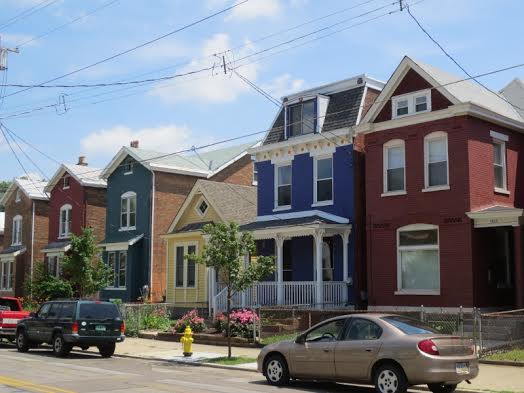
    Photo by Pasu Au Yeung.