Tag: middle class

  • Is Industrial Strife a Sign of Housing Stress?

    Industrial disputes – including a spate of on and off again strikes at national carrier Qantas – are becoming once again a frequent feature of the Australian media. Unions are pushing for wage rises in the face of the falling buying power of the fixed wage (as costs of living rise). Those wage push pressures are being resisted by businesses trying to stay afloat in a very ordinary domestic economy and amidst rising global competition.  

    But instead of a conflict between labor and business, perhaps we may consider   lower living costs as a solution which benefits both? Fundamentally, this boils down to addressing our biggest cost burden: housing. 

    The rapid escalation of housing costs have occurred under the aegis of Labor dominated state governments. Whether in Queensland, New South Wales or Victoria – Australia’s three largest states – their imposition of artificial growth boundaries that limited land supply, the introduction of upfront taxes on new development, and ever more complex planning and development regulation have driven housing prices to unsustainable levels.

    This is ironic since the worst impacts of those policies have been most felt by the very working class constituency which Labor traditionally sought to represent. Having presided over and championed policy mechanisms which have driven up housing costs for workers, these same governments then resist attempts to recover that standard of living through wage growth.

    Now before you think I’ve gone all Marxian militant on you all (trust me, I haven’t), here’s an example of what I’m driving at.

    Much has been said about housing affordability and what it will mean to lock an entire generation out of the housing market.   Recently this story documents yet another report attesting to falling home ownership and the rise of a renting class.   Particularly hard hit are the people who are trying to buy a first home in which to raise a family. They could typically be around their mid to late 20s, biologically in their prime for having and raising children. At this stage of life, you are probably below the average income for your career or profession so the reality of the affordability problem is most acute.

    In Queensland, this might be a teacher in their mid 20s, with two or three years of training, married to a constable who together earn after tax income around $87,500 per annum. (This combined income would be much less of course if, for example, one of our young couple was a child care or retail worker).

    Now, take a modest new family home in an outer suburb like North Lakes or Springfield. Let’s assume they’ve saved a small deposit, and with a loan of $400,000, they buy something for around $450,000. That’s hardly McMansion territory. But that loan, over 30 years at 7.8%, will cost them close to $35,000 per annum in repayments, or 40% of their combined after tax incomes.

    This, of course, is before they even think about children, and the prospect (despite generous maternity and paternity pay and leave provisions) of enduring a significant household income reduction while one of them isn’t working. Even on returning to work, there would then be child care fees, which quickly erode their pre-child household budget.

    Buying a home and starting a family have become a huge financial consideration, instead of a fairly normal and unremarkable pattern of generational and social growth. And it is now absolutely dependent on a dual income family, with both of them preferably good incomes.

    This is a profound change over the last decade. As a result, fewer people are buying homes, people are postponing children (until they can afford them) and when they do, they’re having fewer children. A countless stream of statistical and demographic reports are now underlining this change on an all too frequent basis. Although some greens may celebrate it, this is very bad news long-term for the economy, for society and the community as a whole. 

    So is it any wonder we’re seeing wage push pressures?

    Consider the cost of the $450,000 modest home they’ve bought. Within that price is roughly a $50,000 up-front ‘developer levy’ (better called a new home buyer tax). There’s probably a similar cost of in inflated land costs, brought on by artificial land supply constraints in a country of abundant land. There would also be a raft of minor additional building costs introduced under the guise of ‘green’ or ‘sustainable’ building guidelines, in order   ‘to prevent the sea from rising’. Plus there’s a hard-to-quantify compliance cost because getting the approval to develop the land for new homes now takes 10 years instead of a few months, engaging teams of town planners, lawyers, and other hangers on.

    The total cost of all of these additions to the price paid by our young couple could easily be well over $100,000. If you don’t believe me, check out this old report which I commissioned some years ago.

    A quick bit of math’s now follows. That extra $100,000 (conservatively) has been funded via our young couple’s mortgage. That’s an extra hundred large they’ve borrowed, to cover the costs of additional taxes, fees and compliance introduced under the watch of a State Labor Government. That $100,000 is worth an extra $8,640 per annum out of their pockets. If their repayments fell by that amount, their mortgage costs would be around $26,000 per annum in total, or just under 30% of their combined household income – not 40% of it.

    There you have it. At 30% of household income, not only the home becomes more affordable, but so do children. But at 40%, it’s proving to be touch and go.

    There are two ways, simply put, to improve the cost of living equation faced by younger workers on largely fixed incomes. You can increase their wages (which the unions want and which businesses and governments resist), or you can reduce their costs of living.

    This has somehow eluded people working in state treasuries and planning departments. I haven’t even commented on the insanity of the carbon tax, which is only going to exacerbate basic costs for energy further and likely weaken Australian exports.

    The simple economics of what we’re talking about was summed up beautifully over 160 years ago, in Charles Dickens’ novel David Copperfield, when Mr Micawber lectured the young Copperfield on the perils of exceeding budgets:

    "Annual income twenty pounds, annual expenditure nineteen nineteen six, result happiness. Annual income twenty pounds, annual expenditure twenty pounds ought and six, result misery."

    Mr Micawber, you’ll note, wasn’t implying the need for more income, he was highlighting the important role played by expenses.

    In the Australia (and Queensland) of 2011, the same still applies. Rather than push for more income, unions could do better to lobby their Labor Parties to reduce their living costs. Reducing the housing infrastructure levies, relaxing the rigidity and ideology of urban growth boundaries, reducing compliance costs, cutting green taxes would drive down the costs of housing.   

    In this era of globalization, fighting pitched industrial battles with employers for a few extra dollars a week in income seems futile compared to pressuring   governments over the induced inflation associated with the providing a family home you can afford and raise a new generation of Australians.

    Ross Elliott has more than 20 years experience in property and public policy. His past roles have included stints in urban economics, national and state roles with the Property Council, and in destination marketing. He has written extensively on a range of public policy issues centering around urban issues, and continues to maintain his recreational interest in public policy through ongoing contributions such as this or via his monthly blog The Pulse.
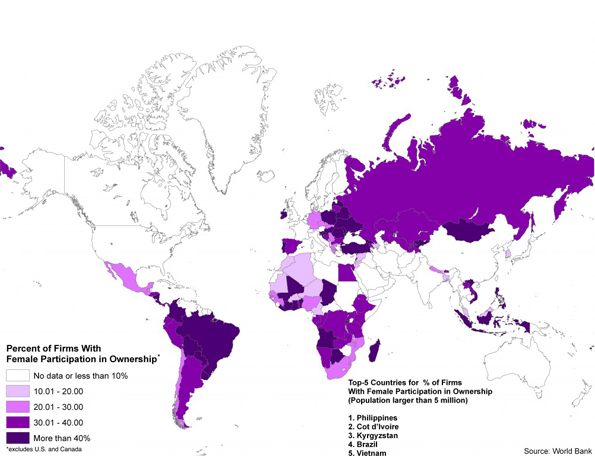
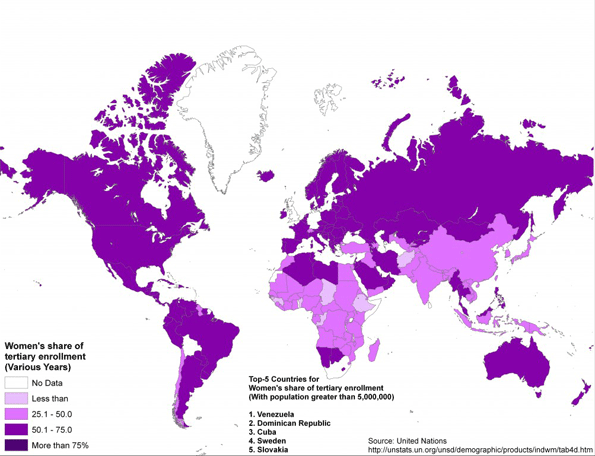
    Photo courtesy of BigStockPhoto.com.

  • Women Ascendent: Where Females Are Rising The Fastest

    You can find the future of the world’s women not in Scandinavia or the U.S., but among the entrepreneurs who line the streets of Mumbai, Manila and Sao Paulo. Selling everything from mangoes to home-made blouses, these women, usually considered the very bottom of their home country’s employment barrel, represent the cutting-edge of progress for women in the 21st century.

    This marks a departure from past decades, when the advancement of women was visible almost solely in the wealthiest of countries. Surveys of female achievements have consistently singled out just a sliver of the globe, but increasingly, women are making the greatest strides elsewhere — in the rapidly growing developing world.

    Women in these countries are newly empowered by remarkable gains in political representation, legal rights and, especially, education. But more important, they are rising in the 21st century’s key economic strata: as business owners.

    For our analysis of the countries where women are rising the fastest, we looked at three factors: education, politics and entrepreneurship. We studied the United Nations’ demographics on post-secondary education (current and historical) and on political participation. To assess the business environment, we examined statistics from Global Entrepreneurship Monitor on nascent entrepreneurship and the World Bank and World Economic Forum on gaps between male and female business ownership. We searched the global press, pored through research publications by financial institutions and NGOs, and visited some locations. Finally, we crunched the numbers, information and observations and came up with our own impressions.

    Our top picks for places where women were rising the fastest — as opposed to merely surfing an already advantageous position — were found largely in the developing world — particularly in Brazil, India, Vietnam and the Philippines.

    A vital benchmark of this progress is the large role that women play in business ownership in these places. In many developing countries the rate of female entrepreneurship surpasses that in the G-7 nations. Many become entrepreneurs by necessity: Often locked out of the of the best opportunities in the job market by cultural and sometimes legal barriers, women are starting businesses at rapid rates in Latin America, India, East Asia and even Africa and Central Europe.

    In contrast, female entrepreneurship rates aren’t rising in many of the most advanced countries. Despite talk of the feminization of advanced societies, the percentages of women-owned businesses are inching downward in the U.S., and they are stagnant in the E.U. To some extent, this slowdown reflects greatly expanded opportunities for a new generation of women, considerably more educated than their mothers, in both the mid-level job market and the highest corporate tiers. These changes have been accelerated by shifts in the nature of employment that favor “brains” and collaboration over traditional male advantages in “brawn” and single-minded ambition.

    The Rise of the Female Entrepreneur

    Latin America is a premiere example of the rise of female business ownership. Both Brazil and Costa Rica rank in the World Bank’s top 10 countries for female ownership participation. The region also stands out for its small gender gap in new businesses: Women are now starting businesses as often men, and sometimes succeeding. Among the top countries with the greatest equality between women and men in establishing new ventures, Global Entrepreneurship Monitor notes that many Latin American countries, especially Brazil and Peru, now have a gap that is smaller than in the U.S. or anywhere in Europe.

    The same trend is emerging in Asia. In the more tropical countries, where women are impeded by unpaid family work combined with a notoriously grim labor picture, many own marginal businesses. South Asia’s bright spot for female entrepreneurs is India, with its highly developed support structure of national-level and local organizations for women’s SMEs and early participation in micro-finance. And female entrepreneurs are thriving in Vietnam, the Philippines and Thailand as well. For example, 24% of Vietnam’s 100,000-plus incorporated enterprises are owned by women; 27% of its 3 million household businesses are also female-owned. The rate of female private business owners in China, at 11 out of 100, is also higher than the world average of 7%. Surprisingly, famously chauvinist Japan is the only country in the world where the percentage of women who own their own businesses, 13%, edges out the percentage of males who do.

    Eurasia and Central Eastern Europe have also experienced a surge in female entrepreneurial activity. As in Latin America, self-employment has often come about as a result of national tragedy and political dislocation — in this case, the economic disruption and male migration abroad that followed the fall of the Soviet Union.

    Data on women in African economies are sparse, with the positive news focused on Lesotho, ranked No. 1 and No. 2 by the World Economic forum for economic opportunity in the last two years, and, unsurprisingly, South Africa, the continent’s most developed nation, considered Africa’s best economic climate for women’s by The Economist Intelligence Unit. Ghana has also drawn attention, with a World Food Program-initiated salt start-up. Micro-financiers, development NGOs and the United Nations have assisted small-scale women entrepreneurs in African nations like Kenya in establishing micro industries such as processing soap, fruit and maize.

    Educated Women on the Front Lines

    Across the globe female gains in education have skyrocketed. In tertiary education — which includes post-high school vocational schools as well as colleges and universities — females now outnumber males in one-third of developing countries, including Brazil, Bangladesh, Honduras, Lesotho, Malaysia, Mongolia and South Africa. Worldwide, between 1970 and 2008, the number of female tertiary students expanded by 70 million, compared with 60 million for males.

    The Legal Right to Wages and Assets

    Along with economic and education gains, women in developing countries are making substantial political gains. Part of a broader movement throughout the developing world toward political empowerment, women are gaining increased access to capital and property ownership, and greater national attentiveness to issues specific to women, such as domestic violence and female health.

    One indication: The percentage of parliamentary seats held by women globally has risen considerably during the first decade of this century, and is now about 18%. As in entrepreneurship and education, the most dramatic gains now are not in the high-income countries but in the developing world, where sizable inroads to the very top tiers of government have also been made.

    Latin America has become the most visible emblem of rising female political power sweeping across a region. When Brazil elected Dilma Rousseff as president in 2010, it joined its neighbors Argentina, Costa Rica and, until recently, Chile in having a female head of state. Latin America, too, is a world leader for female political representation, with 30%-plus parliamentary representation in Costa Rica, Argentina, Ecuador and Bolivia.

    Yet some of the most astonishing changes in representation have taken place in Africa, where Rwanda now has the world’s highest percentage of women in parliament and cabinet seats. Each of Rwanda’s parliamentary houses comprises 50% or more women. South Africa, Angola, Mozambique, Uganda and Tanzania also boast above-average rates.

    The destiny of the global economy has shifted toward countries that once trailed behind but are now rapidly rising. In the same way, the trajectory of women’s progress — and the future of the ascendancy of women — has shifted from the developed to the developing world.

    This piece originally appeared at Forbes.com.

    Joel Kotkin is executive editor of NewGeography.com and is a distinguished presidential fellow in urban futures at Chapman University, and an adjunct fellow of the Legatum Institute in London. He is author of The City: A Global History. His newest book is The Next Hundred Million: America in 2050, released in February, 2010.

    Zina Klapper is a Los Angeles-based journalist, and Deputy Editor of newgeography.com.

    Photo by flickr user Dawn Danby

  • Obama’s Off-target Class War

    For many conservatives, the notion of class warfare that President Barack Obama now evokes is both un-American and noxious — a crass attempt to cash in on envy among the masses. Yet the problem is not in class warfare itself — but in being clear what class you are targeting.

    In this sense, Obama’s populism is little more than a faux version. He is not really going after the privileges of the super-rich — that would involve actions like removing the advantages of capital gains over earned income or limiting dodges to nonprofit foundations or family trusts. Rather than a war against plutocrats, Obama’s thrust is against the upper end of the middle class, whose income is most vulnerable to higher taxes.

    The president is within his rights to use these class warfare tactics; it’s just too bad he is aiming at the wrong target. Exploiting class divisions, in fact, has long been a part of American politics — from the Jacksonian era through Abraham Lincoln, the New Deal and even Bill Clinton. Obama’s sudden tilt toward class warfare may thrill left-wing commentators such as The American Prospect’s Robert Kuttner. But it’s no real threat to the real ruling classes.

    Though the president’s rhetoric focuses on “millionaires and billionaires,” his proposals do less harm to the ultrarich and their trustifarian offspring than to the large professional and entrepreneurial classes, whose members are earning more than $200,000 a year. More affluent than most Americans, these members of the upper middle class hardly constitute oligarchs. Ninety percent of the targeted class earns less than $1 million annually. Only a tiny sliver, or .01 percent, are billionaires.

    Senate Majority Leader Harry Reid’s proposal to raise the target income level closer to $1 million is a concession to political common sense — but still avoids the big distinction between investor and income earner. Meanwhile, the administration’s rhetorical gambit of using Warren Buffett as the class warfare poster boy reveals its fundamental disingenuousness.

    Many rich do avoid high taxes through dynastic trusts concocted largely to avoid the Internal Revenue Service. Others, like Buffett, put vast amounts into foundations — in his case, the Bill and Melinda Gates Foundation, where it sits tax free. In addition, the patrician class, because its members tend to be more active investors, also pays less, largely because its capital gains earnings are taxed at a low 15 percent rate, less than half that paid by high-income professionals.

    Obama’s biggest problem with class is that his policies have made a bad situation worse. During both the Clinton administration and most of the George W. Bush years, the rich prospered. But so, too, did middle- and working-class homeowners, professionals and construction workers.

    Today, however, only the high-end housing market, roughly 1.5 percent of the market, is flourishing. The vast majority have seen their property values shrink — down 30 percent since 2006. Markets, like Manhattan , which is increasingly dominated by foreign investors, have surged — the average price of a New York condo or co-op has topped $1.4 million, a nifty 3 percent increase over last year.

    But to a large degree, this reflects those who are the biggest beneficiaries of the largesses of Treasury Secretary Timothy Geithner and Fed Chairman Ben Bernanke: hedge fund managers, investment bankers, the corporate aristocracy and officials of “too big to fail” banks. For these financiers, the time since the economic collapse has been very fat years — at least until the European debt crisis.

    The situation, however, has been far worse for small businesses — with serious consequences for job creation. The number of start-ups with employees — the traditional source of new jobs — has dropped 23 percent since 2008. Most entrepreneurs, according to the National Federation of Independent Business, expect the job market to weaken and unemployment to stay high for the foreseeable future.

    “Corporate profits may be at a record high,” said Bill Dunkelberg, chief economist of the National Federation of Independent Business, “but businesses on Main Street are still scraping by.”

    Obama’s phony class war also carries considerable political risk. As Mark Penn, the former Clinton adviser, and others have pointed out, the newest Obama tax strategy most penalizes the professionals who flocked to his cause in 2008 . These voters — concentrated largely in high-tax, high-cost blue states — are also particularly vulnerable to any reduction of write-offs for mortgage interest and state taxes.

    Obama’s left turn also fails to address the America’s biggest problem: how to ignite broad economic growth.

    It should now be clear to all but the most deluded that the administration’s bankrolling of massive solar projects and embrace of hopeless causes like high-speed rail have not reaped much of a bonanza. Indeed, in many places where the administration’s “green” agenda has been adopted most fervently, like California, unemployment rates now surpass even Michigan’s.

    Obama’s misguided economic notions can be seen even when he looks to solve our critical jobs shortage. In addition to the “green jobs” fiasco, the president is looking to Silicon Valley and the information economy — which have lost jobs since 2006. Facebook, Apple, Google and the rest may be swell representatives of American ingenuity — but employ relatively few people in America, and mostly the best educated and thus least vulnerable.

    In contrast, the administration displays relatively little support — and passion — for the many middle-income Americans who depend, directly or indirectly, on industries like oil and gas, warehousing, construction and, except for the bailed-out auto firms, manufacturing. In these sectors, only the fossil-fuel industry has done well — adding more than 500,000 generally well-paying jobs since 2006, despite the Environmental Protection Agency’s best efforts to slow its progress.

    Workers in the energy field – in which salaries average more than $100,000 annually — reasonably fear their jobs could be threatened if Obama is reelected. This could damage his appeal in states like Ohio and Pennsylvania, where many working-class voters are now counting on new oil and gas finds to spur the growth of high-wage employment.

    So how best to confront America’s growing class division? With serious economic growth beyond Wall Street. A flatter tax system with fewer exemptions, limiting trusts and foundations and ending the preference for capital gains would force the wealthy to re-engage the economy. They would have fewer ways to hide their money. Sweep aside both subsidies for oil and gas companies and the renewable industry, regulate sensibly and market forces can drive exploration and development.

    Will Republicans support this approach? Many seem almost incapable of acknowledging the threat to democracy and our social order now posed by the growing concentrations of wealth that eerily recall the 1920s. Others prostitute themselves to fossil-fuel industries — the way the Democrats kowtow to rent-seeking green capitalists. Meanwhile, with Obama’s once strong support on Wall Street weakening, they seem all too eager to dance to big money’s tune to fill their own coffers.

    It’s time to finally acknowledge that the whole “trickle down” from Wall Street approach has been discredited — and with it the current regime of class privilege. You don’t have to be a member of Occupy Wall Street to doubt that what’s good for the top investment bankers is necessarily good for the vast majority of the country.

    Neither mindless budget-cutting nor politically motivated redistribution can solve the growing economic divide or create new wealth. Instead, we need a tax and policy regime that stops favoring financial insiders and instead focuses incentives on the grass-roots hard work and ingenuity that have long been America’s greatest economic asset.

    This piece originally appeared at Politico.com.

    Joel Kotkin is executive editor of NewGeography.com and is a distinguished presidential fellow in urban futures at Chapman University, and an adjunct fellow of the Legatum Institute in London. He is author of The City: A Global History. His newest book is The Next Hundred Million: America in 2050, released in February, 2010.

    Photo of protected Wall Street bull by hunter.gatherer.

  • Silicon Valley Can No Longer Save California — Or The U.S.

    Even before Steve Jobs crashed the scene in late 1970s, California’s technology industry had already outpaced the entire world, creating the greatest collection of information companies anywhere. It was in this fertile suburban soil that Apple — and so many other innovative companies — took root.

    Now this soil is showing signs of exhaustion, with Jobs’ death symbolizing the end of the state’s high-tech heroic age.

    “Steve’s passing really makes you think how much the Valley has changed,” says Leslie Parks, former head of economic development for the city of San Jose, Silicon Valley’s largest city. “The Apple II was produced here and depended on what was unique here. In those days, we were the technology food chain from conception to product. Now we only dominate the top of the chain.”

    Silicon Valley’s job creation numbers are dismal. In 1999 the San Jose-Sunnyvale-Santa Clara area had over 1 million jobs; by 2010 that number shrank by nearly 150,000. Although since 2007 and early 2010 the number of information jobs has increased substantially — up roughly 5000 to a total of 46,000 — the industrial sector, which still employs almost four times as many people as IT, lost around 12,000. Overall the region’s unemployment stands at 10%, well above the national average of 9.1%.

    This is partly because Apple, Intel and Hewlett-Packard have shifted their production — which offered jobs to many lower- and medium-skilled Californians — to other states or overseas. With its focus just at the highest end, the Valley no longer represents the economically diverse region of the 1970s and 1980s. Indeed, it increasingly resembles Wall Street — with a few highly skilled employees and well-placed investors making out swimmingly.

    “Silicon Valley has become hyper-efficient; the region doesn’t create jobs anymore,” says Tamara Carleton, a locally based fellow at the Foundation for Enterprise Development. “In terms of revenue per employee, Facebook’s ratio is unprecedented. Even Apple hasn’t grown significantly this last decade, despite the successful launch of many products and services. While commendable, greater efficiency doesn’t put more jobs in the California economy.”

    This “hyper-efficiency” can be seen in the real state of the valley’s industrial/flex space market. The overall industrial vacancy rate remains 14%, two points higher than in 2009. Areas close to Stanford, such as Palo Alto and Mountain View, have done well, but others on the periphery, such as Gilroy, Milpitas and Fremont, and even parts of San Jose have vacancies reaching over 20%.

    California’s other high-tech centers, with the possible exception of San Diego, are doing worse. The state has been losing high-tech employment over the past decade, while such employment has surged not only in China and Korea, but also in competitor states such as Texas, Virginia, Washington and Utah. According to the annual Cyberstates study, California lost more high-tech jobs — about 18,000 — last year than any other state.

    California’s political leaders, particularly Democrats, still genuflect toward the Valley for economic salvation and job growth. But social media has not proved a jobs-creating dynamo, and it’s clear that the highly subsidized, venture backed “green economy” has floundered miserably and faces a less than rosy future.

    You can feel pride, as an American and Californian, in the legacy of the likes of Steve Jobs but also believe our future cannot be salvaged by high-tech alone. Many of the country’s greatest assets, for example, are physical; in California these include the best climate for any advanced region in the world, fertile soil, a prime location on the Pacific Rim and potentially huge fossil fuel energy reserves, which give it enormous competitive advantages.

    The green theocracy now in control of Sacramento, however, has little interest in these aspects of California. It may prove difficult, if not impossible, to modernize the ports of Los Angeles and Long Beach, prolific sources of good-paying white and blue collar jobs. These ports will soon face increased competition for Asian trade from Gulf and south Atlantic locales eagerly waiting for the 2014 widening of the Panama Canal.

    Administration officials such as Energy Secretary Steven Chu also slate the state’s agriculture for demise by climate change. But just in case he’s wrong, we should note that California’s agriculture — despite green attempts to cut off its water supply — accounts for 40% of state exports. It generates $12.7 billion annually in overseas sales and employs over 400,000 people directly and many thousands more in marketing, processing and warehousing.

    Similarly, California boasts some of the nation’s richest deposits of oil and gas, not only on its sensitive and politically nettlesome coast but along the coastal plains and in the Central Valley. The most recent estimates of the state’s reserves, according to the Energy Information Agency, include nearly 3 billion cubic feet of natural gas and more than three billion barrels of oil, roughly the same as Alaska and more than booming North Dakotas.

    Geologists and wildcatters, usually ahead of the game, believe we have touched only a small part of the state’s energy potential. Some discuss new oil shale discoveries, particularly in the Monterey region, that could dwarf even the massive Bakken find in North Dakota. “If you were in Texas,” quipped economist Bill Watkins to an audience in the hard-hit central California town of Santa Maria, a predominately Latino town north of Santa Barbara, “you’d be rich.”

    A judicious and carefully planned expansion of these resources, particularly in the less populated interior areas, could provide tens of thousands of high-paying jobs. It would also funnel desperately needed revenue to the state. At the same time, such development could forestall much higher energy costs, one of the things driving manufacturers in the state to move elsewhere.

    California is unlikely to take advantage of its physical bounty; its leadership seems to lack enthusiasm for any industrial expansion outside of the “green” economy. Industrial parks across the state are emptying, more houses go into foreclosure and local governments wither on the vine. Unless California begins to take its own economy seriously, it will continue to devolve from the aspirational place that produced not only Steve Jobs but scores of entrepreneurs in everything from movies and oil to agriculture and aerospace.

    The Valley itself will likely do fine. Steve Jobs helped cement the position of Santa Clara Valley as the epicenter of the high-tech world. But this accomplishment does relatively little for the rest of California. What we will miss will not only be Steve Jobs’ creative contributions, but how clearly his opportunistic, entrepreneurial spirit has ebbed away from the Golden State.

    This piece originally appeared at Forbes.com.

    Joel Kotkin is executive editor of NewGeography.com and is a distinguished presidential fellow in urban futures at Chapman University, and an adjunct fellow of the Legatum Institute in London. He is author of The City: A Global History. His newest book is The Next Hundred Million: America in 2050, released in February, 2010.

    Shanghai photo by flickr user acaben

  • States with Largest Presence of STEM-Related Jobs

    Few would argue that STEM-educated workers are vital to advancing innovative ideas and new products. But here’s another fact borne out by labor market data: The regions with the strongest presence of STEM-related employment are heavily dependent on government funding.

    Washington, D.C. has more than two times the concentration of STEM (science, technology, engineering, and math) jobs than the national average, according to EMSI’s latest employment estimates. Fairfax and Arlington counties — whose economies are interconnected to D.C.’s — have helped Virginia expand its presence of STEM-related workers, on a per-capita basis, more than any other state in the last decade.

    Meanwhile, the two counties in the U.S. with the most STEM workers per capita — Los Alamos, N.M., and Butte, Idaho — are home to major Department of Energy national laboratories.

    Defining STEM Employment

    Before we go further, though, we should discuss how we define STEM-related jobs. Just like green jobs or creative workers, there are many definitions of STEM occupations — often different from state to state. Here we used the definition developed by Praxis Strategy Group, an EMSI client and North Dakota growth strategy firm that has co-written the U.S. Chamber of Commerce’s “Enterprising States” report the last two years.

    The definition consists of eight high-level categories (see here for all 93 five-digit occupations):

    • Computer specialists (SOC 15-1)
    • Mathematical science occupations (15-2);
    • Engineers (17-2);
    • Drafters, engineering, and mapping technicians (17-3);
    • Life scientists (19-1);
    • Physical scientists (19-2);
    • Social scientists and related occupations (19-3);
    • Life, physical, and social science technicians (19-4).

    Given this  definition, here are some key facts about STEM-related employment in the US:

    • There are just over eight million estimated jobs in these fields as of 2011. Keep in mind that at this point all 2011 EMSI job figures are estimates.
    • Overall this group has grown by 3.7% since 2001; there were significant dips in the early 2000s and at the onset of the recession. 
    • Men hold nearly three of every four STEM-related jobs (73%). 
    • Nearly 20% of the STEM workforce is 55 years old and above (and 26.6% are between 45-54). This  points a fairly substantial number of potential retirements hitting these fields in the next five to 10 years.

    Praxis includes technicians jobs that typically require two-year degrees because they are often overlooked in the STEM conversation.

    States Gaining/Losing STEM Concentration

    Generally, states that have had the biggest percentage increases in employment in the last decade have also seen modest to healthy gains in their STEM workforces. North Dakota’s STEM employment has soared 31% (compared to 15% across all occupations). Alaska and Utah’s STEM jobs have each grown 18%, while both states have seen double-digit percentage increases in all jobs.

    Results for every state are detailed in the table below. We also included  the change in concentration (measured by location quotient, or LQ) for STEM-related workers from ’01 to ’11 across every state. Using our GIS tool, we were able to compare all 50 states (plus D.C.) by their LQ to see which have gained a comparative advantage.

    Outside D.C., Virginia, Washington State — where more than 70% of STEM workers are located in the Seattle area — Maryland, and North Dakota have seen the biggest increases in STEM concentration in the last decade. Other states who have performed well: Alaska, Rhode Island, Arkansas, and West Virginia.

    California, on the other hand, still has more than 13% of the nation’s overall STEM-related workforce (just over 1 million estimated jobs). But it shed 19,000 STEM jobs in the last decade (a 1.75% decline) and saw its above-average concentration slightly decline.

    Note: A location quotient of 1.00, like Arizona has in 2011, means that state has the same relative concentration of STEM workers as the national average.

    State 2001-2011 STEM Job Change % Change (STEM) 2001-2011 Overall Change % Change (Overall) 2001 STEM LQ 2011 STEM LQ
    District of Columbia (DC) 13,758 20% 78,562 11% 2.00 2.20
    Washington (WA) 36,362 16% 314,900 9% 1.42 1.53
    Virginia (VA) 47,728 17% 348,387 8% 1.35 1.49
    Maryland (MD) 27,826 14% 241,837 8% 1.38 1.48
    Massachusetts (MA) -9,569 -3% 71,653 2% 1.53 1.48
    Colorado (CO) -2,654 -1% 181,752 6% 1.45 1.36
    New Jersey (NJ) -8,979 -3% 174,439 4% 1.23 1.16
    California (CA) -18,996 -2% 471,154 2% 1.18 1.15
    Delaware (DE) -4,459 -14% 25,280 5% 1.38 1.14
    Minnesota (MN) 1,730 1% 84,854 3% 1.12 1.12
    New Hampshire (NH) -955 -2% 41,818 5% 1.18 1.11
    Michigan (MI) -52,084 -17% -369,217 -7% 1.22 1.10
    New Mexico (NM) 6,423 14% 90,068 9% 1.05 1.10
    Alaska (AK) 3,539 18% 51,864 13% 1.02 1.09
    Connecticut (CT) -2,849 -3% 71,855 3% 1.13 1.07
    Texas (TX) 86,347 14% 2,179,616 18% 1.06 1.04
    Utah (UT) 11,969 18% 248,910 18% 1.03 1.04
    Oregon (OR) 4,456 4% 125,822 6% 1.03 1.03
    Idaho (ID) -697 -2% 93,579 12% 1.14 1.02
    Arizona (AZ) 8,975 7% 350,216 13% 1.04 1.00
    Vermont (VT) 623 3% 21,017 5% 0.99 0.99
    Pennsylvania (PA) 11,961 4% 212,861 3% 0.94 0.96
    New York (NY) 974 0% 524,666 5% 0.97 0.94
    Ohio (OH) 515 0% -226,628 -3% 0.88 0.93
    Rhode Island (RI) 1,760 7% 7,036 1% 0.87 0.93
    Illinois (IL) -17,404 -5% -45,841 -1% 0.94 0.91
    Kansas (KS) -2,818 -4% 19,642 1% 0.93 0.90
    North Carolina (NC) 18,377 9% 319,803 7% 0.87 0.90
    Wisconsin (WI) 8,050 6% 65,922 2% 0.82 0.87
    Georgia (GA) 6,447 3% 332,612 7% 0.87 0.85
    Missouri (MO) 1,385 1% 19,824 1% 0.83 0.85
    Florida (FL) 26,341 8% 760,396 9% 0.80 0.81
    Montana (MT) 2,834 14% 62,699 11% 0.78 0.81
    Alabama (AL) 8,153 10% 117,917 5% 0.75 0.80
    Nebraska (NE) 3,326 8% 49,749 4% 0.74 0.78
    Indiana (IN) 1,880 2% -68,167 -2% 0.74 0.77
    Maine (ME) 178 1% 13,400 2% 0.76 0.77
    Wyoming (WY) 2,839 26% 60,177 18% 0.72 0.77
    Iowa (IA) 4,852 8% 46,353 2% 0.69 0.74
    Oklahoma (OK) 6,730 10% 138,146 7% 0.69 0.72
    South Carolina (SC) 8,944 12% 214,997 10% 0.69 0.72
    Hawaii (HI) 4,022 17% 73,132 10% 0.66 0.71
    Kentucky (KY) 6,252 9% 58,998 3% 0.63 0.68
    Arkansas (AR) 5,901 14% 65,655 4% 0.61 0.67
    North Dakota (ND) 3,683 31% 67,224 15% 0.58 0.66
    West Virginia (WV) 3,215 13% 35,869 4% 0.60 0.66
    Louisiana (LA) 5,642 8% 148,018 6% 0.63 0.65
    South Dakota (SD) 1,737 12% 38,620 8% 0.62 0.65
    Tennessee (TN) 5,888 6% 119,340 4% 0.60 0.63
    Nevada (NV) 6,580 19% 214,697 17% 0.59 0.61
    Mississippi (MS) 2,957 8% 41,833 3% 0.52 0.55
    Source: EMSI Complete Employment 2011.3

    STEM-Related Earnings Much Higher In Most States

    STEM-related occupations pay on average between $8 to $18 per hour more than all other jobs looking the nation. This isn’t a surprise, but the disparity in wages is startling in some cases. Consider Virginia, where average hourly earnings in STEM-related employment are almost twice that of all other occupations, according to EMSI’s latest  employment data. The difference is almost as large in California, Colorado, and Maryland. (These are disturbing numbers for California, considering the drop-off of STEM jobs we highlighted earlier. Simply, these high-wage jobs have declined while lower-paying jobs have grown).


    It’s also interesting that most states at the other end of spectrum — those where the difference in STEM-related earnings and all others isn’t as severe –  are sparsely populated. This includes Wyoming, Montana, the Dakotas, and Idaho.

    State 2011 Hourly Earnings (STEM Jobs) 2011 Hourly Earnings (Non-STEM Jobs) Difference
    Wyoming (WY) $26.32 $18.37 $7.95
    Montana (MT) $23.71 $15.74 $7.97
    South Dakota (SD) $23.70 $15.27 $8.43
    North Dakota (ND) $25.25 $16.54 $8.71
    Idaho (ID) $27.07 $16.77 $10.30
    West Virginia (WV) $25.83 $15.44 $10.39
    Mississippi (MS) $25.80 $15.35 $10.45
    Kentucky (KY) $27.39 $16.93 $10.46
    Maine (ME) $28.30 $17.47 $10.83
    Arkansas (AR) $26.46 $15.57 $10.89
    Wisconsin (WI) $29.26 $18.14 $11.12
    Indiana (IN) $28.43 $17.25 $11.18
    Vermont (VT) $29.69 $18.27 $11.42
    New York (NY) $34.02 $22.52 $11.50
    Hawaii (HI) $31.13 $19.60 $11.53

    County-Level Look At Stem Jobs

    Los Angeles County has the largest number of STEM jobs in the U.S. (more than 235,000). But when it comes to job concentration, Santa Clara County overwhelms LA County, largely because of the influence of Silicon Valley. Beyond pockets in California and Washington, however, most of the top counties have some kind of heavy government influence.

    As we mentioned earlier, Los Alamos County, N.M. (with an LQ of 7.10) and Butte County, Idaho (with an LQ of 6.83) have huge STEM presences given their overall workforces. The Idaho National Laboratory is located partially in Butte County — in windswept southeastern Idaho — and employs approximately 4,000 people. The Los Alamos National Lab is the largest employer in northern New Mexico, with an estimated budget of $2.2 billion.

    Virginia has three of the top 10 most concentrated counties in the US (King George, Arlington, and Fairfax). King George County, home to the the U.S. Naval Surface Warfare Center Dahlgren Division, has the fourth-highest earnings for STEM workers of any U.S. county and is five times more concentrated than the national average.

    Martin County, Indiana (pop. 10,334), the fourth-most concentrated county in the nation, is also the site of another Naval Surface Center. And it’s not a surprise that Durham County, N.C., is is also in the top 10 given the Research Triangle.


    Joshua Wright is an editor at EMSI, an Idaho-based economics firm that provides data and analysis to workforce boards, economic development agencies, higher education institutions, and the private sector. He manages the EMSI blog and is a freelance journalist. Contact him here.

    Lead illustration by Mark Beauchamp

  • Gassing Up: Why America’s Future Job Growth Lies In Traditional Energy Industries

    In his new book, The Coming Jobs War, Gallup CEO James Clifton defines what he calls an “all-out global war for good jobs.” Clifton envisions a world-wide struggle for new, steady employment, with the looming threat of “suffering, instability, chaos and eventually revolution” for those who fail to secure new economic opportunities.

    In the U.S., this conflict can be seen as a kind of new war battle the states, each fighting not only for employment but for jobs that pay enough to support a middle-class lifestyle.

    My colleagues at Praxis Strategy Group and I have looked over data for the period after the economy started to weaken in 2006. Using stats from EMSI, based on data from the Bureau of Labor Statistics, we compared sectors by growth, and then by average salary.

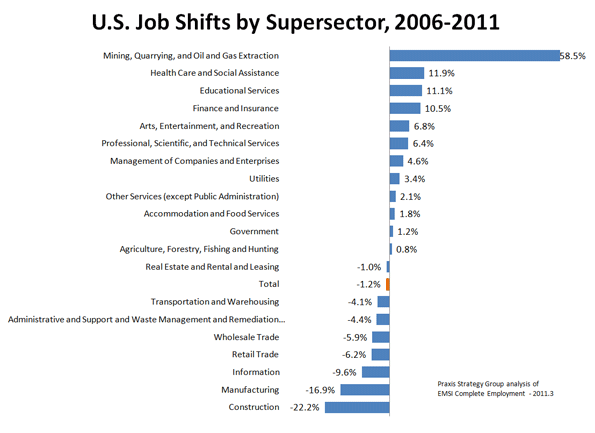
    Not surprisingly “recession-proof” fields such as health care and education expanded some 11% over the past five years. More inexplicably, given its role in detonating the Great Recession, the financial sector expanded some 10%.

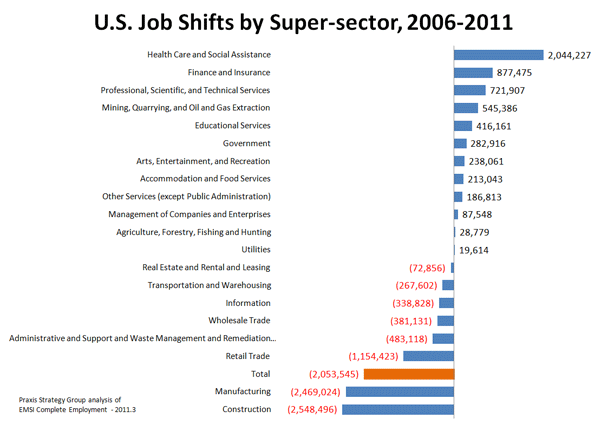
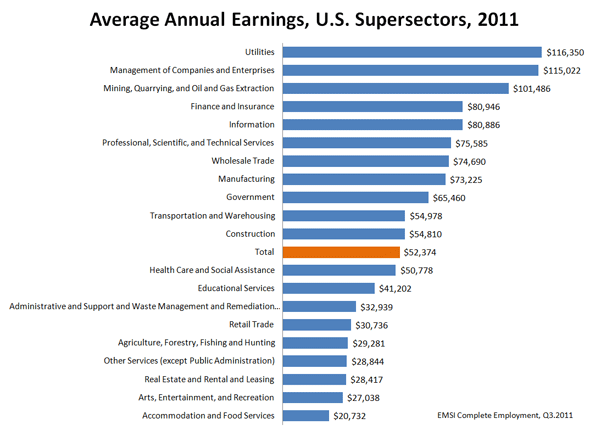
    But the biggest growth by far has taken place in the mining, oil and natural gas industries, where jobs expanded by 60%, creating a total of 500,000 new jobs. While that number is not as large as those generated by health care or education, the quality of these jobs are far higher. The average job in conventional energy pays about $100,000 annually — about $20,000 more than finance or professional services pay. The wages are more than twice as high as those in either health or education.

    Nor is this expansion showing signs of slowing down. Contrary to expectations pushed by “peak oil” enthusiasts, overall U.S. oil production has grown by 10% since 2008; the import share of U.S. oil consumption has dropped to 47% from 60% in 2005.  Over the next year, according to one recent industry-funded study, oil and gas could create an additional 1.5 million new jobs.

    This, of course, violates the widespread notion that the future lies exclusively in the information and technology industries. While technology may well be ubiquitous, as a sector it is far from a reliable creator of high-wage jobs. Since 2006 the information sector has hemorrhaged over 330,000 jobs. And those who do have jobs make on average about $20,000 less than their oil-stained counterparts per year.

    How about those “green jobs” so widely touted as the way to recover the lost blue-collar positions from the recession? Since 2006, the critical waste management and remediation sector — a critical portion of the “green” economy — actually lost over 480,000 jobs, 4% of its total employment. Pay here is lower still, averaging something like $32,000 annually, about one-third that of the conventional energy sector.

    The future of the rest of the “green” sector seems dimmer than widely anticipated. One big problem lies in cost per kilowatt, where wind is roughly twice as expensive and solar at least three times as expensive as electricity produced with natural gas. Given the Solydra   bankruptcy  and their inevitable impact on the renewables industry, it’s also pretty certain that the U.S., at least in the near term, will not be powered by windmills and solar panels.

    So instead of tilting windmills or taking out the trash, what about joining the much ballyhooed “creative class”?  Not so great a bet for those limited in talent or nepotism. The arts, entertainment and recreation sector gained about half as many total jobs as energy, and the pay is nothing to write home about. The average salary for these creative souls is about $27,000, slightly higher than for food service workers, but barely a quarter of the average salary for the oil and gas-dominated sector.

    The relative strength of the energy sector can be seen in changes in income by region over the past decade. For the most part, the largest gains have been heavily concentrated in the energy belt between the Dakotas and the Gulf of Mexico. Energy-oriented metropolitan economies such as Houston, Dallas, Bismarck and Oklahoma City have also fared relatively well. In energy-rich North Dakota there’s actually a huge labor shortage, reaching over 17,000 — one likely to get worse if production expands, as now proposed, from 6000 to over 30,000 wells over the next decade.

    What message does this send to politicians seeking to turn around our moribund economy? Perhaps   they should target oil and gas development as a spur not only to new employment, but to the kind of “good jobs” that Gallup’s Clifton speaks about. With the proper environmental controls, these industries could provide a major jolt to the economy while cutting down on energy imports, reducing debts and bringing jobs back home. As long as Americans consume oil and gas, why not produce close to the market and with reasonable environmental controls?

    The monthly proliferation of new energy finds can provide a much brighter future than many have anticipated. Industry experts say that the shift in energy exploration is moving from the Middle East to the Americas, with rich deposits of oil and gas uncovered from Brazil to the Canadian oil sands.

    Much of the new action is on the U.S. mainland, including the Dakotas, Montana and Wyoming. Increasingly, there’s excitement about finds in long-challenged sections of the Midwest such as Ohio. The Utica shale formation, according to an estimate by Chesapeake Energy, could be worth roughly a half trillion dollars and be, in the words of CEO Aubrey McClendon, “the biggest to hit Ohio, since maybe the plow.”

    Ohio now has over 64,000 wells, with five hundred drilled just year. Recent and potential finds, particularly in the Appalachian basin, could transform the Buckeye State into something of a Midwest Abu Dhabi, creating more than 200,000 jobs over the next decade. The new finds could also help Ohio fund its depleted state coffers without imposing either debilitating budget cuts or economically self defeating new taxes.

    The energy boom also has sparked a spate of new factory expansions, including a $650 million new steel mill to make pipes for gas pipelines. Other local firms are gearing up to make up specialized equipment like compressors.

    Michigan, another perennially hard hit state, is also looking at new energy finds to turbocharge its gradually recovering industrial sector.  While risible former Gov. Jennifer Granholm pushed the notion that Michigan’s recovery lay in “cool cities” and green jobs, the state’s current leaders are focusing on more down-to-earth — and under-the-earth — solutions as part of a strategy to revive industrial production.

    Such growth anywhere is good news, particularly in Midwestern blue-collar towns that have borne the brunt of the recession. Since 2006 manufacturing and construction have shed some 5 million jobs combined — jobs that pay above-average wages, far better than those earned in growing fields such as health care, education or the lower-end service sector.

    The surest road to recovery does not lie in the chimera of “green jobs” or by magically harvesting riches from social networks. It’s in making America a more self-reliant and productive power. The new spate of energy in the Midwest and elsewhere in the country may be one way to do this, if we have the will to take full advantage.

    This piece originally appeared at Forbes.com.

    Joel Kotkin is executive editor of NewGeography.com and is a distinguished presidential fellow in urban futures at Chapman University, and an adjunct fellow of the Legatum Institute in London. He is author of The City: A Global History. His newest book is The Next Hundred Million: America in 2050, released in February, 2010.

    Analysis and charts by Mark Schill, Praxis Strategy Group.

    Photo by flickr user thorinside

  • The Demise Of The Luxury City

    The Republican victory in New York City’s ninth congressional district Sept. 13 — in a special election to replace disgraced Rep. Anthony Weiner — shocked the nation.  But more important, it also could have signaled the end of the idea, propagated by Mayor Michael Bloomberg, of New York’s future as a “luxury product.”

    For a decade, the Bloomberg paradigm has held the city together: Wall Street riches fund an expanding bureaucracy that promotes social liberalism and nanny-state green politics. Indeed, Wall Street’s fortune — guaranteed by federal bailouts and monetary policy under both Presidents George W. Bush and Barack Obama — has been the key to the mayor’s largely self-funded political success. Under Bloomberg, Wall Street’s profits allowed city expenditures to grow 40% faster than the rate of inflation. Bloomberg was also able to buy political peace by bestowing raises two to three times the rate of inflation on the city’s unionized workers.

    Now this calculus is falling apart. Layoffs are mounting on Wall Street, while bonuses — the red meat that fuels everything from high-end condos to expensive boutiques and restaurants — are expected to drop 30% from last year.

    The newly Republican ninth district — stretching from south Brooklyn through the upper-middle-class strongholds around Forest Hills, Queens — reflects growing unease in the non-luxury parts of the city. The area is decidedly middle class, but with a median income of $55,000 it is the city’s least wealthy white district. For the most part, its residents have not benefited from Bloomberg’s management nor from Obama’s economic policies.

    Rather, the district reflects the kind of anxiety that is sweeping middle class areas across the country. “These people are worried about their kids and their future,” says Seth Bornstein, executive director the Queens Economic Development Corp. “The fire may not be in the backyard, but it’s around the corner.”

    Like many native New Yorkers, Bornstein sees Manhattan — the epicenter of the “luxury city” — as something of a “fantasy land,” inhabited by those who, despite living in Gotham’s historic core, are “not really New Yorkers.” Most Manhattanites, he notes, did not grow up in New York, and a majority live in single households. They largely either go to school, work in media or Wall Street, or make their livings servicing the rich.

    The ninth district is different socially as well. It is family-oriented. Barely one-third live in single households, compared with a near majority in Manhattan. Unlike the tony Upper East Side or trendy Soho, there are few celebrities or multi-millionaires. Although some of the ninth district’s inhabitants do work in the financial sector, many are tied to industries such as garments, work as professionals, such as doctors or accountants, or own their own small businesses.

    Some Democrats like California Rep. Henry Waxman have another explanation for the vote: greed. “They want to protect their wealth,” he explained, “which is why a lot of well-off voters vote for Republicans.” You almost have to admire the chutzpah of such views from a man who represents Beverly Hills.

    Waxman, of course, is wrong. This election was driven not by desertions of the rich but by the shift to the GOP among largely middle or working class voters. In many ways this election followed the pattern established by Sen. Scott Brown’s stunning 2009 Massachusetts victory, which came largely from middle-income voters. The ninth district’s new representative, Bob Turner, won big in modest Middle Village and South Brooklyn, while losing decisively in the wealthiest precincts such as Forest Hills and some minority, immigrant-oriented enclaves.

    The big story here, as Bornstein suggests, lies in the growing unease about the national and New York economies among large sections of the city’s beleaguered middle class. Despite the enormous wealth generated on Wall Street, New York’s middle class has been fleeing the city at breakneck speed for decades.

    According to the Brookings Institution, New York has suffered the fastest declines of middle class neighborhoods in the U.S.: Its share of middle income neighborhoods is roughly half that of Seattle or the much maligned Long Island suburbs. Twenty-five percent of New York City was middle-class in 1970, but by 2008 that figure had dropped to 16%.

    Even the young, who so dominate parts of lower Manhattan and Brooklyn, do not appear to be hanging around once they get into their 30s, particularly after their children reach school age. One reason: Bloomberg’s much touted school reforms have been, for the most part, ineffective in turning the bulk of the city’s public schools around.

    Ultimately, the basic truth is this: Bloomberg’s luxury city has failed most of its citizens. Despite its self-celebrated “progressive” image, New York has the most unequal distribution of income in the nation. The bulk of the job growth has not been on Wall Street, where employment has declined over the decade, but in hospitality and restaurants, which pay salaries 60% below the city average. In fact, restaurants are now the largest single private employers in Manhattan, with more people serving tables than trading equities.  As the New York Post quipped: “If you can make it here, you can make it anywhere — as a waiter.”

    It gets worse for the poor. One in five New Yorkers lives in poverty. Black male joblessness hovers at around 50%. Overall, New York’s household income, based on purchasing power, ranks 21st in the nation, behind not only such rich areas as San Francisco or Washington, but also places like Houston, Dallas, Indianapolis, Kansas City and even Pittsburgh.

    Ultimately, suggests Jonathan Bowles, president of the Center for an Urban Future, the future of New York’s middle class depends on reducing dependence on Wall Street.  The city needs to focus on industries and niches outside finance, including education, health, design, high-tech services, media and smaller businesses, many of them owned by immigrants.

    Bowles suggests diversification needs to speed up particularly now that Wall Street, the very engine of the “luxury” economy, is sputtering. Such a change will require a new political climate.  Voter engagement and political choice in New York have atrophied under the Medici-like Bloomberg, who has managed to pay off many interest groups with a combination of his own and the city’s money. Combined with a union-financed get-out-the-vote, the choices offered by the city’s once contentious politics have become increasingly constricted.

    But something is stirring in the boroughs.  The district’s voters not only embarrassed their civic betters by voting Republican, but they also demonstrated that New York’s middle class, politically quiescent under Bloomberg, may need to be taken seriously again.

    This gives hope for what Bornstein calls “the real New York” — a place that is neither particularly glamorous nor severely bifurcated between the rich and those who service their needs. With a more diversified economy and family orientation, this unexpected rebellion could represent the first step toward restoring New York’s roots as a city not of luxury but of aspiration.

    This piece originally appeared at Forbes.com.

    Joel Kotkin is executive editor of NewGeography.com and is a distinguished presidential fellow in urban futures at Chapman University, and an adjunct fellow of the Legatum Institute in London. He is author of The City: A Global History. His newest book is The Next Hundred Million: America in 2050, released in February, 2010.

    Photo by flickr user zoonabar

  • The Crisis of the “Gentry Presidency”

    The Obama administration’s belated attempt to address the looming employment crisis — after three years focused largely on reviving Wall Street, redoing health care and creating a “green” economy — reflects not only ineptitude but a deeper crisis of what is best understood as the “gentry presidency.”

    Unlike previous Democratic presidents, including John F. Kennedy and Bill Clinton, President Barack Obama’s base primarily lies not with the working and middle classes, who would have demanded effective job action, but with the rising power of the post-industrial castes, who have largely continued to flourish even through the current economic maelstrom.

    From the beginning, Obama has been nurtured and supported by an array of influential leaders in finance, technology and real estate who supported his rise. In the run-up to his nomination, he attracted more money from Wall Street than Hillary Clinton, New York’s senator. Later, he pummeled the Republican nominee, Sen. John McCain (R-Ariz.), by a wide margin among financiers.

    To be sure, Obama’s ground game relied on organized labor, particularly public-sector unions, African-Americans, Latinos and progressive activists. But these groups have not emerged stronger from his three years in office.

    Instead, the major winners of the Obama years have been the big nonprofits, venture capitalists and, most obviously, the financial aristocracy. These have all benefited from the Ben Bernanke-Timothy Geithner — previously the Bernanke-Henry Paulson — policy of cheap money and near zero-interest rates, which have depressed the savings of the middle classes but served as a major boon to Wall Street. This has benefited mostly the wealthiest 1 percent, which owns some 40 percent of equities and 60 percent of financial securities.

    This Wall Street-first approach makes Reaganite “trickle down” look like a populist torrent. Glimmers of reality are beginning to dawn on more perceptive progressive analysts, like Kevin Drum of Mother Jones, who accuses the Democrats under Obama of abandoning “the middle class in favor of the rich.” The Democrats, grouses the reliably partisan but perceptive Harold Meyerson, should be known as “Bankers R Us.”

    To be sure, some parts of the old progressive coalition, such as African-Americans, whose prospects have declined markedly under Obama, will most likely remain loyal to the president. Many other working- and middle-class voters, including Latinos and young people, groups particularly hard hit, may not be ready to bolt en masse for the GOP. But their lessened enthusiasm to participate in either the campaign or to vote could threaten the White House next year.

    These developments, as Marxists might put it, reflect the fundamental contradictions of gentry liberalism. Essentially, gentry liberalism reflects the coalescing interests among the financial, technological and academic upper strata. For these people, the Great Recession was brief and ended long ago. All depend heavily on high stock prices to maintain their wealth. Their interest in the overall U.S. economy — particularly the Main Street grass roots — has become ever more tenuous with their increasing ability to shift assets to East Asia and other developing country hot spots.

    These prerogatives have been neatly protected under Obama. In the past, administrations let corporate scofflaws, like the savings and loan companies, collapse. Some were sent to jail.

    But this time, the Wall Street elites have been allowed to skate through their own self-created crisis with astounding agility. Not only have they stayed out of the slammer, but they have been enjoying the best of times.

    This may have also been good news for Manhattan and San Francisco real estate and luxury retail — Tiffany profits were up 25 percent in the past quarter. Silicon Valley venture capitalists, in particular, have been lavished with access to cheap government loans and incentives — as demonstrated by the recent revelations about solar manufacturer Solyndra — to promote their attempted expansion into the ballyhooed “green economy.”

    The essential problem of gentryism, however, is that it fails to address the fundamental economic needs of the vast majority. It is also tied to policy prescriptions that either fail to spur broad-based growth or, in some cases, hinder it.

    For one thing, by concentrating wealth at the top, the gentry approach has depressed entrepreneurialism among the vast middle and working classes. In contrast to past “recoveries,” the rate of new start-ups has slowed considerably. The health of existing small business remains feeble, notes the National Federation of Independent Business.

    Other initiatives have slowed potential growth, particularly the threat of new draconian environmental regulations. Fossil-fuel development, for example, represents one of the best opportunities for new, high-wage employment for blue- and white-collar workers. In contrast, the massive expenditures of public money on “green jobs” has turned out to be less than effective in creating blue-collar employment.

    Equally revealing has been the pathetic performance of states that most fully embraced gentryism. California, an epicenter of the gentry economy, suffers the second-worst unemployment and lowest new business formation rates among all the states. Illinois lost more jobs in August than any other state. The bluest places — New York City and California — also tend to be the most unequal — and places where the middle class is fleeing.

    Whatever the failings of ungentrified Texas — ranging from a too-tattered social safety net and too many low-paying jobs — the rate of employment growth, including the high-tech sector, dwarfs that of key blue states, including California. Denizens of California, New York and other Obama bastions are voting for the Lone Star state with their feet.

    You don’t have to be a fan of Gov. Rick Perry to acknowledge Texas’s relative success compared with the gentry bastions.

    Overall, gentry rule has fostered a sense throughout the American public of national decline and diminishing personal expectations. Small property ownership, the key to a democratic capitalist society, is fraying. Wall Street’s Morgan Stanley, for example, having helped create the housing crisis, now talks boldly of a “rentership” society.

    This would extend the dominion of Wall Street and large landowners, like feudal lords, over the last redoubts of small property owners.

    Clearly, as even many on the left now acknowledge, we need a bold and radical break with gentry politics. Bernanke-ism is absurd — given that, under today’s conditions, a federally sponsored Wall Street boom does not assure prosperity for most. Perhaps it is time to focus instead on how to shift capital and incentives to the grass-roots economy.

    One possible reform would be a flat, or flatter, income tax that eliminates the patently unjust lower rates for capital gains and eliminates dodges for the ultra-rich, while creating greater incentives to individual grass-roots wealth creation. The Obama payroll tax cut represents a small, grudging step in this direction, but may well be too little, too late.

    Such a radical break would most likely cause mass consternation in Washington — as both parties rally to save their friends on Wall Street and a host of special tax breaks that enrich their campaign coffers. Many big money conservatives would shoot back with capitalist indignation while Democrats like Wall Street’s consigliere Sen. Chuck Schumer (D-N.Y.) would come up with more elegant reasons to protect their Wall Street backers.

    But such a suggestion from Obama might show his willingness to end a vassalage to the patrician class that is sinking both the economy and his own reelection chances.

    This piece originally appeared at Politico.

    Joel Kotkin is executive editor of NewGeography.com and is a distinguished presidential fellow in urban futures at Chapman University, and an adjunct fellow of the Legatum Institute in London. He is author of The City: A Global History. His newest book is The Next Hundred Million: America in 2050, released in February, 2010.

    Photo by flickr user Uggaboy

  • Obama’s Economic Trifecta: How The President Helped Kill Progressivism, Capitalism And Moderation

    President Barack Obama‘s “pivot” on jobs this week shows that the president has finally — if belatedly — acknowledged the real misery caused by the Great Recession. However, it does not shed his complicity in the ever deepening employment crisis. Unemployment remains high, exceeding 9% — 16% if you include part-time workers. The percentage of adults in the workforce is bouncing near a 30-year low. And according to a recent Gallup Poll, barely one-fourth of the American public approve of the president’s economic policies.

    Over the past three years, President Obama has done a remarkable job of undermining three very different ideals: progressivism, capitalism and moderation. Progressivism, his own brand, has taken the biggest blow, which may be why so many progressives — particularly environmentalists — have been so critical of their chosen candidate.

    Progressivism’s golden day seemed to have arrived with Obama’s election. But the progressivism embraced by the president was not the middle-class-oriented, growth-inducing kind associated with previous Democrats. Instead, Obama’s progressivism was shaped by his fellow academics, who have enjoyed unprecedented influence in this administration, as well as closely aligned classes such as affluent greens, urban land interests, venture capitalists and the mainstream media.

    Expressing the world view of the well-heeled, Obama’s progressivism did not focus on class mobility and economic growth. The old progressivism’s program was bold and opportunity-oriented: increasing energy supplies (think Tennessee Valley Authority) and encouraging industrial growth through building critical new infrastructure.

    Obama’s stimulus did not seek to increase productivity capacity or create good blue-collar jobs. It largely missed the recession’s biggest victims: minorities, the working class and the young who are well represented of the 1 in 5 Americans now not working.  The president instead chose to service the needs of organized constituencies such as public sector unions, large research universities and “green capitalists.”

    The tragedy is that Obama could have done things differently. A new variation of the Works Progress Administration, for example, would create hundreds of thousands of jobs for the currently unemployed, particularly those under the age of 25. At the same time, it would have created a legacy of tree-planting and road, port and bridge construction, which would have impressed voters of all kinds by actually producing tangible results. Think of all the bridges, public facilities and art bequeathed to us by WPA.

    Instead Obama’s regressive progressivism strangled blue-collar sectors of the economy. Many of his key policy initiatives, particularly in the health and environmental areas, scared businesses from expanding their operations.

    Sadly, the one infrastructure project embraced by the administration — high speed rail — reflected trendy urbanist theory more than common sense. At very best high-speed rail would have served, at an exorbitant cost, a small cadre of tourists and businessmen now capable of getting to the same places by car, plane or Megabus. HSR’s ever rising costs have even led some leftists, such as Mother Jones’ Kevin Drum, to denounce it as “boondoggly.” As Drum sensibly put it, “We have way better uses for the dough.”

    Similarly, Obama’s much ballyhooed “green jobs” have proved an expensive bust. Environmentalists Ted Nordhaus and Michael Shellenberger note there are fewer “green jobs” in Silicon Valley, the industry’s supposed hot bed, today than in 2003. The recent bankruptcy of California-based solar-panel maker Solyndra — recipient of a $500 million federally guaranteed loan — represents just the first of a series of government-backed failures.

    The traditional left is also increasingly persuaded that Obama’s policies have been better for the silk stocking set than the lunch pail crowd. Banks and high-end finance capital have been the biggest beneficiaries of Obama, a peculiar accomplishment for a nominally progressive administration. Wall Street’s subsidized ride to profits — courtesy of TARP and the Bernanke-Geithner fiscal policies — has helped a relative handful of investors and brokers  to enjoy record pay in 2009 and 2010.

    These failures have downgraded the chances for another big stimulus — the prescription most favored on the left — to all but impossible. But left-wing ideology hasn’t been Obama’s only victim; he has also delivered a body blow to the ethos of capitalism itself. For decades conservatives have preached that if we made capital available through a soaring stock market, business would then spend its bounty by reinvesting in the country’s productive capacity. Yet even as the market boomed over the past two years, very little has reached Main Street businesses faced with middle-income customers too skittish to buy their goods and services.

    Obama’s most recent fetish, moderation, also is proving something of a bust. Anxious not to be labeled anti-business, he has surrounded himself not with entrepreneurs but consummate crony capitalists — chief of staff Bill Daley (scion of the Chicago machine family), General Electric‘s Jeffrey Immelt and proposed Commerce Chief John Bryson, who has spent much time as a master manipulator for a large regulated utility. These figures have little or no credibility among grassroots businesspeople. They are seen as being more adept at working the system than succeeding in the free market. If this is what moderation is about, the public has good reason not to trust it.

    So having downgraded progressivism, capitalism and even moderation, Obama’s remaining hope lies in two things: the intrinsic strengths of the U.S. economy and the well-demonstrated ineptitude of his political rivals. He may have helped his cause — to the consternation of his green base — by restraining EPA emissions rules and opening some areas for oil exploration. This could help supercharge the nation’s energy industry, which has added 250,000 new, high-paying jobs since Obama’s election, mostly across the energy belt from Texas to the Dakotas.

    Unencumbered by some of the more draconian EPA rules, America’s increasingly competitive manufacturers should be able to continue boosting exports. The U.S. also retains a big edge in industries from agriculture to software. Just do less egregious harm, and perhaps the economy will come back some on its own.

    And then there’s the gift that keeps giving: the Republican Party. The GOP has no real economic strategy except to cut government and stop higher taxes. Its record on enhancing class mobility, particularly under the Bushes, is less than exemplary; wages barely moved over the George W.’s first five years in office.

    To win this year, the GOP needs to convince enough middle- and working-class voters that it offers something other than a less refined version of the same old insider game, albeit without the annoying professorial rhetoric. In this sense, the recent rush of some former pro-Obama hedge funds to the GOP may represent more of a curse than a blessing since no one, short of Mitt Romney, wants to associate themselves too much with Wall Street.

    The party base’s obsession with antediluvian social views also works to the president’s advantage,  since it distracts from a more  economic focus that would work against Obama’s reelection  . Overt religiosity and social-issue litmus tests are not the best way to win over suburban voters who turned so decisively on the Democrats in 2010.

    For three years President Obama has accomplished a hat trick of economic ineptitude that has downgraded the street cred of progressivism, capitalism and even reason. By all rights, he should be thinking about his profitable future as a post-presidential celebrity. But, for reasons having little to do with his own record, he’ll likely be entering a re-election campaign with a decent chance for another chance to screw up even worse.

    This piece originally appeared at Forbes.com.

    Joel Kotkin is executive editor of NewGeography.com and is a distinguished presidential fellow in urban futures at Chapman University, and an adjunct fellow of the Legatum Institute in London. He is author of The City: A Global History. His newest book is The Next Hundred Million: America in 2050, released in February, 2010.

    Photo courtesy of Barack Obama’s Photostream.

  • Applying Lessons from the UK Riots to Australia

    Many commentators correctly attribute the UK rioting to decades of misgoverning and miseducating youth. Contributing to this has been the breakdown of family discipline, the replacement of working fathers as role models and the creation of a culture of entitlement. Tony Blair has talked about a breakdown in public morality. Less convincingly, many on the left have attributed the cause to the social expenditure cuts of the Cameron Government, cuts that have actually made barely a dent in the proceeding Blair/Brown years of tumescent expenditure growth.

    Adding poison to the brew are government appointments and procedures that deflect police forces away from law enforcement into institutions that “reach out” rather than prevent wrong-doing, seek to understand miscreants rather than enforce the law, and try to contain disturbances rather than prevent them. The soft sociological and managerial ethos that has undermined policing in Britain is all too familiar here in Australia.

    But there are other factors at work. This is especially evident given the nature of those arrested. Many turn out not to be part of some jobless underclass but relatively affluent working people, some in their late twenties and early thirties.

    And the rioters are black and white – though hardly any Indians or other Asians. One reason for this is Asian family background, bringing values based on self-improvement by work rather than theft, reinforced by religious teachings, especially in the case of Muslims, the only group where a large majority are religious practitioners.

    While the complexion of the rioters will be subject to considerable analysis over future months, we can be confident about one hypothesis: few if any of the rioters own their own homes. This is because nothing engenders respect for property and others’ possessions more than people having a personal stake in property themselves. Property ownership – for most of us this means home ownership – is the key to creating a law abiding society. Where riots in England take place outside of areas other than those hosting electrical and sporting goods, they take place on council estates, in areas where people rent. If in owner-occupied housing areas, the rioters are outsiders.

    British families owning their own homes rose steadily up to the early 1980s, reaching 75 per cent. The figure has since fallen back to 70 per cent. More critically, the ability to get on the house ownership ladder has become increasingly difficult for large numbers of young people. Demographia reports that the average house in England now costs over five times the average family’s income. That’s up from three times the average family’s income 25 years ago. In London and other major cities the cost is much higher than this.

    Countless reports in England, Australia and the US demonstrate planning restraints over land use are the cause of houses becoming expensive. Governments do their level best to impose additional costs on house builders, especially through energy saving requirements, but the building industry is highly competitive and finds ways of largely offsetting these costs. However, when government regulations constrain the amount of land that can be built upon this engenders unavoidable costs.

    Ironically, after decades of acquiescing in creating shortages for new home building, the UK Government last month finally expressed a determination to do something about freeing up more land for building. That was met by the usual howls of protest from incumbent home owners wanting to avoid having “riff raff” moving close to them, barking on about preservation of villages and anxious to see a continued shortage of available properties in order to boost their own house values. But these self-centred blockages of new housing stock are contributing to an alienation of many people from mainstream values.

    British Labour Party leader, David Miliband, is arguing that a gulf between rich and poor is a cause of the rioting. He may well have home ownership in mind in offering as his solution, “we need to give people a stake in this society”. But “giving” is not a policy that will work. It morphs into an entitlement regime, which reinforces divisions within society and weakens the self-improvement ethos. Applied to housing, it is reminiscent of the US policy which required banks to make housing loans to those who were not credit-worthy, a policy still unraveling in mortgage defaults and collapsed price bubbles. Removing regulatory restraints that have driven housing prices into unaffordable ranges is the better approach.

    Not being a participant in a home owning democracy provides no excuse for trashing and thieving. But it is clear that there is a vast number of young people who have decided they are excluded and have become eager participants in hooliganism. Policies of tolerating misdemeanors and acquiescing in slack educational supervision will clearly be re-thought in the UK. But so also must be the policies creating barriers that shut people out of home ownership.

    There are lessons in the UK developments for Australia. Not the least concerns home ownership. A fundamental cause of the present economic malaise has been over-investment in US housing as a result misguided attempts to foster home ownership through forcing financial institutions to lend to people who were not creditworthy. This was motivated by the hope that the subsequent property stake would lead to an improvement in civil society on the part of those who found themselves excluded.

    These measures failed because they created a housing price bubble. However, removal of cost enhancing planning restraints would not be likely to bring the same housing inflation outcomes (indeed in states like Texas where the artificial price boosting caused by planning restraints is absent, home price inflation and busts has been modest).

    Planning restraints in Australia have created home costs that are six times family incomes (nine times family incomes in Sydney). House prices in Australia are therefore even higher than in England and urgent steps need to be taken to reform the planning policies that have caused this. If this means a society closer to the ideal of a property owning democracy, so much the better.

    Alan Moran is the Director, Deregulation at the Institute of Public Affairs.

    Photo by bobaliciouslondon.