Tag: Pittsburgh

  • The Pittsburgh Conundrum

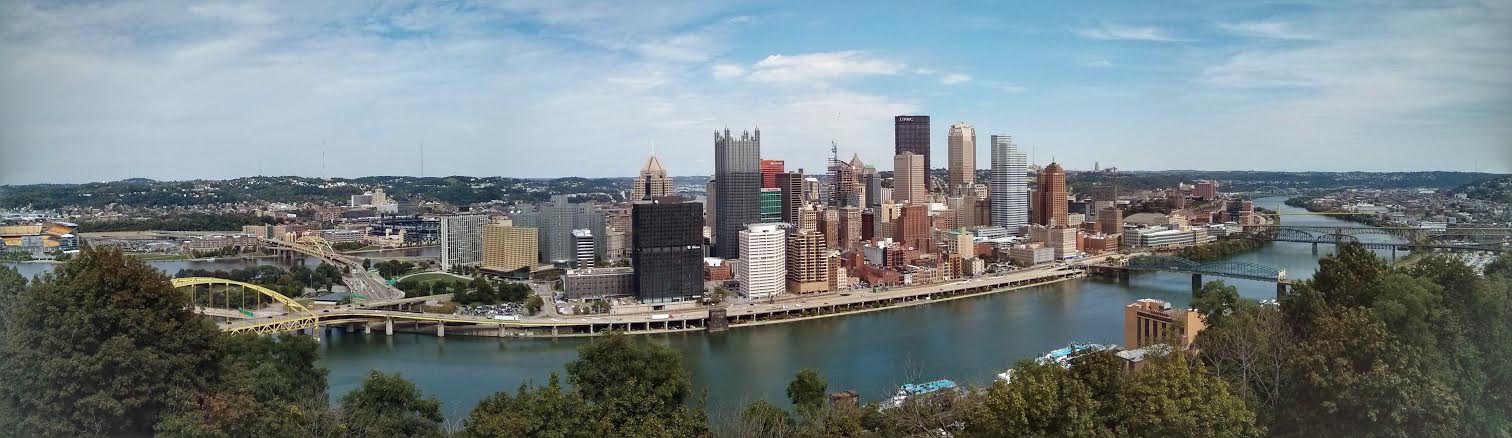
    Forty years after the decline of the steel industry, Pittsburgh has emerged from the ashes of deindustrialization to become the new Emerald City. Its formidable skyline gleams with homegrown names—PPG, UPMC, and PNC. Touted as the “most livable city” by the likes of The Economist and Forbes, its highly literate and educated workforce has contributed to a robust and diverse local economy known as a center for technology, health care, and bio-science. It is a leader in startup businesses. Uber and Ford’s announcement in 2016 that they would base development of their self-driving cars in Pittsburgh, rather than in Silicon Valley, is a telling example of the power of high-tech image and low costs.

    Pittsburgh also ranks high in housing affordability. Residents can easily walk or bike to public libraries, museums, and arts and entertainment venues. Some see Pittsburgh as a model for economic development and a new urbanism that could revitalize the Rust Belt and other former industrial regions.

    In short, Pittsburgh seems to have responded more effectively to the challenges of deindustrialization than many other cities. Hunter Morrison, winner of the American Planning Association’s 2015 Burnham Award for his work on regional planning in northeastern Ohio, notes that Pittsburgh has done better than Cleveland in several areas. It has retained more of its residents, largely minority households; stabilized its working-class neighborhoods without relying on gentrification; and steadily attracted educated millennials. Morrison also says that Pittsburgh has held on to its historic working-class culture and civic identity more than have other legacy communities. “The concept of the ‘Steelers Nation,’” he says, “goes well beyond a marketing campaign and appears to be embedded as a deeply felt personal identity by people of all classes. The retention of dialect, food, symbols, team colors, and attitude is remarkable and, I would argue, increasingly unique.”

    But is there really such a thing as Pittsburgh exceptionalism? Or, as with other successful cities, do we need to ask: A renaissance for whom? Residents like Kathleen Newman, a working-class studies scholar and professor at Carnegie Mellon, see gentrification expanding with Pittsburgh’s drive to attract high-tech industries. This threatens the city’s remaining working-class neighborhoods and its already small African American middle class. Some resistance to gentrification has emerged—protests over the construction of high-income housing and a Whole Foods Market in Pittsburgh’s East Liberty neighborhood, for instance. Residents are also proposing their own alternatives for affordable housing.

    And there are more fundamental questions: Can—does—Pittsburgh’s success extend beyond city limits? Can it resurrect its broader Rust Belt region? What can Pittsburgh do—what can we do—for the broader regions that it has left behind?

    Pittsburgh was always more than its city limits. The seven counties composing the metropolitan region include surrounding towns that contributed to Pittsburgh’s industrial might in the 20th century, such as Braddock, Homestead, Aliquippa, and McKees Rocks. But the area beyond Pittsburgh, extending from these towns through western Pennsylvania, has not experienced the revitalization that has transformed the city. From Weirton, West Virginia, to the west, Uniontown to the south, Johnstown to the east, and Sharon to the north, economic recovery has been, at best, uneven across the region. Apart from a few newer suburbs like Cranberry and some older revitalization projects, such as the Waterfront complex in Homestead, the region continues to be plagued by the long-term effects of deindustrialization and disinvestment. Along with underperforming schools, violence, and pollution—including, according to a recent report, lead contamination—the region still struggles with employment and population declines. The Bureau of Labor Statistics shows wide swings in employment over the last decade, but non-farm employment in the Pittsburgh metropolitan area declined by about 15,000 between October 2016 and March 2017. A University of Pittsburgh study reports that 23 percent of Pittsburgh residents live in poverty, and 43 percent earn less than 200 percent of the poverty level. Furthermore, outside its urban core, a larger number of individuals actually live in poverty than in Pittsburgh itself. In the seven-county Pittsburgh metropolitan statistical area, fully 79 percent of the people living in poverty reside outside the city limits.

    Both the city and the surrounding area are also losing population. Census data show that Pittsburgh’s Allegheny County lost almost 4,000 people in 2015 and 2016, while the seven-county region lost nearly 9,000 people on top of the more than 6,700 lost in the previous year.

    The Pittsburgh story, then, involves more than a shining city on many hills. As a case study for thinking about economic development and urban planning, we have to go beyond the city itself. If you drive out of the busy downtown, away from the academic neighborhoods, and past the new suburbs, you cannot help but see the remains of the troublesome legacy of deindustrialization. Deteriorating factories, empty parking lots, dilapidated housing, and vacant lots all bear witness to the continuing material and social costs of economic restructuring. Urbanists, developers, and politicians have much to learn by expanding their view of Pittsburgh.

    IN 2013, CARNEGIE MELLON University organized the 25th anniversary conference of the original Remaking Cities Congress. Pittsburgh was chosen as both site and symbol for its “25-year transformation from an industrial economy to a knowledge economy.” The conference brought together 300 leading national and international urban and city planners, economic development specialists, and architects to consider the state of efforts to revitalize deindustrialized communities. Many conference participants praised Pittsburgh as a prime example of the new urbanism that promotes walkability, diverse housing, quality architecture and design, increased density, mixed-use neighborhoods, smart public transportation, and commitment to sustainability and quality of life.

    The plenary speakers included urbanologist Richard Florida, the Brookings Institution’s Bruce Katz, the architect David Lewis, and Prince Charles, who had played a pivotal role in organizing the initial conference. Alongside numerous self-congratulatory presentations about how cities were reinventing themselves, however, ran a darker undercurrent of uncertainty. In his plenary presentation, Florida noted how the new urbanism was fostering inequality, outmigration, and racial divisions. His analysis became the foundation of his new book, The New Urban Crisis: How Our Cities Are Increasing Inequality, Deepening Segregation, and Failing the Middle Class—and What We Can Do about It.

    Florida had been in a good position to observe changes in Pittsburgh and other cities associated with the knowledge economy. He taught at Carnegie Mellon while researching his book The Rise of the Creative Class: And How It’s Transforming Work, Leisure, Community and Everyday Life, which argued for the power of technological determinism in shaping urban regeneration and economic growth. Initially published in 2002, the book instantly became a touchstone for economic developers and urban planners. Esquire magazine named Florida one of the “Best and Brightest” in 2005, and Businessweek called him a Voice of Innovation in 2006. Within several years, Florida became a beacon for those suggesting that postindustrial cities should concentrate on attracting a “creative class” of writers, painters, musicians, software developers, engineers, and doctors.

    At the Remaking conference, however, Florida focused (as he does in his new book) on the unintended consequences of the growing knowledge economy he had earlier championed. While obliquely addressing Pittsburgh and its region, his analysis of the growing inequality, injustice, and resentment shown toward this and other cities captured, among other things, the growing populist unrest in western Pennsylvania and eastern Ohio—a pattern that would play out a few years later in the 2016 election.

    Florida’s change of heart did not surprise Chapman University professor Joel Kotkin. As Kotkin argued in The Human City: Urbanism for the Rest of Us and The New Class Conflict, the new urbanism lay at the heart of an emerging class conflict. Unlike industrial conflicts between owners and laborers, this class conflict pitted a postindustrial elite made up of high-tech oligarchs and policy, media, and academic experts against the middle and working classes. According to Kotkin, the rise of the knowledge economy and new urbanist planning strategies had erased the idea that the city could be a place of hope for advancement for those in poverty. Instead, the poor, many of them people of color, were displaced by rising housing costs as white residents returned to the city and developers created a “Disneyland” of “restaurants, shops, and festivals.” For Kotkin, the American dream could now be found in the suburbs, where it was cheaper to live and survive in uncertain economic times. He argued that suburbs have become more racially diverse, and people with lower incomes had more opportunities to own property and build community.

    But Kotkin’s suburbanist dream has also come under scrutiny. Urbanists have claimed that suburban sprawl increases demand for land usage and water, police, and fire services, as well as car dependency. The opioid epidemic has also reached the suburbs. Long commutes disconnect suburban residents from community life. Online shopping causes suburban malls to close, shattering local retail economies. Shoddy construction and poor materials long associated with suburban tract housing have become increasingly apparent.

    Most crucially, studies make clear that poverty has grown most rapidly in suburban areas. Florida has countered Kotkin’s optimism. “The suburbs,” he has written, “are no longer the apotheosis of the American Dream and the engine of economic growth.” Citing David Lewis, he wrote that “the future project of suburban renewal would likely make our vast 20th-century urban renewal efforts look like a walk in the park.”

    Debates between urbanists and suburbanists have consequences for planning and policy—just as the rift between metropolitan residents and other Americans has political consequences. In the 2016 presidential election, voting patterns in Pittsburgh and western Pennsylvania reflect this divide. While many commentators focused on racial, educational, gender, and generational gaps, The Atlantic’s Ronald Brownstein argued that none of these divides “proved more powerful than the distance between the Democrats’ continued dominance of the largest metropolitan areas, and the stampede toward the GOP almost everywhere else.” Nationally, Democrats won an average of 72 percent of the vote in counties with an urban core. But they lost in suburbs, midsize cities, and small and very small cities, and the farther these places were from cities, the bigger the loss for Democrats.

    The voting in Pittsburgh and western Pennsylvania followed the national trend. Real Clear Politics reported that Hillary Clinton won culturally cosmopolitan areas “most commonly seen as centers of economic growth, political power, or cultural production,” but Trump made gains in the popular vote in traditional Democratic areas like Cleveland, Detroit, Buffalo, St. Louis, Pittsburgh, and other smaller cities in the middle of the country, when their decaying suburbs and exurbs were lumped into the tallies.

    Pittsburgh and Allegheny County voted Democratic at 56 percent. This was only slightly lower than the levels of 2008 and 2012. But in surrounding counties in western Pennsylvania, support for Democratic candidates dropped. With larger turnouts in areas with greater Republican support, like Butler and Westmoreland Counties, western Pennsylvania could not deliver the votes necessary for the Democrats to win Pennsylvania. In addressing the decline in support for Democrats even in the city, Pittsburgh Mayor Bill Peduto said it best: “What we saw [on Election Day] was Democrats voting Republican.”

    Clearly, the Republicans and Trump were successful in reducing support in what had been traditional Democratic areas by mining the divide between urban and suburban/rural areas, benefiting from the politics of resentment toward urbanism and economic elites.

    FOLLOWING THE ELECTION, deliberations over new urbanism, urban-suburban identities, and the urban crisis have intensified as part of the debate over our future economic policy. The competing narratives have been shaped by such think tanks as Brookings and New America, representing a range of liberal and conservative political viewpoints.

    For example, New America co-founder Michael Lind joined with Kotkin to produce a new report arguing that the solution to America’s economic problems lies in the revitalization of the heartland. In “The New American Heartland: Renewing the Middle Class by Revitalizing Middle America,” Lind and Kotkin reject the view that the coasts, epitomized by Silicon Valley in California and the finance industry in New York, should be the drivers of the American economy. They claim that what they call the “Gulf of Mexico watershed”—an admittedly imprecise geographic area—better reflects an ongoing population and economic shift away from the coasts toward middle America. This New American Heartland includes the older manufacturing rust belt, broad agricultural regions, and resource-extracting areas along the Gulf Coast. In other articles, Kotkin suggests this was the very region responsible for the election of Donald Trump.

    Lind and Kotkin reject both Democrats’ and Republicans’ belief that America’s economic future is tied to knowledge, media, and finance industries that require the higher-skilled and better-educated employees located in coastal areas, and they also point out that even knowledge workers are leaving the coasts. While they do not deny that automation and offshoring have reduced employment in manufacturing and goods-producing industries, they believe that “the tradable sector” is far more essential to American prosperity than its share of current employment suggests. This sector includes manufacturing, industrial agriculture, energy, and minerals, fields that are dominated by large firms and complex supply chains. Once again indirectly criticizing the failures of urbanists’ visions of technology as the source of economic growth, they argue that every city and county cannot be Silicon Valley, and that the lower housing and energy costs and weaker regulatory environment in the “New Heartland” will drive future economic growth and development.

    Lind and Kotkin’s political colors become more apparent in their discussion of the role of government in revitalizing the New American Heartland. They call for the government to supplement efforts of the private sector, but they also warn that “misguided regulations” could “thwart economic development.” For example, they note that regulatory attempts to mitigate the “possible” harms of climate change only increase the costs of fossil fuels. They are more concerned about possible dangers to energy industries, American jobs, and productivity growth. Instead, they suggest, the federal government should largely limit its support to basic science research and development, infrastructure, and tax support for state and local government and public-private partnerships.

    Brookings scholar Bruce Katz and Jennifer Bradley, director of the Center for Urban Innovation at the Aspen Institute, offer a similar but decidedly smaller geographic analysis, minus the anti-coastal attacks and criticism of technology industries. In The Metropolitan Revolution: How Cities and Metros Are Fixing Our Broken Politics and Fragile Economy, they argue that metro areas, like Greater Pittsburgh, will drive economic growth because they are home to clusters of universities, local businesses, hospitals, museums, and advanced technology and manufacturing industries, what Katz and Bradley call “innovation districts.” They encourage planners and government officials to develop new strategies based on “Emergent Metros.”

    Like Lind and Kotkin, Katz and Bradley raise doubts about the role of the federal government. They believe that the metropolitan revolution is “exploding this tired construct” about federal solutions. Instead, they argue, cities and metro areas “are becoming the leaders in the nation: experimenting, taking risk, making hard choices and asking for forgiveness, not permission.” This, they suggest, will lead to “only one logical conclusion: the inversion of the hierarchy of power in the U.S.”

    That inversion, however, would put business elites and their closely affiliated local foundations in power. The examples that Katz and Bradley highlight all involved a shift in power from elected government officials to unelected business and economic leaders and nongovernmental organizations, leaving local electorates, community groups, and neighborhoods with little power to do anything other than rubber-stamp the decisions made by local elites. They minimize the involvement of popular movements in urban issues. They contrast both the Occupy and Tea Party movements with their metropolitan revolution, which they describe as “reasoned rather than emotional, leader driven rather than leaderless, born of pragmatism and optimism rather than despair and anger.”

    In contrast, Richard Florida envisions a more critical and stronger role for government in supporting urban transformational changes. In The Urban Crisis, he argues that a “disconnect between the vital economic role of cities and our policymakers’ neglect of them” has led to a crisis. Florida still believes, as he wrote in The Rise of the Creative Class, that cities are most economically successful when they bring together the three “Ts”—technology, talent, and tolerance. Cities remain platforms for innovation, wealth creation, social and progressive values, and political freedom, and these, in turn, contribute to the health of suburbs and outlying areas. However, he now argues that cities must resist the “winner-take-all urbanism” that fosters economic inequality and segregation. He offers seven keys for more equitable development: reforms in building, zoning codes, and tax policies; infrastructure investment to spur density and clustering and to limit sprawl; affordable rental housing in central locations; turning low-wage service jobs into family-supporting work; addressing poverty through greater investment in people and places; helping build stronger and more prosperous international urban cities; and empowering local communities and local leaders to strengthen their own economies. No doubt many of these reforms would make cities more affordable and attractive to the middle and working classes, but they would also require massive government subsidies. For Florida, then, the federal government has a central role to play in alleviating the urban crisis.

    The real problem for Florida is not the coastal elites and tech hubs and oligarchs so vilified by Lind and Kotkin. Rather, the problem lies with “urbanized knowledge capitalism” itself, which has clear winners and losers, as evidenced by the economic segregation, wage and income inequality, and home unaffordability that plague the urban centers of knowledge capitalism. This urban crisis is not limited to coastal areas. It affects cities and metros of all sizes across the country. To address the underlying crisis of this “secular stagnation,” Florida believes, the federal government must move beyond the usual but vague debates over infrastructure spending and make “strategic investments in the kinds of infrastructure that can underpin more clustered and concentrated urban development.”

    WHAT IS MISSING FROM the larger discussions of urban and regional development are any fully formed progressive solutions. Even the most progressive of recent political campaigns offered little. While Bernie Sanders championed “New Deal Reforms” and a “new Bill of Rights” that, he claimed, would create “an economy that works for all, not just the very wealthy,” other than making housing affordable and increasing wages and benefits, he put forth no concrete plans for dealing with the broader crisis of urban and regional economies. Some of Richard Florida’s more progressive pillars found their way into Martin O’Malley’s campaign, but that never got off the ground.

    More recently, the Center for American Progress has put forward a progressive solution, a report entitled “Toward a Marshall Plan for America: Rebuilding our Towns, Cities, and the Middle Class.” It argues for developing a commission to design a “domestic Marshall Plan for jobs and community investment.” The Marshall Plan Commission would be “under the direction of national, regional, and local leaders.” They would “seek input from urban and rural leaders who represent labor, business, education, health, faith, community, economic development, and racial justice to help understand the problem; lift up promising practices; develop bold ideas; particularly for people who did not attend college.” The plan encourages the building of “community institutions that support incomes, employment, and mobility” through greater infrastructure spending, investment in education, public employment, improvements in access to child care and health care, tax reform, and increased wages and social security, among other strategies. Overall, the plan can be read as a provisional “New Deal Lite,” a thinly disguised re-do of the center’s contributions to Hillary Clinton’s economic platform, with belated attention to the working class and nonmetropolitan America.

    There is a good reason why no one has offered clearer strategies, though. As Pittsburgh shows, there are no easy answers to challenges facing metro regions. When we look beyond that city’s core, we clearly see that even the place most often praised for having gotten economic renewal right still battles uneven development and inequities just beyond the city limits. None of the strategists offer much hope for the many former mill towns and rural communities in western Pennsylvania. Without a new and enduring infusion of economic vitality, smaller towns and rural areas outside the upscale metropolitan hubs will show persistent signs of economic struggle. Some may be beyond repair.

    It isn’t that the Pittsburgh story is wrong. It is simply incomplete. The narratives about this city, like the broader debates among new urbanists and economic and urban planners, do not fully consider the continuing costs of deindustrialization, disinvestment, globalization, and neoliberal austerity programs on individuals and communities. These personal, community, and national costs rival the displacements caused by natural disasters and armed conflicts. The devastation of economic change has left far too many with limited options and little power to improve their lives or communities.

    Even if someone could offer clear solutions, however, their proposals would still have to surmount political gridlock. Neither party seems poised to take on this crisis in any effective way, which only contributes to the disillusionment of many voters and to a growing divide that, as Brownstein argues, splits urban residents from those living in suburbs, small towns, and rural areas.

    Even with the best of intentions, urban planners and economic developers are complicit in sustaining the broken socioeconomic system that Florida suggests is central to the urban crisis. They need to recognize that the problem goes beyond even secular stagnation, segregation, gentrification, inclusion, regional integration, and the business and government efforts so prominent in their narratives. The problem is with capitalism as it currently exists—its reliance on inequality and racism, and its externalization of its social costs. This is not to say that economic and social improvements cannot be made through some of the reforms suggested previously. But they won’t solve the underlying problems that come from capitalism’s subordination of social needs to its economic necessities.

    Urbanists need to consider long-term strategies based on values, and not just spatial considerations, that address the concrete needs of people. What makes our urban and regional crisis seem so intractable, ultimately, is this very tension between market forces and ethical and moral solutions.

    This piece originally appeared in The American Prospect.

    John Russo is the former co-director of the Center for Working-Class Studies at Youngstown State University and currently a visiting scholar at Georgetown University’s Kalmanovitz Initiative for Labor and the Working Poor.

    Photo by Dllu (Own work) [CC BY-SA 4.0], via Wikimedia Commons

  • Black Homes Matter: The Fate of Affordable Housing in Pittsburgh

    “I live here.  I’m from here.  My whole family is here.   We try to stay close together.  This is America.  I’m a Marine, I went to war three times.  I served my country.  It feels crazy not to be able to live in my own area where I grew up,” writes an East Liberty resident in Black Homes Matter, a booklet describing alternative approaches to neighborhood revitalization in the city of Pittsburgh. Since the Reagan-era shut-down of funding for public housing projects, the lack of decent affordable housing for low-income people has become a crisis in many cities.  San Francisco and Seattle are notorious for pushing out poor and working-class residents, but mid-sized cities like Pittsburgh will be following suit unless city governments have the courage to implement equitable development.

    Pittsburgh has been designated the “most livable city” in the US several times in the past decade.  It gets points for its parks and rivers, excellent universities and hospitals, low crime rate, strong family-centered neighborhoods, expanding high-tech economy, and fine dining.  Of course, The Economist and Forbes magazine do not consider how the city’s livability is distributed unequally across lines of race and class.  The facts that we have among the steepest bus fares in the nation, the lowest minimum wages, and high infant mortality among African Americans do not figure in rankings designed to attract tourists and new businesses to the city.

    Housing is one of the sharpest of these class-race fault lines, as gentrification accelerates in desirable neighborhoods.  In a city already segregated by race, affordable housing is rapidly being replaced by high-end units for young professionals attracted by the city’s hi-tech reinvention of itself after the decline of steel and other industries.  The former Nabisco factory in East Liberty now houses a Google hub in the Bakery Square mall and “village,” with an LA Fitness gym, Anthropologie store, and high-priced coffee shops.   Its developer received major public funding because the project borders a “blighted” neighborhood, whose mostly black residents have hardly benefitted from the action.  Few local residents are employed by the new businesses in their neighborhood.

    East Liberty is also the site of a nearly completed Transit-Oriented Development project along the Port Authority’s east bus-way.  Residents of the 360 new apartments, built by private developers with infrastructure provided by the city, will be able to get downtown in twelve minutes.  Rents in the transit center buildings start at $1,100 a month for a studio apartment.   No units have been reserved for tenants whose income is below the city’s median income, which in Pittsburgh is $37,161 overall, and $21,790 for black residents.  Calculating housing expenses at 30% of income, maximum rents would be $929 and $545 respectively.  In the absence of inclusionary zoning, or other enforcement for equity, there is no room in the attractive new development for even the average city resident, let alone those getting by on much lower incomes.  Ironically, these are traditionally the primary users of public transit.  Pittsburgh is on a course to follow Washington DC, where a recent Washington Post study found that neighborhoods with Metro stops are now majority white, and “the Metrorail system is becoming more inaccessible to minority workers.”

    Throughout what was a predominantly black neighborhood, residents are being forced out either through direct eviction from public housing that is being demolished for re-development or because rents have risen beyond their means. In the Pittsburgh Post-GazetteDiana Nelson Jones writes, “Many who are leaving East Liberty can’t find rental housing under $800. Many are having to accept living without adequate services, including transit, outside city neighborhoods where they have earned a sense of belonging. The vast majority are our elders, lifelong laborers and the working poor. Nobody should get sick with stress in the struggle to pay their expenses, then get sent off to the fringes.”  But that is the current reality.  One resident quoted in Black Homes Matter says, “We wasted six months looking for something affordable around here so we finally moved out to Millvale.  I had to buy a car to commute back here to my job and then I had to take another job to pay for the car. I get very little sleep.  And I miss my neighborhood.”

    As a white middle-class resident of a neighborhood bordering East Liberty, I have benefited from the area’s revitalization.  I shop at Trader Joes and Home Depot and eat at Chipotle and Whole Foods.  I have a choice of three nearby yoga studios.  The house I bought twenty years ago for $50K, with help from the Urban Redevelopment Authority because it was in a “transitional” neighborhood, is now worth upwards of $300K.  My street, which was mixed-race back then, now appears to be entirely white, despite being majority rental.   There’s a deep injustice in the fact that many residents who lived through the period of “blight” in the neighborhood are not here to share in its renewal or in the wealth being generated.  Some residents who stay no longer feel at home: “There are people looking at me like ‘what are you doing here?’  I had my first kiss on that street.”

    Along with its “most livable” designation, Pittsburgh is also credited these days for its progressive city administration.  Mayor Bill Peduto, in office since 2014, is listed alongside New York’s Bill De Blasio as a leader willing to tackle structural inequality in his city.  Bakery Square and the East Liberty TOD were initiated before Peduto’s term, and he has recently set up an Affordable Housing Task Force.  A test case will come with the development of the “28 acres,” a vast parking lot between downtown and the largely black Hill District.  This was the site in the 1960s of one of Pittsburgh’s most brutal acts of “urban renewal” – or “negro removal” as activists call it.  8,000 people were displaced and their homes and businesses razed to make way for an arena and parking for the Pittsburgh Penguins hockey team.  The arena has been demolished and the Penguins have relocated, but they still own the land and they refuse to include more than 12% of affordable housing on the site.  With “affordable” defined as 80% of the market rate, even those few homes will be out of reach for descendants of the families that used to live in what was a thriving community.

    It doesn’t have to be this way.  On Pittsburgh’s North Side we have a counter-example: a strong tenant council prevented the eviction of more than 300 low-income families from Section 8 housing slated for redevelopment.  Working with the URA and other agencies, Northside Coalition for Fair Housing acquired properties and used a “rehab for resale” strategy to keep people in their homes.  “The result has been higher-quality housing, safer and more attractive neighborhoods, and increased tenant incomes,” according to the Pittsburgh Fair Development Action Group, which produced Black Homes Matter.  The group advocates a range of strategies to resist displacement and support resident control in neighborhoods threatened by gentrification: inclusionary zoning, community land trusts, rent stabilization, tenant ownership schemes.

    There is no shortage of successful models from around the country.  In Pittsburgh and other cities, we need the political will to hold private property developers accountable to equitable standards and to include residents in determining plans for improvement of their communities.  Affordable housing and accessible transit are essential to neighborhoods that are “livable” for all.

    This essay was first published by the Working-Class Perspectives blog, which offers weekly commentaries on current issues related to working-class people and communities.

    Nicholas Coles holds BA and MA degrees from Oxford University and MA and PhD degrees from SUNY, Buffalo, and has been a member of Pitt’s English Department at the University of Pittsburgh since 1980. Coles is a past-president of the Working-Class Studies Association, and is a founding member of the Pittsburgh Collaborative for Working-Class Studies, a new multi-campus interdisciplinary organization.

    Image of Eastside III development courtesy of mosites.net.

  • Family Friendly Cities

    One of the common criticisms leveled at people who promote urban living goes something like this. “Cities are great for college kids, people starting off in their careers, bohemians, and maybe some older empty nesters with money who have a taste for theater and art. But most people have families and tight budgets. Suburbia is the only place that provides a high quality, safe, affordable life for regular folks with children.”

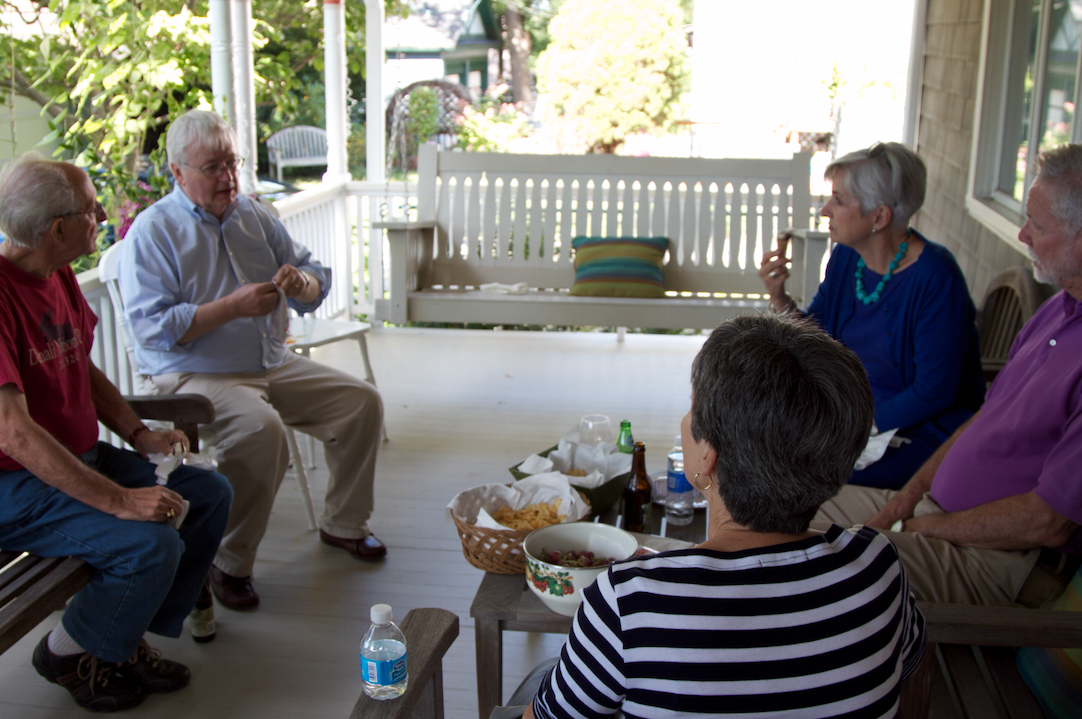
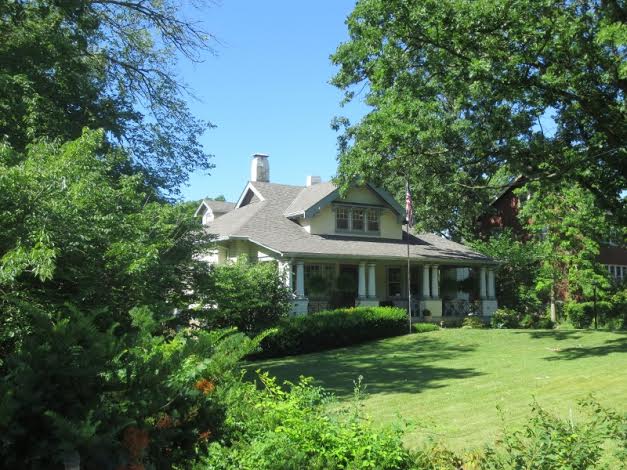
    Last year I flew to Pittsburgh, Pennsylvania to attend a wedding. As we were all milling about with friends and family on the porch eating ice cream on a gorgeous September afternoon I noticed some of my fellow out-of-town visitors from New York and San Francisco looking around with a peculiar expression. It was the same kind of look that dogs get when they’re curious and a little confused – one ear up and one ear down. They looked at their kids playing in the grass and sitting on grandma’s lap. I knew very well what they were thinking. They were a family of four living in a tiny one bedroom apartment in Brooklyn and their oldest child will be starting school next year.

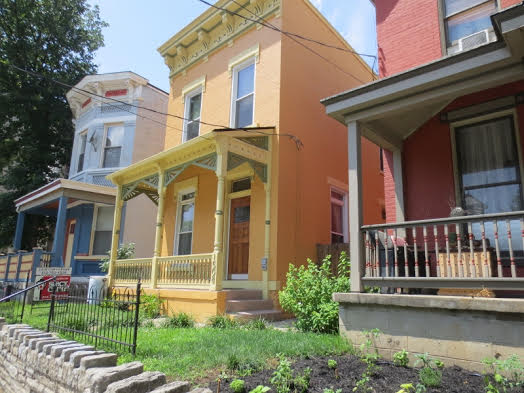
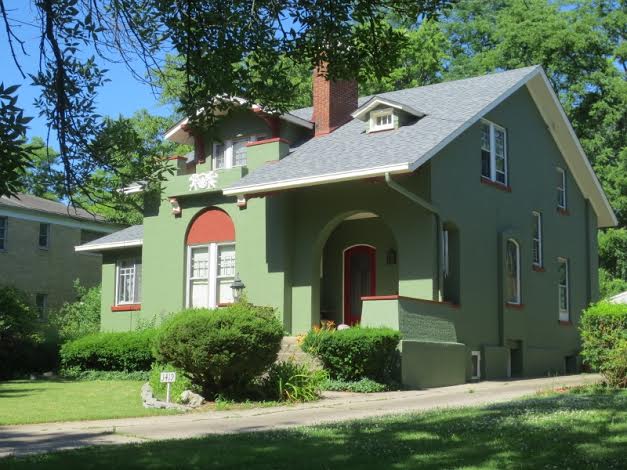
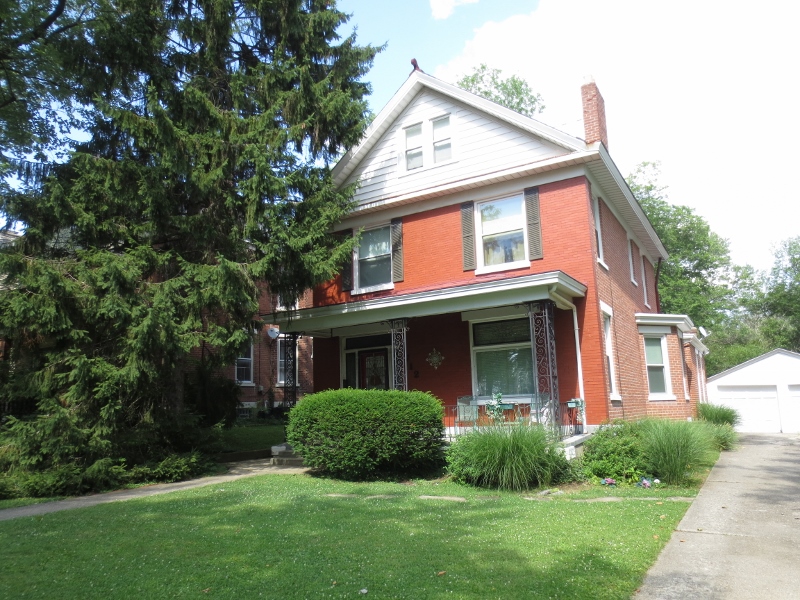
    IMG_0202 (800x533) (2) Screen Shot 2014-10-11 at 11.03.48 PM Screen Shot 2014-10-11 at 11.08.00 PM Screen Shot 2014-10-11 at 11.02.26 PM

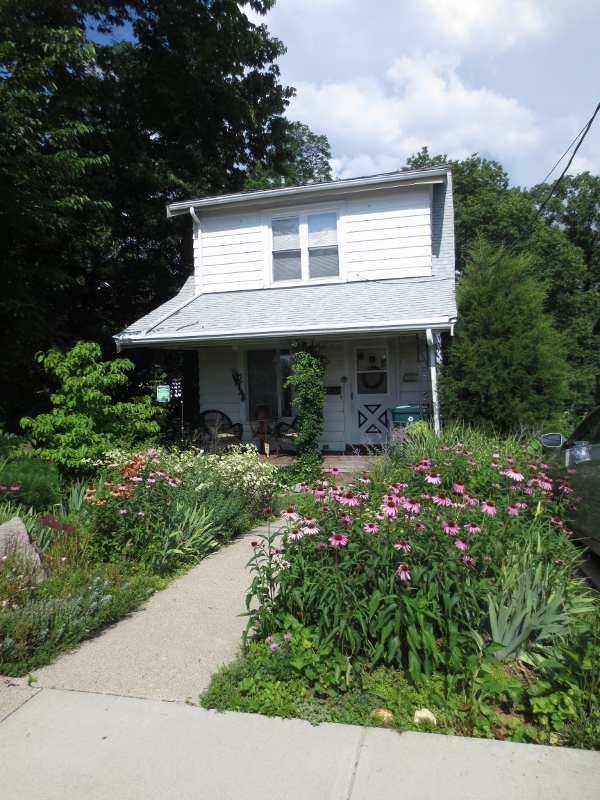
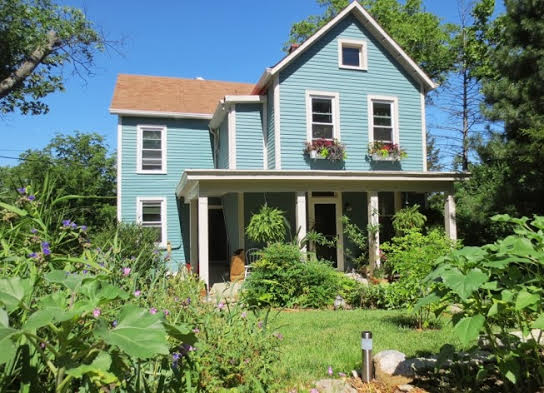
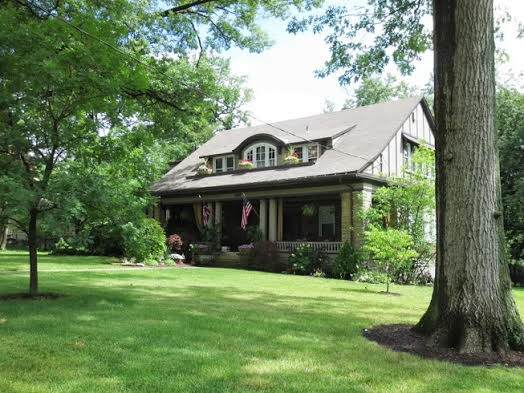
    Now, I need you to picture the neighborhood so you get the context here. This is a century old streetcar suburb five miles from downtown. There are tree lined streets, front porches on elegant old homes, a charming Main Street with mom and pop shops a couple of blocks away, and an elementary school directly across the street. Even in this very comfortable and pricey neighborhood a grand home with a patch of grass could be purchased for significantly less than the cost of a one bedroom apartment in Brooklyn. You can actually ride a bicycle to downtown Pittsburgh – and it would be a pleasant and convenient ride. Carnegie Mellon University and a dozen other prominent institutions are nearby.

    Screen Shot 2014-10-11 at 11.00.56 PM Screen Shot 2014-10-11 at 11.00.36 PM Screen Shot 2014-10-11 at 11.41.36 PM Screen Shot 2014-10-11 at 10.40.35 PM

    In large expensive cities many young families are having to make harsh choices. They can stay where they are and pay exorbitant rents or a shockingly high mortgage for less than ideal accommodations in order to have access to good jobs and urban amenities. Or they can move to a more affordable suburb and spend a couple of hours each day schlepping in and out of the city. Or they can step away from the city entirely and organize their lives around a purely suburban set of arrangements: the subdivision, the office park, the shopping mall… For many people who value urban life these are difficult decisions with a lot of unsavory trade offs.

    Screen Shot 2014-10-11 at 11.31.54 PM Screen Shot 2014-10-11 at 11.46.03 PM Screen Shot 2014-10-11 at 11.26.11 PM

    Pittsburgh is just one of hundreds of small and medium sized cities in the interior that people in coastal cities like to dismiss as part of “Flyover Country”. What isn’t clearly understood is that Pittsburgh isn’t competing with New York or San Francisco. Instead Pittsburgh is competing with the distant suburbs of places like New York and San Francisco out in the endless smear of anonymous tract homes and strip malls that ring those cities. Pittsburgh wins that taste test hands down every time for anyone who shows up and actually looks around and experiences what’s on offer.

    unnamed

    John Sanphillippo lives in San Francisco and blogs about urbanism, adaptation, and resilience at granolashotgun.com. He’s a member of the Congress for New Urbanism, films videos for faircompanies.com, and is a regular contributor to Strongtowns.org. He earns his living by buying, renovating, and renting undervalued properties in places that have good long term prospects. He is a graduate of Rutgers University.

  • America’s Shrinking Cities Are Gaining Brains

    If there’s one thing that’s a nearly universal anxiety among cities, it’s brain drain, or the loss of educated residents to other places. I’ve written about this many times over the years, critiquing the way it is normally conceived.

    Since brain drain seems to be a major concern in shrinking cities, I decided to take a look at the facts around brains in those places. Looking at the 28 metro areas among the 100 largest that had objective measures of shrinkage – in population and/or jobs – between 2000 and 2013, I looked what what happened to their educational attainment levels.

    My results were published in my Manhattan Institute study “Brain Gain in America’s Shrinking Cities.” As the title implies, my key findings were:

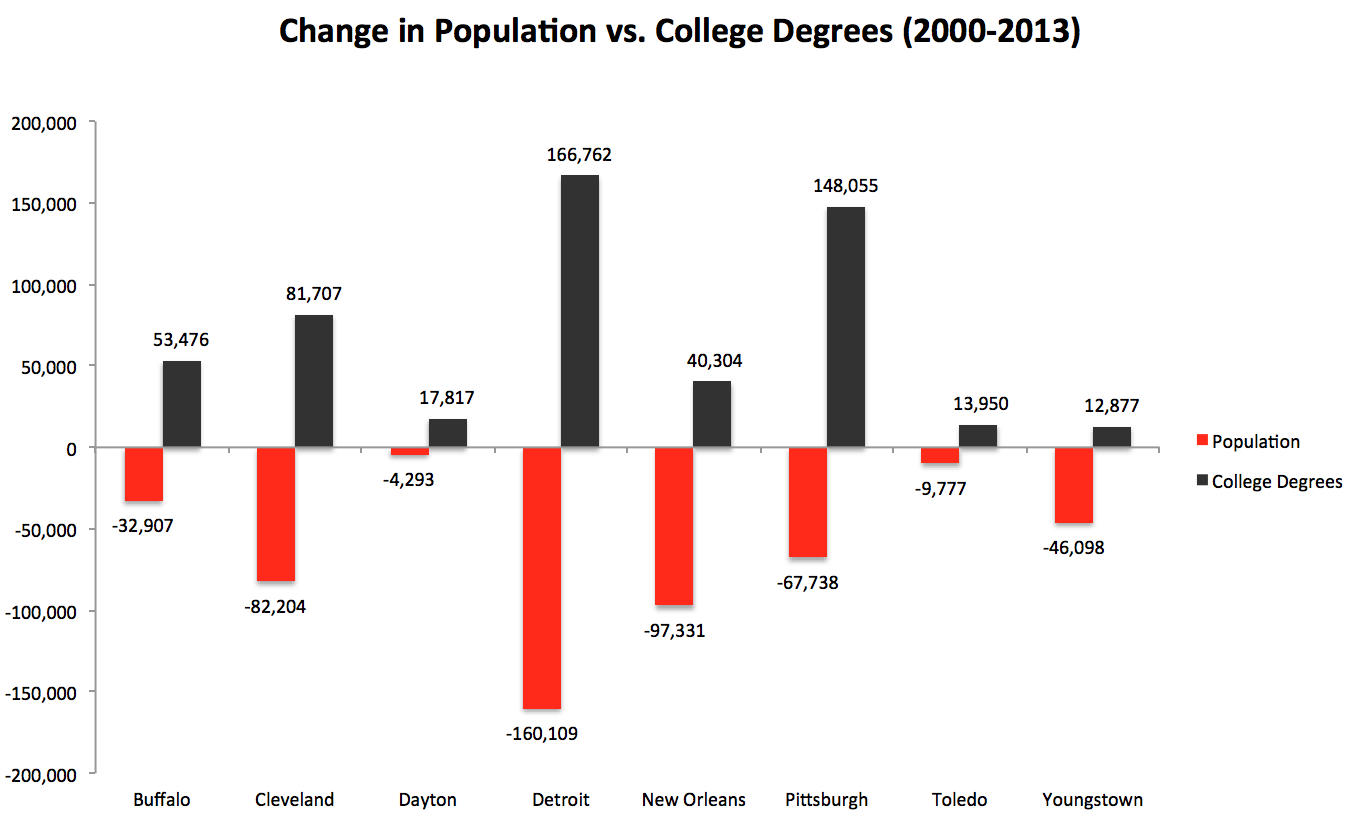
    • Every major metro area in the country that has been losing population and/or jobs is actually gaining people with college degrees at double digit rates.
    • As a whole the shrinking city group is holding its own with the country in terms of educational attainment rates, and in many cases outperforming it.
    • Even among younger adults, most shrinking cities are adding more of them with degrees, increasing their educated population share, and even catching up with the rest of the country in their college degree attainment levels.

    The following chart of metro area population change vs. degree change for select cities should drive the point home.

    Click through to read the whole thing.

    In short, for most places, it looks like the battle against brain drain has actually been won. As people there can attest, thanks to many improvements public and private over the years, they are now viable places to live for higher end talent in a way they weren’t say 20 years ago. This means the attention and resources that have been devoted to this issue can now be put to more present day tasks such as repairing civic finances, rebuilding core public services, and creating more economic opportunity for those without degrees.

    More commentary later perhaps, but for now please check out the report and share widely.

    Aaron M. Renn is a senior fellow at the Manhattan Institute and a Contributing Editor at City Journal. He writes at The Urbanophile.

  • The “Inner Cleveland” of Trendy Cities

    Check out these photos and try to guess where they were taken. If you thought Cleveland, Pittsburgh, Detroit, Buffalo, Cincinnati, or a dozen other Rustbelt towns you’d be mistaken, although your confusion is completely understandable. It’s actually Portland, Oregon – that bastion of liberal, crunchy, hippie, yuppie, hipster, eco-friendliness. Go figure. I’m not putting down Portland. Portland is great. I love Portland. I’m making a point about the reputation of some cities and how we perceive places differently based on a lot of vague stereotypes. If the only images we ever saw of Portland all looked like this it would be hard to persuade people to migrate there – even if the photos don’t portray the complete reality on the ground.

    IMG_0087 (800x533) IMG_0100 (800x533) IMG_0093 (800x533) IMG_0126 (800x533)

    To be perfectly honest, Portland is a small blue collar city out in the sticks with a fairly recent trendy overlay. Its economy is fair-to-middling. Stable, but nothing to write home about. It’s primary source of dynamism comes from inflows of cash, talent, and people from other more expensive west coast cities who seek out a higher quality of life at a lower price point. That migration is fueled by the popular image many people have about the city more than the reality on the ground. Over time this branding becomes a self-fulfilling prophecy. Now check out these next photos.

    Screen Shot 2014-10-27 at 9.19.36 PM Screen Shot 2014-10-27 at 9.17.00 PM unnamed-9 unnamed-8 Screen Shot 2014-11-15 at 9.45.23 AM unnamed

    When you look at these pictures what do you think of? Portland? Seattle? Boston? Chicago? It’s actually Cincinnati.

    Screen Shot 2014-10-11 at 5.35.40 PM Screen Shot 2014-10-11 at 11.14.59 PM Screen Shot 2014-10-11 at 11.11.00 PM Screen Shot 2014-10-11 at 11.32.50 PM Screen Shot 2014-10-11 at 11.28.35 PM

    How about these photos? San Francisco? Maybe a cool part of LA? Nope. It’s Pittsburgh.

    buf4
    buf7 unnamed buf6 buf5 buf1

    How about these photos? Brooklyn? Chicago? Boston? How about Buffalo? Yep. Buffalo.

    IMG_0576 (800x533) IMG_0577 (800x533) IMG_0565 (800x533) IMG_0714 (800x533) (2)

    Are you looking for a great walkable vibrant neighborhood, but really want a single family home with a patch of garden to go along with all the cool nearby shops and fun stuff on Main Street? Maybe something with a bit of historic charm instead of a cookie cutter tract home? Well, for north of $500,000 you can get one of these great places in Portland. Or…

    buf2
    buf3 buf1 buf2

    For about $200,000 you could get something like this in Buffalo. Don’t have $200,000? If you’re willing to work on a fixer upper in a transitional neighborhood really close to the areas that have already gentrified you can find something for $50,000.

    4 unnamed-7 Cincy 34 
    Cincy 33
    Cincy 51 -1
    3 unnamed-2

    How about one of these in Cincinnati for between $50,000 and $200,000?

    Will you make as much money in Cincinnati, Pittsburgh, or Buffalo as you might in Seattle, Chicago, or Brooklyn? No. But when your housing cost has been radically reduced you really don’t need nearly as much cash. It isn’t how much you earn that matters. It’s how much you have left over at the end of the month that determines how well you live. Personally I spend 90% of my life within a five block radius of my apartment in San Francisco. Do I love having ready access to the rest of an amazing city? Absolutely. Could I afford to enjoy most of what San Francisco has to offer if we hadn’t bought our place a million years ago when the Mission was still a cheap funky neighborhood? Not even close.

    Here’s my advice to both young people who are just starting out as well as older people who are struggling to manage in a tough economic environment. Stop fighting expensive housing markets. Stop trying to wedge yourself into an overpriced shoe box apartment in a mediocre neighborhood in a top tier city. Stop driving an hour and a half out to an isolated subdivision just to hold on to your status in a big metroplex. It’s not worth it. The interior of the country is absolutely full of amazing places at a price you can comfortably afford. Give yourself and your family a big raise and leave the coast behind.

    John Sanphillippo lives in San Francisco and blogs about urbanism, adaptation, and resilience at granolashotgun.com. He’s a member of the Congress for New Urbanism, films videos for faircompanies.com, and is a regular contributor to Strongtowns.org. He earns his living by buying, renovating, and renting undervalued properties in places that have good long term prospects. He is a graduate of Rutgers University.

  • The Rustbelt Roars Back From the Dead

    Urban America is often portrayed as a tale of two kinds of places, those that “have it” and those who do not. For the most part, the cities of the Midwest—with the exception of Chicago and Minneapolis—have been consigned to the second, and inferior, class. Cleveland, Buffalo, Detroit or a host of smaller cities are rarely assessed, except as objects of pity whose only hope is to find a way, through new urbanist alchemy, to mimic the urban patterns of “superstar cities” like New York, San Francisco, Boston, or Portland.

    Yet in reality, the rustbelt could well be on the verge of a major resurgence, one that should be welcomed not only locally but by the rest of the country. Two factors drive this change. One is the steady revival of America as a productive manufacturing country, driven in large part by new technology, rising wages abroad (notably in China), and the development of low-cost, abundant domestic energy, much of it now produced in states such as Ohio and in the western reaches of Pennsylvania.

    The second, and perhaps more surprising, is the wealth of human capital already existent in the region. After decades of decline, this is now expanding as younger educated workers move to the area in part to escape the soaring cost of living, high taxes, and regulations that now weigh so heavily on the super-star cities. In fact, more educated workers now leave Manhattan and Brooklyn for places like Cuyahoga County and Erie County, where Cleveland and Buffalo are located, than the other way around.

    The Psychological Undermining of the Rustbelt

    When attention is paid to the industrial Midwest, it often takes the form of an anthropological curiosity as to how “the other half” lives. “I’ll tell you the relationship between New York and Cleveland,” said Joyce Brabner, wife of the underground comic book legend Harvey Pekar, to a New York City radio host. Brabner talked about the “MTV people” coming to Cleveland to get pictures of Pekar emptying the garbage and going bowling. But they didn’t bowl, Brabner quipped. They went to the library. “So, that’s it,” she continued. “We’re just basically these little pulsating jugular veins waiting for you guys to leech off some of our nice, homey, backwards Cleveland stuff.”

    Urban economists, particularly those on the self-satisfied coasts, tend to envision utter hopelessness for the region. “Can Buffalo Ever Come Back?” reads the headline of a City Journal article by Harvard economist Ed Glaeser. He answers in the subtitle: “Probably not—and government should stop bribing people to stay there.” Glaeser cites Buffalo’s low levels of human capital and low housing costs as reasons to federally jump ship.

    Berkeley-based economist Enrico Moretti is also bearish on the future of the region. Moretti believes that the winners in the knowledge economy, such as Silicon Valley, Boston, and Seattle, will be winning more, and the losers—he cites Cleveland and Detroit—will be winning less. In a recent interview, Moretti hints at the prospect of federal incentives tied to unemployment benefits to motivate people to leave the Rust Belt for high-tech hot spots. “If you are a waiter, you can make twice as much in Austin relative to Flint,” remarked Moretti. Of course what’s missing from this equation is that the median rent in San Francisco is much more than double that of Flint, without considering the higher cost of energy and far higher taxes.

    Often, when national experts imbue hopelessness into the region, rustbelt leaders, no strangers to desperation, often take the bait. Perhaps nothing so illustrates the long-term acceptance of second-class status than the widespread adoption of the creative class model of urban development championed by Richard Florida. This approach—which holds up places like San Francisco and New York as exemplars par excellence—maintains that the key to growth is to develop a hip, cool scene that will attract educated, entrepreneurial people to a city.

    For instance, in a recent interview about how to turn around Detroit, Florida says, “If you want to rebuild a neighborhood, you’re a lot better off starting with stuff people eat and drink.” In other words, cities should develop the microbrewery district, the artisanal culinary scene, etc. to attract the talent; and once the talent clusters, broad economic development will follow.

    This approach was adopted in the ’90s by such politicians as former Michigan governor Jennifer Granholm, who famously proclaimed that the key to turning around rustbelt cities like Detroit lay in becoming “cool” by cultivating the “creative class” and subsidizing the arts. But as the American Prospect has noted, many down-at-the-heels burgs like Cleveland, Toledo, Hartford , Rochester, and Elmira, New York have tried but largely failed to reinvent themselves as hipster-oriented. “You can put mag wheels on a Gremlin,” commented one long time Michigan observer, “but that doesn’t make it a Mustang.”

    The Resurgence of the rustbelt as a productive region

    The rustbelt revival relies not on mimicry but on embracing the regional culture that values production of things over simply their mere consumption. Cities like San Francisco, Portland and Seattle may have started with industrial roots, but their recent success has been tied to such factors as attractive geographies and, to Midwest sensibilities at least, mild climates. These regions have been enriched for decades by the migration of people from the rustbelt—Microsoft’s former President Steve Ballmer (suburban Detroit), venture capitalist John Doerr (St. Louis), and Intel co-founder Robert Noyce (Iowa) are just a few examples.

    The cities of the heartland came into existence, first and foremost, as economic entities. Detroit, for example, grew first from timber and farming, and later autos; its location at the confluence of the Detroit River and the Great Lakes assured that its products could be exported around the nation and the world. Cleveland grew, and thrived, due to its location near such natural resources as oil (which explains Standard Oil’s founding in that city), as well as its strategic lakefront location. Pittsburgh also grew largely due to the nearby availability of cheap energy as well as the confluence of three rivers that made it an ideal place for the evolution of the steel industry.

    Today many in the economics and urban planning professions consider such factors close to irrelevant. With the certainty of old Marxists predicting the inevitable end of capitalism, the clerisy today denies that industry can ever revive. “Construction and manufacturing jobs are not coming back,” intoned Slate, suggesting not much of a future for a wide swath of the country, and millions of Americans.

    Yet a funny thing has happened on the way to oblivion: the rustbelt’s industrial base is reviving. Cheap and abundant natural gas is luring investment from manufacturers from Europe and Asia, who must otherwise depend on often unsecured and more expensive sources of energy. The current energy and industrial boom, according to Siemens President Joe Kaeser, “is a once-in-a-lifetime moment.”

    Indeed, since 2010, jobs have expanded in energy, manufacturing, logistics and, with the return of the housing market in some areas, construction. Although much of the expansion has taken place in the sunbelt, notably Texas, the rustbelt economy has also been a prime beneficiary. Of the top ten states for new plants in 2010, five were in the rustbelt—led by second place (after Texas) Ohio, Pennsylvania, Michigan, Illinois, and Indiana.

     Most impressively, there has been a revival of job growth in these areas. Between 2009 and 2013, rustbelt cities and states dominated the country’s industrial revival. At the top of the list is Michigan, which gained 88,000 industrial jobs, a performance even greater than that of Texas, which came in second. The next three leading beneficiaries are all rustbelt states: Indiana, Ohio, and Wisconsin.

    For much of the past half century, the rustbelt states suffered high levels of unemployment. But today Ohio, Indiana, Minnesota and Wisconsin have considerably lower rates of unemployment than the national average, and considerably less than California, Georgia, Nevada, New Jersey, and New York.

    Human Capital: A critical advantage for the new rustbelt

    Critically, despite generations of out-migration, the region has retained a strong base of skilled, technical workers. The Great Lakes states, for example, boast the largest concentration of engineering jobs (more than 318,000) of any major region. This is 70,000 more than northeast or the west coast. In terms of engineers per capita, both Dayton and Detroit rank among the top 12 regions in the country; they have many more, per capita, than Boston, San Francisco, New York, Los Angeles, and Chicago.

    The rustbelt’s technological strengths differ considerably those of the two leading engineer cities, San Jose/Silicon Valley and Houston. In the Silicon Valley engineers tend to be focused on the high profile digital economy, while those in Houston are generally engaged with oil and gas. In contrast, the rustbelt’s workforce is more involved in the world of production, of practical engineering. Their work conforms closest to French sociologist Marcel Mauss’s description of technology as “a traditional action made effective.”

    The revival of industry makes such engineering talent critical to regional success. It also provides a critical opportunity to expand the ranks of the middle class. The University of Washington’s Richard Morrill has found that areas with large concentrations of manufacturing—including largely non-union southern plants—and other higher-wage blue collar jobs have significantly lower levels of income inequality than areas that rely primarily on service, finance, and tech industries.

    This could create tremendous opportunity for a broad swath of the rustbelt population. There is already, notes a recent Boston Consulting Group (BCG) study, a shortfall of some 100,000 skilled manufacturing positions in the U.S. By 2020, according to BCG and the Bureau of Labor Statistics, the nation could face a shortfall of around 875,000 machinists, welders, industrial-machinery operators, and other highly skilled manufacturing professionals.

     So rather than focus on the “hip cool,” the rustbelt’s new generation, particulary the majority without Bas, needs to become reacquainted with the skills—so often deemed unfashionable and dead-end—that built the region.

    Equally critical has been the growth among younger educated workers in the region. From 2000 to 2012, the Buffalo metro area rose to seventh in the nation in the number of 25- to 34-year-olds with a college degree, a percentage gain of 34 percent. Greater Pittsburgh ranked tenth. Over the last three years, the Cleveland metro has risen to third in the nation in the percentage gain of young adults with a college degree, behind only Nashville and Orlando. Cleveland’s gain of 15,500 college-educated young adults was greater than Silicon Valley’s and seven times that of Portland.

    These young folks aren’t just arriving, but they are also employed. According to the Center for Population Dynamics at Cleveland State University, Pittsburgh and Cleveland are third and eighth in the nation respectively in the percentage of 25- to 34-year olds in the workforce with an advanced or professional degree, ahead of such high-tech hot spots as Seattle, Austin, and San Diego, and well ahead of Portland, which ranks twenty-third. One explanation for this shift lies in job prospects. For example, one recent highly-disseminated report by the Portland-based Value of Jobs Coalition found that Portland’s “brain gain” was more akin to “brain waste.” The region’s educated labor force—which the report found was oversaturated with liberal arts majors—works fewer hours and gets paid less than the national metropolitan average.

    The Comeback is not just coming, it’s already here

    What’s driving the sudden improvement in the rustbelt? Some of it has to do with the region’s legacy. Various industrialists long ago financed the universities and hospitals that pepper the region, and it is these centers of knowledge production that are driving the highly-skilled workforce demand. For example, Carnegie Mellon’s robotics and computer engineering programs are creating a two-way pipeline between Pittsburgh and Silicon Valley. Both Google and Apple are broadening their physical footprint in the Steel City, in part because of the cost advantages the rustbelt offers relative to either coast. In Cleveland, the health care service and technology industry is clustering at a fast pace, particularly along the city’s health-tech corridor. According to Jeff Epstein, director of Cleveland Health-Tech Corridor, the city has raised more than $1 billion in venture capital over the last 12 years. The city’s biotech start-ups have increased by 133 percent, to 700, over the same time period. Global firms are taking notice. “The city has become quite a hub for the healthcare industry,” said Eric Spiegel, CEO of Siemen’s USA, on a recent visit to Cleveland. “We think there’s a good talent base here. It’s a good location for a lot of our businesses.” Bowling and taking out the garbage this isn’t.

    Another major factor lies with costs. Housing prices in most rustbelt cities, adjusted for incomes, are one-third those of the Bay Area and at most one-half those seen in the Los Angeles, New York, or Boston areas. This can be seen not just in distant exurbs or suburbs, but in prime inner-city neighborhoods. Whatever dreams millennials have are likely to center around affordable single-family housing, as they begin to marry and start families. The rustbelt offers this younger generation the kind of choices, and middle class standards, that are increasingly unattainable in the superstar cities.

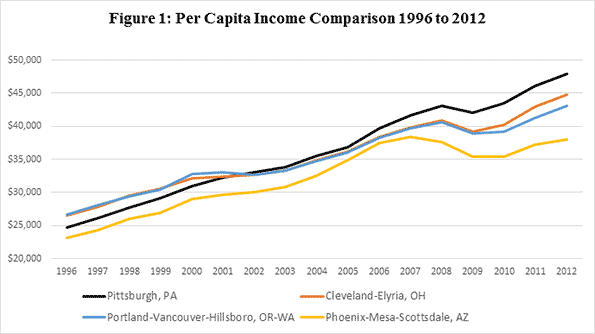
    These changes are beginning to be seen in hard economic numbers. The region is already experiencing some of the nation’s largest per capita income gains. From 2009 to 2012, Cleveland’s metro income, when adjusted for inflation and cost of living, increased from $44,109 to $47,631—the fifth biggest increase in the nation, behind Silicon Valley, Houston, Oklahoma City, and Nashville. Buffalo ranked tenth in the nation, while Detroit and Pittsburgh ranked twelth and thirteenth, respectively. Conversely, Portland’s metro area ranked thirty-eighth in income gains, going from $39,414 to $40,706, one spot ahead of New York, whose per capita income nudged up by only $1,200.

    Economic development, then, is not simply about adding a cornucopia of talent or cool, then shaking and stirring it like a drink. According to Buffalo native and rustbelt economic expert Sean Safford, a director at the internationally-acclaimed Parisian Sciences Po, creative classification efforts distract from the kind of basic investments that really matter. What is important, Safford found, is investing in infrastructure that will drive the evolution of the rustbelt’s knowledge networks, particularly around the anchor institutions such as industrial research labs, universities, and hospitals that can help produce products for the global market.

    Cleveland, for one, is figuring this out. Along the city’s health-tech corridor, investment is not spent sprinkling the tech corridor with art galleries and microbreweries, but rather with the world’s first commercial 100 gigabit fiber network. Cleveland increasingly knows its bread is buttered by health care expertise, and it is making the requisite infrastructure investments to further the growth of its health care industry.

    Sure, Cleveland has got a microbrew scene as well, just like Portland. But a pricey pint requires a solid paycheck, which means Cleveland has microbreweries whose products are consumed by people who know microbes, and how to fashion steel, or develop new energy resources. Those tasty brews are consumed by producers. As long as that causality stays clear—not only for Cleveland, but for other rustbelt metro areas as well—then the region’s future could be far brighter than most experts suggest. Before long, those who can only envision the rustbelt as a landscape of garbage cans and bowling pins may find that they are the people who are stuck in the past.

    This piece originally appeared in Forbes.

    Joel Kotkin is executive editor of NewGeography.com and Distinguished Presidential Fellow in Urban Futures at Chapman University, and a member of the editorial board of the Orange County Register. His newest book, The New Class Conflict is now available at Amazon and Telos Press. He is author of The City: A Global History and The Next Hundred Million: America in 2050. His most recent study, The Rise of Postfamilialism, has been widely discussed and distributed internationally. He lives in Los Angeles, CA.

    Richey Piiparinen is a Clevelander, writer, and Senior Research Associate heading the Center for Population Dynamics at Cleveland State University.

  • Brain Drain Hysteria Breeds Bad Policy

    Desperate times call for desperate measures. The Rust Belt, a region familiar to the air of anxiety, knows this all too well, particularly the “desperate measures” part.

    A case in point: During the 1990’s, Pittsburgh, like many of its Rust Belt peers, was in the midst of a fit of brain drain hysteria. Strategic policy was needed. So the powers that be thought of a marketing campaign meant to saturate the minds of the educated “young and the restless” who were thinking about exiting the Steel City. Pittsburgh demographer and economist Chris Briem, in a 2000 op-ed in the Post-Gazette, picks it up from here:

    “The focus on retaining vs. attracting workers is pervasive in local policies. One marketing character thought of by the Pittsburgh Regional Alliance, whose mission is to promote Pittsburgh, was the genial "Border Guard Bob." The image was of an older, uniformed sentinel on Pittsburgh’s borders keeping our citizens, in particular the younger workers, from leaving the region. This is the same logic that inspired the East Germans to build a wall around Berlin and is likely to have as much success in the long-run.”

    Luckily for Pittsburgh, Border Guard Bob never materialized. Policy-wise, building walls is terrible form in the age of information. Still, the aura of desperation remained in the region, despite its illogicality. For instance, in his 2002 piece called “Young people are not leaving Pittsburgh”, Briem crunched the numbers to find the region’s brain drain wasn’t. Yet he found it hard “to convince Pittsburghers that the outmigration of youth is not the problem it once was,” blaming “a persistence of memory” stemming from the regional exodus in the 1980’s.  

    As a demographer and economic thinker in Cleveland, I can sympathize with Briem. Cleveland, too, is prone to bouts of brain drain hysteria. A recent report highlighted in the New York Times called “The Young and Restless and the Nation’s Cities” was enough set off a flare-up. The report found that between 2000 and 2012, Greater Cleveland added less than 800 25- to 34-year-olds with a college degree—an increase of 1%. The metro ranked second last out of 51 metros, behind only Detroit.

    Obviously, those numbers are not good. That said, from a methodological standpoint, the study has its limitations. Specifically, the analysis cuts through four economic eras: 2000, the end of a prolonged expansionary period; 2005 to 2007, the middle of a jobless economic recovery; 2008 to 2010, the throes of a deep global recession; and 2011 to 2012, a period of economic recovery.

    Why does this matter? Migration patterns are affected by quite different economic circumstances nationally. This is especially true for the 25- to 34-year-old cohort, who are the most mobile, if not fickle, group.

    For example, Greater Cleveland’s lack of a young adult brain gain from 2000 to 2012 resulted from a substantial decrease of nearly 16,000 25- to 34-year-olds with a 4-year college degree from 2000 to 2006. The 2001 recession and subsequent jobless recovery hit Cleveland hard. However, my research at the Center for Population Dynamics at Cleveland State University showed that Greater Cleveland recouped the losses from earlier in the decade, gaining approximately 17,000 25- to 34-year-olds with a 4-year degree from 2006 to 2012—an increase of 23%.

    Moreover, the Census recently released data for 2013, which allows a comparison of the nation’s top big-city metros for 2011 to 2013: the current era of economic recovery. Put simply, what large metros have the momentum? Has there been a shift in where the “young and the restless” are attempting to settle down?

    The results are surprising. Cleveland ranks 3rd in the nation, with a 19.85% increase in the number of young adults with a college degree, behind the Sun Belt metros Nashville and Orlando. And no, this percentage “pop” for the region is not simply due to the fact that Cleveland had a really small base of young college graduates. In fact, the region’s 3-year gain of 15,557 ranks Cleveland 15th in total gains, despite being the 29th largest metro in the nation. To put this in perspective, Greater Cleveland had a larger total growth than Chicago, and nearly seven times the gain of Portland: the nation’s poster child for where the “young and restless” go to “live, work, play”.

    Table 1: 25-to-34-year-olds with at least a Bachelor’s degree, Change, 2011 to 2013
    Metro Area 2011 2013 % Change 2011 to 2013 Total Change 2011 to 2013
    Nashville-Davidson–Murfreesboro–Franklin, TN 82,588 103,239 25.01% 20,652
    Orlando-Kissimmee-Sanford, FL 83,706 101,066 20.74% 17,361
    Cleveland-Elyria, OH 78,392 93,949 19.85% 15,557
    Riverside-San Bernardino-Ontario, CA 97,804 116,767 19.39% 18,963
    Jacksonville, FL 47,792 56,256 17.71% 8,464
    Austin-Round Rock, TX 119,482 138,240 15.70% 18,758
    Seattle-Tacoma-Bellevue, WA 208,647 240,267 15.15% 31,620
    Sacramento–Roseville–Arden-Arcade, CA 77,075 87,435 13.44% 10,360
    Salt Lake City, UT 55,036 62,124 12.88% 7,088
    Pittsburgh, PA 117,402 131,770 12.24% 14,368
    Philadelphia-Camden-Wilmington, PA-NJ-DE-MD 306,271 341,220 11.41% 34,948
    Columbus, OH 106,144 118,224 11.38% 12,080
    Houston-The Woodlands-Sugar Land, TX 266,289 295,230 10.87% 28,941
    Buffalo-Cheektowaga-Niagara Falls, NY 52,231 57,727 10.52% 5,496
    Dallas-Fort Worth-Arlington, TX 296,927 327,330 10.24% 30,403
    New Orleans-Metairie, LA 54,104 59,616 10.19% 5,512
    San Jose-Sunnyvale-Santa Clara, CA 135,306 148,978 10.10% 13,672
    Detroit-Warren-Dearborn, MI 154,542 170,122 10.08% 15,580
    San Francisco-Oakland-Hayward, CA 320,585 350,490 9.33% 29,904
    Baltimore-Columbia-Towson, MD 150,003 163,941 9.29% 13,938
    New York-Newark-Jersey City, NY-NJ-PA 1,216,127 1,327,778 9.18% 111,651
    Los Angeles-Long Beach-Anaheim, CA 631,960 688,057 8.88% 56,098
    St. Louis, MO-IL 134,267 145,978 8.72% 11,710
    Oklahoma City, OK 58,027 63,084 8.71% 5,057
    San Antonio-New Braunfels, TX 85,240 92,524 8.55% 7,284
    Hartford-West Hartford-East Hartford, CT 59,780 64,784 8.37% 5,004
    Denver-Aurora-Lakewood, CO 163,026 176,237 8.10% 13,211
    Milwaukee-Waukesha-West Allis, WI 79,404 85,793 8.05% 6,390
    Louisville/Jefferson County, KY-IN 50,790 54,849 7.99% 4,060
    Virginia Beach-Norfolk-Newport News, VA-NC 67,664 72,888 7.72% 5,224
    Tampa-St. Petersburg-Clearwater, FL 99,316 106,504 7.24% 7,187
    San Diego-Carlsbad, CA 167,735 179,850 7.22% 12,114
    Birmingham-Hoover, AL 47,340 50,675 7.04% 3,335
    Kansas City, MO-KS 102,284 109,455 7.01% 7,171
    Rochester, NY 48,844 52,212 6.90% 3,368
    Boston-Cambridge-Newton, MA-NH 348,490 371,303 6.55% 22,813
    Phoenix-Mesa-Scottsdale, AZ 163,995 174,694 6.52% 10,699
    Providence-Warwick, RI-MA 64,205 68,349 6.45% 4,144
    Raleigh, NC 76,164 80,447 5.62% 4,283
    Indianapolis-Carmel-Anderson, IN 91,083 95,827 5.21% 4,744
    Las Vegas-Henderson-Paradise, NV 59,998 63,058 5.10% 3,060
    Cincinnati, OH-KY-IN 95,084 99,225 4.36% 4,142
    Minneapolis-St. Paul-Bloomington, MN-WI 214,755 223,640 4.14% 8,885
    Washington-Arlington-Alexandria, DC-VA-MD-WV 460,693 477,706 3.69% 17,013
    Chicago-Naperville-Elgin, IL-IN-WI 558,464 572,324 2.48% 13,860
    Atlanta-Sandy Springs-Roswell, GA 272,907 279,232 2.32% 6,325
    Portland-Vancouver-Hillsboro, OR-WA 119,490 121,794 1.93% 2,304
    Miami-Fort Lauderdale-West Palm Beach, FL 221,294 224,388 1.40% 3,094
    Richmond, VA 59,907 59,289 -1.03% -618
    Memphis, TN-MS-AR 52,911 49,412 -6.61% -3,499
    Source: ACS 1-Year, 2011, 2013 Note: Charlotte was removed from the analysis due to substantial geographic changes in the MSA designation from 2011 to 2013. Created by the Center for Population Dynamics at Cleveland State Univeristy, October, 2014. 


    What gives?

    Part of the answer may be economic. For example, my colleagues Joel Kotkin and Aaron Renn recently analyzed the growth in per capita GDP from 2010 to 2013 for Forbes in a piece entitled “The cities that are benefiting the most from the economic recovery”. Cleveland ranked 15th in the nation, with a 6% increase. In terms of income, the metro is 5th in the nation in the total per capita income increase from 2010 to 2012, behind Houston, San Jose, Oklahoma, and San Francisco.

    In understanding Cleveland’s nascent young adult brain gain, the broader economic performance is important. Healthier economies make metros “stickier” for those here and more of a magnet for those who aren’t. And while there also is the element of “Rust Belt Chic”, or the lure of so-called “authentic” places that counter the “Brooklynization” of American cities, Cleveland as a destination, or a “consumer city”, will always take a back seat to Cleveland as a “producer city”, which is a metro of good jobs, good schools, and affordable housing. The producer city focuses on the creation of value, not simply the consumption of things. This is not to say amenities, such as a good culinary and microbrew scene, are not important, it only says that if the talent you attract has nothing to produce or nowhere to live, well, all play and no work makes Jack a dull boy.

    Talent attraction, then, is only part of the formula in Cleveland’s ongoing and difficult economic restructuring. Talent production is also needed, for both natives and newcomers, regardless of the age group. But emphasizing the latter entails knowing the score on the former. Brain drain hysteria breeds desperation.

    And desperate times call for desperate measures—and bad policy.

    This piece first appeared at Crains Cleveland.

    Richey Piiparinen is a Clevelander, writer, and Senior Research Associate heading the Center for Population Dynamics at Cleveland State University.

  • Ranking America’s Top Young Labor Forces: A Rust Belt Rising?

    This is a new report brief from the Center for Population Dynamics at Cleveland State University, download the pdf version here. The report was authored by Richey Piiparinen, Charlie Post, and Jim Russell

    Greater Cleveland ranks 8th nationally in the percentage of 25- to 34-year-olds in the labor force with a graduate or professional degree, ahead of such “brain hubs” as Chicago, Seattle, and Austin. The analysis speculates as to whether or not this is a leading indicator to broader economic growth. Comparisons are made with Boston and Pittsburgh—two metros further along in the economic restructuring process.

    Ranking America’s Young Adult Labor Forces

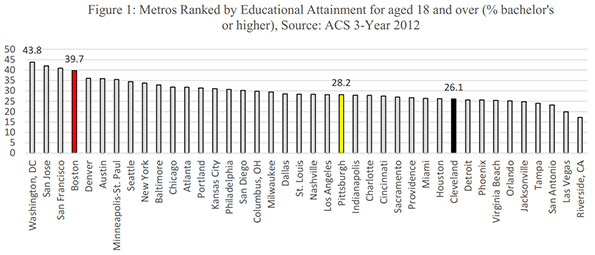
    A region’s economic prospects are tied to its levels of human capital. The most common proxy for human capital is the educational attainment rate, or the percent of a population that has completed a bachelor’s degree or higher. Figure 1 shows the nation’s largest 40 metros ranked by the percent of residents 18 and over who have completed at least a bachelor’s degree. The Rust Belt metros of Pittsburgh and Cleveland rank 23rd and 31st, respectively.

    But there are issues with measuring educational attainment this way. Metros such as Cleveland and Pittsburgh have larger aging populations due to their settlement histories, and this significantly affects regional educational attainment rates. Why does this matter? Notes Pittsburgh economist Chris Briem1: “I argue all the time that such a metric says little about how well we are doing in recent decades at either educating the population, or on how we are doing at both attracting and retaining folks with higher education.”

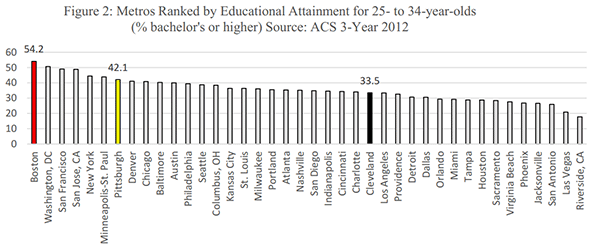
    A better way to analyze human capital is through age cohort. Measuring the educational attainment of a region’s 25- to 34-year-olds is a leading indicator when it comes to understanding where a region’s economy is headed. Figure 2 shows the educational attainment rates for the 25- to 34-year-old age cohort. Greater Pittsburgh ranks 7th, moving up 16 spots. Greater Cleveland moves up 6 spots to rank 25th.

    An additional method of examining a region’s skill level is to look at the educational attainment within the labor force, as opposed to population. The rationale for doing so is simple. Regions with proportionally large student populations, like Columbus, Ohio, can have exaggerated talent pools, at least in terms of economic productivity. That is, a college student may live in a region to consume knowledge but not necessarily be employed to produce output.

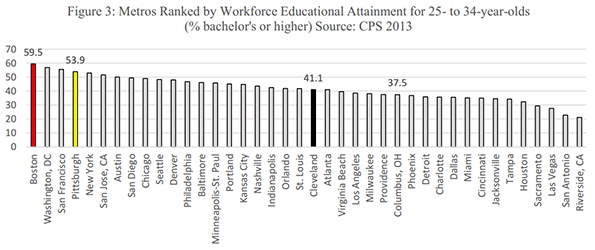
    To calculate educational attainment in the labor force, data were analyzed for the 25- to 34-year-old cohort from 2013 Current Population Survey2. Figure 3 details the results of this analysis. Pittsburgh ranks 4th, whereas Greater Cleveland moves up to rank 21st. Conversely, Columbus, Ohio drops 13 spots to rank 27th, perhaps suggesting that the region’s large college enrollment isn’t effectively translating into the regional labor market.

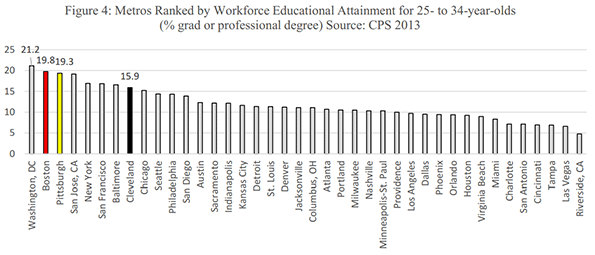
    A final analysis examines the percentage of a region’s young adult labor force that is highly skilled, or those with a graduate or professional degree. Slicing the labor force data this way is important in that a region’s highest-skilled workers are drivers of economic growth. Specifically, a metro’s top talent—think engineers, scientists, and doctors—are key agents of knowledge production and transference3, which— when translated into the marketplace—mean new firms and the evolution of existing firms. Those metros that have a high concentration of highly-skilled young adult workers have a head start in the race toward the “next” new economy.

    Figure 4 ranks the metros by the percentage of 25- to 34-year-olds in the labor force with a graduate or professional degree. Pittsburgh ranks 3rd nationally, whereas Greater Cleveland moves up 13 spots to rank 8th, ahead of Chicago, Seattle, and Austin. The implications of these findings are discussed below.

    A Rust Belt Rising?

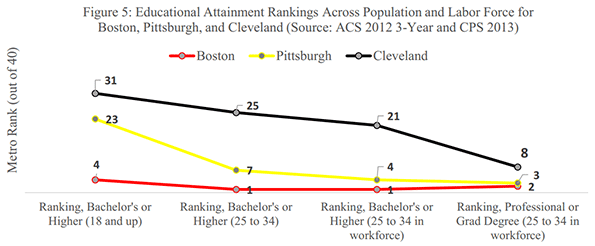
    Economic restructuring from a labor- to a knowledge-based economy is no easy endeavor. Perhaps no other metro has made this transformation as successfully as Boston. What has driven the region’s evolution from a “dying factory town to a thriving information city”4 has been its gains in human capital. As shown in Figure 5, Boston ranks as an elite metro when it comes to educational attainment rates in both its population and labor force.

    What metro is the “next Boston”? Pittsburgh is a likely candidate. The “Steel City” region is increasingly marrying its legacies of manufacturing and knowledge production, with the evolution of new industries and products to show for it5. Enabling Pittsburgh’s ascent is a highly-skilled young adult workforce that’s rivaling Boston in terms of concentration of human capital (See Figure 5 below).

    here does that leave Cleveland? While the region is far from being the “next Boston”, one can make the case it is trending to be the “next Pittsburgh”. Specifically, a line of emerging thought—and one that will be developed by the Center for Population Dynamics in the coming months in two working papers—is that Cleveland’s 8th-placed ranking in its concentration of young workers with an advanced degree is a harbinger of broader economic growth. While this supposition is exactly that, there are several mechanisms by which this can occur.

    First, it is important to note that there is an industry demand for workers with advanced degrees in Greater Cleveland, else its 8th-place ranking wouldn’t occur. Termed a “magnet city”6, Cleveland’s knowledge economy is forming world-class clusters of expertise that are attracting top talent in key industry sectors, particularly life sciences and advanced manufacturing. In other words, if you want to act, you go to Hollywood. If you want to practice cardiac care or make medical devices you come to Cleveland. The next step for the region is to scale up its emerging economies so that the amassing of knowledge and investment becomes multiplied into the creation of a “thicker, stickier” regional economy.

    Part of this scaling up process relates to the effect that Cleveland’s concentration of highly-skilled workers can have on the local economic ecosystem. To wit, those with advanced degrees are most likely to migrate across state or international lines7. For instance, 29% of newly-arriving immigrants into Cleveland’s Cuyahoga County had a graduate or professional degree8. This means Cleveland’s burgeoning new economy demand is commonly fueled from outside the market. Why does this matter? For a historically insular region like Cleveland, this out-of-the-market knowledge migration brings a deepening of a region’s idea bank, as well as increasing global connectivity. The ability of a region to cross-pollinate ideas and get connected with global markets is crucial in the creation of new firms and emerging industries9.

    Now, what does, for example, a new biotech firm in Cleveland’s Health Tech Corridor mean for the local mechanic, bartender, lawyer, or accountant? A lot actually. Specifically, economist Enrico Moretti found that for every high-skilled job created, an additional 5 jobs are created in the professional or service sector10. What’s more, the job creation goes beyond the local services and taps into semi-skilled professions in emerging industries. For example, a recent Brookings study found that the Cleveland metro ranked 20th out of the nation’s largest 100 metros in the number of workers without bachelor’s degrees employed in pre-baccalaureate health care occupations11.

    Summary

    Perhaps Cleveland is the next Pittsburgh, and Pittsburgh the next Boston. Clarifying this entails analyzing how human capital development and economic restructuring takes place. Simply, is Cleveland’s talent profile today similar to Pittsburgh’s a decade ago, and to Boston’s twenty years prior? Moreover, what policies have been proven effective in translating knowledge production to regional economic growth?

    The Center for Population Dynamics is in the process of answering these questions. The information intends to help Cleveland speed up how quickly tomorrow gets here.

    This is a new report brief from the Center for Population Dynamics at Cleveland State University, download the pdf version here.

    Creative Commons photo “Cleveland Skyline from the Flats” by Flickr.com user Erik Drost.

    ———–

    2 The Current Population Survey (CPS) is a monthly survey of households conducted by the Bureau of Census for the Bureau of Labor Statistics. The monthly workforce educational attainment rate estimates were aggregated for a 2013 annual estimate.

    3 Waters, R. and Smith, H. 2013. High-technology local economies: Geographical mobility of the highly-skilled. In
    Networking Regionalised Innovative Labour Markets; Eds. Hilpert, U and Smith. H. Routledge: New York.
  • Confessions of a Rust Belt Orphan

    How I Learned to Stop Worrying and Love Northeast Ohio

    Go to sleep, Captain Future, in your lair of art deco
    You were our pioneer of progress, but tomorrow’s been postponed
    Go to sleep, Captain Future, let corrosion close your eyes
    If the board should vote to restore hope, we’ll pass along the lie

    -The Secret Sound of the NSA, Captain Future

    As near as I can tell, the term “Rust Belt” originated sometime in the mid-1980s. That sounds about right.

    I originated slightly earlier, in 1972, at St. Thomas Hospital in Akron, Ohio, Rubber Capital of the World. My very earliest memory is of a day, sometime in the Summer of 1975, that my parents, my baby brother, and I went on a camping trip to Lake Milton, just west of Youngstown. I was three years old. To this day, I have no idea why, of all of the things that I could remember, but don’t, I happen to remember this one. But it is a good place to start.

    image
    Image Source: Wikipedia: Change in total number of manufacturing jobs in metropolitan areas, 1954-2002. Dark red is very bad. Akron is dark red.

    The memory is so vivid that I can still remember looking at the green overhead freeway signs along the West Expressway in Akron. Some of the signs were in kilometers, as well as in miles back then, due to an ill-fated attempt to convert Americans to the Metric system in the 1970s. I remember the overpoweringly pungent smell of rubber wafting from the smokestacks of B.F. Goodrich and Firestone. I recall asking my mother about it, and her explaining that those were the factories where the tires, and the rubber, and the chemicals were made. They were made by hard-working, good people – people like my Uncle Jim – but more on that, later.

    When I was a little bit older, I would learn that this was the smell of good jobs; of hard, dangerous work; and of the way of life that built the modern version of this quirky and gritty town. It was the smell that tripled Akron’s population between 1910 and 1920, transforming it from a sleepy former canal-town to the 32nd largest city in America. It is a smell laced with melancholy, ambivalence, and nostalgia – for it was the smell of an era that was quickly coming to an end (although I was far too young to be aware of this fact at the time). It was sometimes the smell of tragedy.

    We stopped by my grandparents’ house, in Firestone Park, on the way to the campground. I can still remember my grandmother giving me a box of Barnum’s Animals crackers for the road. She was always kind and generous like that.

    Who were my grandparents? My grandparents were Akron. It’s as simple as that. Their story was Akron’s story. My grandfather was born in 1916, in Barnesboro, a small coal-mining town in Western Pennsylvania, somewhere between Johnstown, DuBois, and nowhere. His father, a coal miner, had emigrated there from Hungary nine years earlier. My grandmother was born in Barberton, in 1920. Barberton was reportedly the most-industrialized city in the United States, per-capita, at some point around that time.

    They were both factory workers for their entire working lives (I don’t think they called jobs like that “careers” back then). My grandfather worked at the Firestone Tire & Rubber Company. My grandmother worked at Saalfield Publishing, a factory that was one of the largest producers of children’s books, games, and puzzles in the world. Today, both of the plants where they worked form part of a gutted, derelict, post-apocalyptic moonscape in South Akron, located between that same West Expressway and perdition. The City of Akron has plans for revitalizing this former industrial area. It needs to happen, but there are ghosts there…

    My name is Ozymandias, King of Kings, 
    Look on my works, ye Mighty, and despair!
    Nothing beside remains. Round the decay 
    Of that colossal wreck, boundless and bare 
    The lone and level sands stretch far away.

    -Percy Bysshe Shelley, Ozymandias

    My grandparents’ house exemplified what it was to live in working-class Akron in the late 1970s and early 1980s. My stream-of-consciousness memories of that house include: lots of cigarettes and ashtrays; Hee-HawThe Joker’s Wild; fresh tomatoes and peppers; Fred & Lamont Sanford; Archie & Edith Bunker; Herb Score and Indians baseball on the radio on the front porch; hand-knitted afghans; UHF/VHF; 3, 5, 8, and 43; cold cans of Coca-Cola and Pabst Blue Ribbon (back when the pop-tops still came off of the can); the Ohio Lottery; chicken and galuskas (dumplings); a garage floor that you could eat off of; a meticulously maintained 14-year-old Chrysler with 29,000 miles on it; a refrigerator in the dining room because the kitchen was too small; catching fireflies in jars; and all being right with the world.

    I always associate the familiar comfort of that tiny two-bedroom bungalow with the omnipresence of cigarette smoke and television. I remember sitting there on May 18, 1980. It was my eighth birthday. We were sitting in front of the TV, watching coverage of the Mount St. Helens eruption in Washington State. I remember talking about the fact that it was going to be the year 2000 (the Future!) in just twenty years. It was an odd conversation for an eight year old to be having with adults (planning for the future already, and for a life without friends, apparently). I remember thinking about the fact that I would be 28 years old then, and how inconceivably distant it all seemed. Things seem so permanent when you’re eight, and time moves ever-so-slowly.

    More often than not, when we visited my grandparents, my Uncle Jim and Aunt Helen would be there. Uncle Jim was born in 1936, in West Virginia. His family, too, had come to Akron to find work that was better-paying, steadier, and (relatively) less dangerous than the work in the coal mines. Uncle Jim was a rubber worker, first at Mohawk Rubber and then later at B.F. Goodrich. Uncle Jim also cut hair over at the most-appropriately named West Virginia Barbershop, on South Arlington Street in East Akron. He was one of the best, most decent, kindest people that I have ever known.

    I remember asking my mother once why Uncle Jim never washed his hands. She scolded me, explaining that he did wash his hands, but that because he built tires, his hands were stained with carbon-black, which wouldn’t come out no matter how hard you scrubbed. I learned later, that it would take about six months for that stuff to leach out of your pores, once you quit working.

    Uncle Jim died in 1983, killed in an industrial accident on the job at B.F. Goodrich. He was only 47. The plant would close for good about a year later.

    It was an unthinkably tragic event, at a singularly traumatic time for Akron. It was the end of an era.

    Times Change

    My friend Della Rucker recently wrote a great post entitled The Elder Children of the Rust Belt over at her blog, Wise Economy. It dredged up all of these old memories, and it got me thinking about childhood, about this place that I love, and about the experience of growing up just as an economic era (perhaps the most prosperous and anomalous one in modern history) was coming to an end.

    That is what the late 1970s and early 1980s was: the end of one thing, and the beginning of a (still yet-to-be-determined) something else. I didn’t know it at the time, but that’s because I was just a kid.

    In retrospect it was obvious: the decay; the deterioration, the decomposition, the slow-at-first, and then faster-than-you-can-see-it unwinding of an industrial machine that had been wound-up far, far, too-tight. The machine runs until it breaks down; then it is replaced with a new and more efficient one – a perfectly ironic metaphor for an industrial society that killed the goose that laid the golden egg. It was a machine made up of unions, and management, and capitalized sunk costs, and supply chains, and commodity prices, and globalization. Except it wasn’t really a machine at all. It was really just people. And people aren’t machines. When they are treated as such, and then discarded as obsolete, there are consequences.

    You could hear it in the music: from the decadent, desperately-seeking-something (escape) pulse of Disco, to the (first) nihilistic and (then) fatalistic sound of Punk and Post-Punk. It’s not an accident that a band called Devo came from Akron, Ohio. De-evolution: the idea that instead of evolving, mankind has actually regressed, as evidenced by the dysfunction and herd mentality of American society. It sounded a lot like Akron in the late 1970s. It still sounds a little bit like the Rust Belt today.

    As an adult, looking back at the experience of growing up at that time, you realize how much it colors your thinking and outlook on life. It’s all the more poignant when you realize that the “end-of-an-era” is never really an “end” as such, but is really a transition to something else. But to what exactly?

    The end of that era, which was marked by strikes, layoffs, and unemployment, was followed by its echoes and repercussions: economic dislocation, outmigration, poverty, and abandonment; as well as the more intangible psychological detritus – the pains from the phantom limb long after the amputation; the vertiginous sensation of watching someone (or something) die.

    And it came to me then 
    That every plan 
    Is a tiny prayer to Father Time

    As I stared at my shoes
    In the ICU
    That reeked of piss and 409

    It sung like a violent wind
    That our memories depend
    On a faulty camera in our minds

    ‘Cause there’s no comfort in the waiting room
    Just nervous paces bracing for bad news

    Love is watching someone die…

    -Death Cab For Cutie, What Sarah Said

    But it is both our tragedy and our glory that life goes on.

    Della raised a lot of these issues in her post: our generation’s ambivalent relationship with the American Dream (like Della, I feel the same unpleasant taste of rust in my mouth whenever I write or utter that phrase); our distrust of organizations and institutions; and our realization that you have to keep going, fight, and survive, in spite of it all. She talked about how we came of age at a time of loss:

    not loss like a massive destruction, but a loss like something insidious, deep, pervasive.

    It is so true, and it is so misunderstood. One of the people commenting on her blog post said, essentially, that it is dangerous to romanticize about a “golden age”; that all generations struggle; and that life is hard.

    Yes, those things are all true. But they are largely irrelevant to the topic at hand.

    There is a very large middle ground between a “golden age” and an “existential struggle”. The time and place about which we are both writing (the late 1970s through the present, in the Rust Belt) is neither. But it is undoubtedly a time of extreme transition. It is a great economic unraveling, and we are collectively and individually still trying to figure out how to navigate through it, survive it, and ultimately build something better out of it.

    History is cyclical. Regardless of how enamored Americans, in general, may be with the idea, it is not linear. It is neither a long, slow march toward utopia, nor toward oblivion. When I look at history, I see times of relative (and it’s all relative, this side of paradise) peace, prosperity, and stability; and other times of relative strife, economic upheaval, uncertainty, and instability. We really did move from one of those times to the other, beginning in the 1970s, and continuing through the present.

    The point that is easy to miss when uttering phrases like “life is hard for every generation” is that none of this discussion about the Rust Belt – where it’s been, where it is going – has anything to do with a “golden age”. But it has everything to do with the fact that this time of transition was an era (like all eras) that meant a lot (good and bad) to the people that lived through it. It helped make them who they are today, and it helped make where they live what it is today.

    For those that were kids at the time that the great unraveling began (people like me, and people like Della) it is partially about the narrative that we were socialized to believe in at a very young age, and how that narrative went up in a puff of smoke. In 1977, I could smell rubber in the air, and many of my family members and friends’ parents worked in rubber factories. In 1982, the last passenger tire was built in Akron. By 1984, 90% of those jobs were gone, many of those people had moved out of town, and the whole thing was already a fading memory. Just as when a person dies, many people reacted with a mixture of silence, embarrassment, and denial.

    As a kid, especially, you construct your identity based upon the place in which you live. The whole identity that I had built, even as a small child, as a proud Akronite: This is the RUBBER CAPITAL OF THE WORLD; this is where we make lots and lots of Useful Things for people all over the world; this is where Real Americans Do Real Work; this is where people from Europe, the South, and Appalachia come to make a Better Life for themselves; well, that all got yanked away. I couldn’t believe any of those things anymore, because they were no longer true, and I knew it. I could see it with my own two eyes. Maybe some of them were never true to begin with, but kids can’t live a lie the way that adults can. When the place that you thought you lived in turns out not to be the place that you actually live, it can be jarring and disorienting. It can even be heartbreaking.

    We’re the middle children of history, man. No purpose or place. We have no Great War. No Great Depression. Our great war is a spiritual war. Our great depression is our lives.

    Tyler Durden, Fight Club

    I’m fond of the above quote. I was even fonder of it when I was 28 years old. Time, and the realization that life is short, and that you ultimately have to participate and do something with it besides analyze it as an outside observer, has lessened its power considerably. It remains the quintessential Generation X quote, from the quintessential Generation X movie. It certainly fits in quite well with all of this. But, then again, maybe it shouldn’t.

    I use the phrase “Rust Belt Orphan” in the title of this post, because that is what the experience of coming of age at the time of the great economic unraveling feels like at the gut-level. But it’s a dangerous and unproductive combination, when coupled with the whole Gen-X thing.

    In many ways, the Rust Belt is the “Generation X” of regions – the place that just doesn’t seem to fit in; the place that most people would just as soon forget about; the place that would, in fact, just as soon forget about itself; the place that, if it does dare to acknowledge its own existence or needs, barely notices the surprised frowns of displeasure and disdain from those on the outside, because they have already been subsumed by the place’s own self-doubt and self-loathing.

    A fake chinese rubber plant
    In the fake plastic earth
    That she bought from a rubber man
    In a town full of rubber plans
    To get rid of itself

    -Radiohead, Fake Plastic Trees

    The whole Gen-X misfit wandering-in-the-Rust Belt-wilderness meme is a palpably prevalent, but seldom acknowledged part of our regional culture. It is probably just as well. It’s so easy for the whole smoldering heap of negativity to degenerate into a viscous morass of alienation and anomie. Little good can come from going any further down that dead-end road.

    Whither the Future?

    The Greek word for “return” is nostosAlgos means “suffering.” So nostalgia is the suffering caused by an unappeased yearning to return.
    – 
    Milan Kundera, Ignorance

    So where does this all leave us?

    First, as a region, I think we have to get serious about making our peace with the past and moving on. We have begun to do this in Akron, and, if the stories and anecdotal evidence are to be believed, we are probably ahead of the region as a whole.

    But what does “making our peace” and “moving on” really mean? In many ways, I think that our region has been going through a collective period of mourning for the better part of four decades. Nostalgia and angst regarding the things that have been lost (some of our identity, prosperity, and national prominence) is all part of the grieving process. The best way out is always through.

    But we should grieve, not so we can wallow in the experience and refuse to move on, but so we can gain a better understanding of who we are and where we come from. Coming to grips with and acknowledging those things, ultimately enables us to help make these places that we love better.

    We Americans are generally not all that good at, or comfortable with, mourning or grief. There’s a very American idea that grieving is synonymous with “moving on” and (even worse) that “moving on” is synonymous with “getting over it”.

    We’re very comfortable with that neat and tidy straight, upwardly-trending line toward the future (and a more prosperous, progressive, and enlightened future it will always be, world without end, Amen.)

    We’re not so comfortable with that messy and confusing historical cycle of boom-and-bust, of evolution and de-evolution, of creation and destruction and reinvention. But that’s the world as we actually experience it, and it’s the one that we must live in. It is far from perfect. I wish that I had another one to offer you. But there isn’t one on this side of the Great Beyond. For all of its trials and tribulations, the world that we inhabit has one inestimable advantage: it is unambiguously real.

    “Moving on” means refusing to become paralyzed by the past; living up to our present responsibilities; and striving every day to become the type of people that are better able to help others. But “moving on” doesn’t mean that we forget about the past, that we pretend that we didn’t experience what we did, or that we create an alternate reality to avoid playing the hand that we’ve actually been dealt.

    Second, I don’t think we can, or should, “get over” the Rust Belt. The very phrase “get over it” traffics in denial, wishful thinking, and the estrangement of one’s self from one’s roots. Countless attempts to “get over” the Rust Belt have resulted in the innumerable short-sighted, “get rich quick” economic development projects, and public-private pyramid-schemes that many of us have come to find so distasteful, ineffective, and expensive.

    We don’t have to be (and can’t be, even if we want to) something that we are not. But we do have to be the best place that we can be. This might mean that we are a smaller, relatively less-prominent place. But it also means that we can be a much better-connected, more cohesive, coherent, and equitable place. The only people that can stop us from becoming that place are we ourselves.

    For a place that has been burned so badly by the vicissitudes of the global economy, Big Business, and Big Industry, we always seem to be so quick to put our faith in the Next Big Project, the Next Big Organization, and the Next Big Thing. I’m not sure whether this is the cause of our current economic malaise, or the effect, or both. Whatever it is, we need to stop doing it.

    Does this mean that we should never do or dream anything big? No. Absolutely not. But it does mean that we should be prudent and wise, and that we should tend to prefer our economic development and public investment to be hyper-nimble, hyper-scalable, hyper-neighborhood-focused, and ultra-diverse. Fetishizing Daniel Burnham’s famous “Make no little plans…” quote has done us much harm. Sometimes “little plans” are exactly what we need, because they often involve fundamentals, are easier to pull-off, and more readily establish trust, inspire hope, and build relationships.

    Those of us that came of age during the great economic unraveling and (still painful) transition from the Great American Manufacturing Belt to the Rust Belt might just be in a better position to understand our challenges, and to find the creative solutions required to meet them head-on. Those of us that stuck it out and still live here, know where we came from. We’re under no illusions about who we are or where we live. I think Della Rucker was on to something when she listed what we can bring to the table:

    • Determination
    • Long-game focus
    • Understanding the depth of the pit and the long way left to climb out of it
    • Resourcefulness
    • Ability to salvage
    • Expectation that there are no easy answers
    • Disinclination to believe that everything will be all right if only we do this One Big Thing

    When I look at this list, I see pragmatism, resilience, self-knowledge, survival skills, and leadership. It all rings true.

    He wanted to care, and he could not care. For he had gone away and he could never go back any more. The gates were closed, the sun was gone down, and there was no beauty but the gray beauty of steel that withstands all time. Even the grief he could have borne was left behind in the country of illusion, of youth, of the richness of life, where his winter dreams had flourished.

    “Long ago,” he said, “long ago, there was something in me, but now that thing is gone. Now that thing is gone, that thing is gone. I cannot cry. I cannot care. That thing will come back no more.”

    -F. Scott Fitzgerald, Winter Dreams

    So, let’s have our final elegy for the Rust Belt. Then, let’s get to work.

    This post originally appeared in Jason Segedy’s Notes From the Underground on November 2, 2013.

    Segedy is the Director of the Akron Metropolitan Area Transportation Study, the Metropolitan Planning Organization serving Akron, Ohio.  As a native of Akron, and as an urban planner, he has a strong interest in the future of places throughout the Great Lakes region, and in the people that inhabit them.

  • The Ugly City Beautiful: A Policy Analysis

    When it comes to the future, Detroit and San Francisco act as poles in the continuum of American consciousness. Detroit is dead and will continue dying. San Francisco is the region sipping heartily from the fountain of youth. Such trajectories, according to experts, will go on indefinitely.

    Harvard economist Ed Glaeser has a grim outlook for the Rust Belt. “[P]eople and firms are leaving Buffalo for the Sunbelt because the Sunbelt is a warmer, more pleasant, and more productive area to live,” he writes in City Journal.

    Glaeser echoes this sentiment in a recent interview with International Business Times, saying “[s]mart people want to be around other smart people”, and the Rust Belt has a long slog ahead given that “post-industrial city migration is dominated by people moving to warmer climes”.

    But is this true? Is there a “brain drain” from the Rust Belt to the Sun Belt and Coasts? In a word: no. But Rust Belt leaders have bought this narrative hook line and sinker, and the subsequent hand-wringing has led to wasteful public investment.

    “Michigan’s cities must retain and attract more people, including young knowledge workers, to its cities by making them attractive, vibrant, and diverse places,” reads a 2003 memo from the National Governor’s Association about Michigan’s “Cool Cities” campaign.

    But the campaign struggled. “Government can’t mandate cool,” reflected Karen Gagnon, the former Cool Cities director. “As soon as government says something is cool, it’s not.”

    What’s worse, “cooling you city” with talent attraction expenditures can exacerbate economic disparities on the ground. Cities, like Chicago, are increasingly becoming bifurcated cities based on faulty assumptions that “trickle down urbanism” works. That said, the challenge of the day—for not only Rust Belt cities, but all cities—is not “brain drain”, but “brain waste”. Those cities who can best rebuild middle class communities tied to emerging markets will be the future of investment, like they were in the past.

    Through Rust-Colored Glasses

    When a people fall from grace, the sentiment of decline tends to stick. The Rust Belt’s demise is cemented. Meanwhile, the future is elsewhere. Like toward the sun. For instance, from 2000 to 2010, the Sun Belt metros of Houston, Dallas, Atlanta, Riverside, Las Vegas, Miami, Orlando, and Phoenix experienced the largest population growth. The biggest losers? It’s a “who’s who” of Rust Belt metros, led by Detroit, Cleveland, Pittsburgh, and Buffalo.

    America is a country governed by growth: big cars, big belt buckles, big houses, and big populations. Shrinkage is weakness. It is a sign of place failure. The problem here is that population growth is an ineffective, broad-brush measure when trying to understand regional underlying dynamics. A new study by Jessie Poon and Wei Yin in the journal Geography Compass called “Human Capital: A Comparison of Rustbelt and Sunbelt Cities” details exactly that.

    In it, the authors compare human capital levels between the Sunbelt metros in California (including San Francisco and L.A.), Nevada, New Mexico, and Arizona with Rust Belt metros in Michigan, Ohio, Indiana, Pennsylvania, and upstate New York. When it comes to share of population with a college degree, the authors find that the Rust Belt is experiencing a brain gain equal to their Sun Belt peers from 1980 to 2010. Poon and Wei also found that skill ratios of immigrants is higher in the Rust Belt than Sunbelt. The authors note that despite population decline, the Rust Belt continues “to be important sites of human capital accumulation”.

    The study coincides with recent work out of the Center for Population Dynamics that shows Greater Cleveland’s number of 25- to 34-year olds with a bachelor’s or higher increased by 23% from 2006 to 2012, as well as Pittsburgh economist Chris Briem’s work that shows the metros of Pittsburgh, Detroit, and Cleveland rank 1st,, 6th, 7th in the country respectively when it comes to the number of young adults in the labor force with a graduate or professional degree.

    Beyond human capital, the Rust Belt continues to produce and export wealth at a massive pace. The “Chi-Pitts” mega-region, which mirrors the Rust Belt boundaries with the addition of Minneapolis, generates $2.3 billion in economic output, second only to the “Bos-Wash” mega-region that makes up the Northeast Corridor.

    Also, using IRS migration data from the 2009-2010 period, a team of researchers led by Michal Migurski showed that Los Angeles County, New York County, and Cook County sent the most people and money to the rest of the United States. Detroit’s Wayne County was fourth. Cleveland’s Cuyahoga County was 9th, one spot ahead of San Francisco County. Speaking to Esquire, which published the work in a visual called “Where Does the Money Go”, Migurski explains the findings:

    "We realized that if you look at the biggest ‘losers,’ essentially what you’re looking at are the biggest cities in the U.S.," Migurski says. One of those losers: New York County, which lost $1,306,548,000 and 15,100 people. "But does that actually mean New York is a big loser?" Migurski asks. "One of our ideas was that, you’re not a loser if you’re losing money. You’re an exporter." The sort of exporter, he says, that boosts the rest of the U.S. economy. Traditional Sun Belt retirement areas comprise the gainers; areas like South Florida and Southern California in particular, create what Migurski calls "money sinks."

    Still, the notion of “loser” for Wayne and Cuyahoga County sticks, despite evidence to the contrary. But why? Why the constant “poor post-industrial people” sentiment, if not a low-grade captivation that comes with “ruin porn” rubbernecking?

    Well, if an ideal exists—you know, the experts beckon: be the “new” city, the “hot” city, the “creative” city—then a study in contrasts is necessary. The Rust Belt, with its connotations of smoke stacks and demographic decline, fits the bill.

    “[Richard] Florida suggests that Rustbelt cities’ high concentration of less creative blue-collar workers also produces unhappy residents,”Poon and Wei conclude in their Rust Belt/Sun Belt study. “We suggest that such a doom and gloom picture of urban and regional development for the uncool industrial Rustbelt needs to be tempered with a trend of brain gain that is growing across cities in the region.”

    But for this tempering to happen a clearer understanding of the importance of accumulating human capital needs to be ascertained. More exactly: Is it to put your city to work, or to “live-work-play”?

    Build it and they will…what?

    In his 1921 work Economy and Society, social scientist Max Weber details a city’s raison d’etre. Cities can be producer cities, wherein importance is derived from industries that demand national and international trade. Think Detroit and cars. Additionally, cities are consumer cities, in which growth is tied to how much is spent consuming goods and services in the local economy. Think eating, drinking, and buying houses.

    The cities that are the most economically robust have wealth generated from global production, which in turn enables local consumption. San Francisco’s tech economy drives it real estate market and artisanal toast scene. That is, if the question was “What came first, the farm-to-table chicken or the egghead?” The answer is “the egghead”, hands down.

    But this logic—i.e., in order to go to a restaurant, you need a job, and your job prospects are tied to the viability of your region’s global industries—is often turned on its head in economic development. Here, the goal is growth, no matter the rhyme or reason.

    “Like in many Sun Belt cities,” writes a Seattle Times columnist and Sun Belt expat, “Phoenix’s economic plan devolved into merely adding people, no matter the enormous long-term costs”. The columnist goes on to note that while the population has boomed, the city lags on most measures, such as per capita income (see Figure 1 below).

    Moreover, the Phoenixes of the world exist partly because of retired Baby Boomers and the disposable income that comes with it. The Sun Belt feeds off the legacy of production in the Northeast and Midwest. Other cities, like Portland, are fed by a not dissimilar dynamic. But it’s not the retired who come, rather the pre-retired.

    “The Portland metro area’s young college-educated white men are slackers when it comes to logging hours on the job,” lead’s a piece in the Oregonian about a study conducted last year, “and that’s one reason people here collectively earn $2.8 billion less a year than the national average.” Figure 1 demonstrates Portland’s sluggish income gains compared to Rust Belt peers Pittsburgh and Cleveland.

    Similarly, in a paper circulated by the Federal Reserve Bank of Atlanta, the author analyzed the top 86 “brain gain” metros in the nation to determine whether or not a region’s increase in human capital was paying off in terms of per capita income, labor force participation, poverty rate, and unemployment. The author found Portland was one of twelve metros that experienced zero economic outcomes. Pittsburgh scored 4 for 4. The authors suggest that talent attraction and retention—when untethered to production capacity—“may be largely inefficient, a kind of traditional economic development ‘buffalo hunting’”.

    Portland is perhaps America’s consummate lifestyle city. No doubt, the city has experienced a significant brain gain over the last decade. Portland is a talent attraction model. But it is not a talent producing or refining model. Rather, Portland is producing a scene that is run by the consumption of the scene’s aesthetic. Writes one young worker who left:

    “I can’t stay too long because I know if I stayed a day too long in Portland, I’d suddenly be happy to embrace the slow pace of the city and stop working… I’d end up getting sleeping real late every day, drink some coffee, maybe write some poetry on my porch (or not), and then find a part time job selling cigars like I had in college.”

    The lesson is that accumulating talent is not enough. There has to be something for the talent to do, or a context that fosters “doing”. It is also a warning for cities investing in the lifestyle game. Spending on creative class amenities ensures nothing. Creating a field of dreams won’t pay the bills. But it will run up the tab.

    The Ugly City Beautiful

    In 1998, the Chicago Sun-Times ran a piece called “Building the City Beautiful”. “The mayor of the city of Chicago, Richard M. Daley, is a big admirer of Martha Stewart,” it begins, before describing Daley’s plans to begin the "Martha Stewart-izing" of Chicago. The article goes on to quote a University of Illinois at Chicago professor who said Chicago is turning from a producer city to a consumer city. "The producer city was the industrial city — the smoke and the noise and the industrial jobs,” noted the professor. “The consumer city is the city of Starbucks, boutiques and so forth.”

    The professor was only partly right. By the 1990s, Chicago was indeed becoming brainier. But its emerging knowledge economy was an outgrowth of its “big shouldered” manufacturing base. Columbia University professor Saskia Sassen recently noted that pundits overlook this when examining the city’s transformation, with the bias being that “Chicago had to overcome its agro-industrial past, [and] that its economic history put it at a disadvantage”. Notes Sassen:

    [I]n my research I found that its past was not a disadvantage. In fact, it was one key source of its competitive advantage. The particular specialized corporate services that had to be developed to handle the needs of its agro-industrial regional economy gave Chicago a key component of its current specialized advantage in the global economy.

    Similar economic transformations from legacy cost to legacy asset are found throughout the whole of the Rust Belt. Pittsburgh, for instance, no longer provides the muscle for steel making, but it does act as the “brain center” for the world’s steel frame. How this came about is detailed in the article “Pittsburgh’s evolving steel legacy and the steel technology cluster”.

    With the arrival of the new economy also came “new economy” tastes. Sassen noted that when she arrived in to study in Chicago in the 90s she was greeted by “old lofts transformed into beautiful restaurants catering to a whole new type of high-income worker—hip, excited, alive.”

    In other words, local consumption patterns began setting up around the emergent worker demand. Going was the Italian Beef and arriving was pickled beets. This demand also impacted housing, with the attraction to urban living setting the stage for gentrification. This, in a nutshell, is the dynamic driving the transformation of urban neighborhoods nationwide: a new economy demands new workers which in turn demand a new kind of lifestyle. The problem, though, is that leaders have the causality backward, or that creating a new lifestyle will incur new worker supply and then poof: new industries. But as we see with Portland, it is not that easy. The industrial DNA and social history of your city matters more than the cosmetics atop the topography.

    Still, from a policy and strategy standpoint, it is easier just to make your city “cool”. And that’s exactly what Chicago has been doing at a significant pace. In a recent piece entitled “Well-healed in the Windy City”, author Aaron Renn details Mayor Rahm Emanuel’s policy of using tax-increment financing (TIF) to create geographic “winners” and “losers” across Chicagoland. “The true purpose of Chicago’s TIF districts—which now take in about $500 million per year,” writes Renn, “appears to be tending to high-end residents, businesses, and tourists, while insulating them from the poorer segments of the city.”

    The strategy was spelled out explicitly by Mayor Emanuel during a recent ribbon cutting for a bike path in Chicago’s Loop. Said Emanuel: “I expect not only to take all of their [Seattle and Portland’s] bikers but I also want all the jobs that come with this, all the economic growth that comes with this, all the opportunities of the future that come with this.”

    Notwithstanding the faulty logic in the strategy—e.g., if Portland lacks the jobs for its residents, how can it supply jobs for Chicagoans—the real problem is the costs associated with such bifurcated investment. In West and South Chicago, the byproducts of the City Beautiful approach are downright ugly. But they are not unexpected. They are the long-documented economic and social effects of concentrated poverty and segregation. Continues Renn:

    Safety levels in Chicago can no longer be plotted on a single bell-shaped curve for the entire city. Today, that curve is split into two—one distribution for the wealthy neighborhoods and one for the poor ones. A lack of resources is part of the problem: the police department is understaffed… While the city budget is tight, failing to increase police strength during a murder epidemic is a profound statement of civic priorities.

    Urban priorities flow from a perception of what is at stake. For long, the push for human capital accumulation has pitted city versus city amidst the backdrop of an urban popularity contest in which the “winner” is assured nothing outside of popularity. But victory in the vanity game is fleeting. The young and the restless are exactly that, and many people who come to New York or San Francisco, or for that matter Portland, leave as they get older and seek out affordable places to raise a family. What remains on the ground is the reality of brain waste. Without the prioritization of equitable, integrated middle-class neighborhoods a city’s progress will be always be disparate, if not illusory. Talent attraction is but part of a redevelopment process. So is talent refinement for those arriving and talent production for those in place. After all, neighborhoods are factories of human capital. Building people, not places, is what a successful city is all about.

    But to know this is to “know thyself”. The Rust Belt has been dying for some time now, so say the experts. The region has absorbed the projections, and given that desperate times call for desperate measures investment has been wasted. “[Creative class theory] is bad because it distracts from what’s important,” says Sean Stafford, author of Why the Garden Club Couldn’t Save Youngstown.

    Regaining focus entails removing the rust-colored glasses. Rust Belt leaders will see there are assets to work with, not to mention feel the freedom that comes with no longer being a study in contrast for those touting a future that really isn’t.

    Richey Piiparinen is Senior Research Associate at the Center for Population Dynamics at the Maxine Goodman Levin College of Urban Affairs at Cleveland State University. The Center for Population Dynamics at Cleveland State University’s Maxine Goodman Levin College of Urban Affairs aims to help partner organizations competitively position the region for economic and community development. It will do so through the lens of migration, applied demography, and culture.

    Lead photo courtesy of bctz Cleveland