Tag: technology

  • Building the Responsive City

    The Responsive City: Engaging Communities Through Data Smart Governance
    by Stephen Goldsmith and Susan Crawford

    Technology, and especially the use of data and analytics, has been transforming the way cities manage service delivery. Former Indianapolis mayor New York City deputy mayor Steve Goldsmith, and his colleague at Harvard Susan Crawford, recently wrote a book called “The Responsive City” looking at this technology revolution. I recently read the book and posted some thoughts in a review posted at City Journal. Here’s an excerpt:

    The book chronicles more than just technology’s potential; it also highlights what some local governments have already achieved with innovative approaches. After several fires resulted in the deaths of five people, New York City built a system to identify buildings at high fire risk, using predictive models and integrating data from multiple sources. City inspectors are now aggressively targeting those buildings for upgrades. To fight its rat problem, Chicago is using data analytics to predict where rats will gather, instead of waiting for resident complaints. Boston has developed a civic customer-relationship management system, with mobile-device apps, to link residents more easily with city services. Mimicking the way that Yelp collects restaurant reviews, Washington, D.C. uses a website to solicit ratings of city services. Cities around the country are adopting open-data portals.

    Goldsmith and Crawford are candid about the challenges facing their responsive-city vision. Progressive-era reforms designed to eliminate corruption also curtailed government employees’ discretion, leaving them with narrowly defined roles and limited ability to respond effectively to real-world problems. Rigid job descriptions, such as “temporary full-time permanent intermittent police officer,” are common in cities like New York, which has more than 2,000 such classifications. Procurement rules require that detailed specifications be prepared in advance, unlike in the private sector, where technology and other solutions are often developed iteratively. Government’s rigid contracting processes make it tough to respond to findings during development.

    You can click over to City Journal to read the entire thing

    I also sat down with Steve Goldsmith recently to talk about the book, and some of the challenges and pitfalls of this technology-drive approach. If the audio embed doesn’t display for you, click over to listen on Soundcloud.


    This piece originally appeared at The Urbanophile.
  • Architecture Critic Paul Goldberger on Silicon Valley, San Jose, and Apple

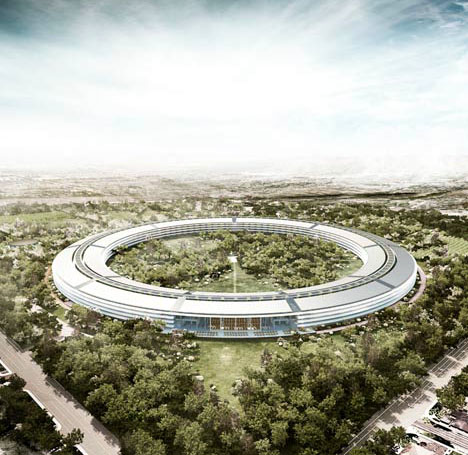
    Last week Paul Goldberger, Pulitzer Prize winning architecture critic for the New Yorker and Vanity Fair, sat down with Allison Arief of the San Francisco Planning and Urban Research Association (SPUR) in downtown San Jose to discuss the state of 21st Century urbanism with a focus on Silicon Valley. Though admired the world over as the preeminent center for technological innovation, Silicon Valley has never been known for its great architecture. Goldberger suggested that this reputation could’ve improved had Apple not missed the mark with the design of their proposed Apple Campus 2 building in Cupertino.

    While acknowledging that Apple is probably the best design company at the moment, Goldberger asserted that the company’s design abilities end with small consumer gadgets and fail spectacularly at the urban level. Calling the Norman Foster designed building for the new Apple Campus a ‘beautifully designed donut or spaceship’, he lamented the lack of context and connection to anything around it. Speaking to an audience that included members of San Jose’s city government, Goldberger suggested that Apple missed the opportunity to take the reins to help transform San Jose by relocating at least some of its operations to help its long struggling (and subsidized) downtown.

    The reality is that most of the big tech companies in the Valley, not just Apple, have an extreme indifference to place-choosing to locate operations in suburban office parks. This has much to do with the history of Silicon Valley planning as it does with the nature of tech companies, which tend to employ legions of introverted computer engineering types and go to great lengths to remain insular and secretive (Apple taking this to the extreme). Perhaps it also makes perfect sense that rather than even acknowledging the true urban environment, companies whose primary business is creating the virtual world in which we increasingly experience public life take an active stance on turning their backs on the city.

    Yet for those still interested in experiencing the delights of pre-Information Era, pre-21 Century urbanism, there is always San Francisco not far up the road.  Goldberger made the point that the handful of tech companies who do choose to locate their operations in the city probably have a different mindset than those that stay in the Valley. Twitter being the prime example of the moment- the micro blogging site just leased 400,000 square feet of space on a long-maligned section of Market Street. Up in Seattle, Amazon recently announced its plan to build three new 37-story towers in the downtown area, which the proposal’s architect said is “not about building a corporate campus, it’s about building a neighborhood.”

    So even though not every tech company is averse to the city, the Richard Florida argument that high urban density is a prerequisite for innovation and creativity is a bit of a stretch, as the economic success of suburban Silicon Valley continually disproves. Near the end of the discussion, Goldberger suggested that deliberately designing space for innovation might be a bit too self-conscious. This implies that rather than design, factors such as human resources, access to capital and a culture with openness to trial-and-error matter more than the traditional urban hardware of cities.

    Adam Nathaniel Mayer is an American architectural design professional currently based in China and California. In addition to his job designing buildings he writes the China Urban Development Blog. Follow him on Twitter: @AdamNMayer.

  • Information Technology and the Irrelevance of Architecture

    Throughout history, architecture served as the primary communication device of common cultural values. Whether inspiring religious awe or displaying the power of an empire, great works of architecture went beyond mere utility to reflect the shared expression of time and place.  Modern architecture, with its right angles and smooth surfaces devoid of ornamentation expressed the early 20th Century zeitgeist of efficiency and mass production. In many ways, the Modern architectural language also conveyed common cultural values of the time as it became the model for socialist utopia.

    The information technology revolution of the late twentieth century changed the role of architecture forever. With digital information readily available at our fingertips, buildings are no longer needed as a communication device. This new paradigm has largely gone unnoticed by the architectural establishment, which itself has been through a series of futile stylistic phases in recent decades ranging from the campy Postmodernism to the cynical Deconstructivism. The soul-searching continues today, as leading architects promote the use of technology to justify the creation of wild, superfluous forms that are for the most part nothing more than self-referential, sculptural contortions.

    Function still matters, but building design often no longer serves the higher aim of communicating a shared culture to a civic audience. Rather, it is the mobile IT products created by companies like Apple that do a superior job of communicating and transferring information while at the same time filling a human desire for great design.

    The implications for urbanism are enormous. Cities, as they are thought of in the traditional sense of high-density concentrations of people and buildings, are no longer required for a productive economy. No other place represents this new reality better than Silicon Valley. Rather than being an exalted futuristic urban landscape as one might expect given the amount of innovation that goes on there, Silicon Valley is a non-descript amalgam of low-density suburban villages. The headquarters of internet giants like Google, Yahoo! and Facebook are just as anonymous—bland office parks that turn inwards and are indifferent to the street.

    Los Angeles Times architecture critic Christopher Hawthorne blasts this reality in a critique of the proposal for the new Apple headquarters, which he calls a ‘retrograde cocoon.’ The proposal is a huge four-story concentric ring set among a park-like setting in the Silicon Valley town of Cupertino which Hawthorne laments as what he sees as the continuation of an unfortunate land-use pattern of low-density sprawl.


    Urbanists cannot afford to ignore the fact that technology is unsympathetic to architecture. Computer programmers and IT innovators, people who require countless hours of focused concentration, might actually prefer the pastoral landscape and low-key nature of Silicon Valley to the noisy and bustling urbanism that define what we traditionally think of as a ‘city’. Taking this into consideration, the new Apple HQ is an appropriate design for its purpose and also serves as reminder of the irrelevance of architecture in the twenty-first Century.

    This essay originally appeared in the architecture journal CLOG: APPLE

    Adam Nathaniel Mayer is an American architectural design professional currently living in China. In addition to his job designing buildings he writes the China Urban Development Blog.

  • How the new Apple iPad (and other mobile tech) changes the commuting equation

    Apple’s much anticipated iPad tablet computer was announced today, albeit to some mixed reviews. While the iPad itself may or may not succeed, the overall technology trend line is clear: increasingly rich mobile access to the Internet and email. Oddly, this Business Week columnist thinks the iPad may lead to more telecommuting, when what it really favors is tipping the balance for commuters from driving to transit, where the usually “dead” commuting time can become really productive. Most people are already spending more than two hours a day on email and the Internet – why not put those hours at the beginning and end of the day while commuting so you can spend less time in the office and more time with your family?

    A decade ago, the workplace was much more call and voice-mail driven, which matched up just fine with long driving commutes and cell phones. But the shift has moved strongly towards email and other data-driven communications (texting, Twitter, Facebook, collaboration applications, etc.). Most messages have multiple recipients and can expect to have a string of replies – something voice mail simply can’t handle. People are trying to do this data-driven communication while driving, with very bad effects that are leading rapidly to a comprehensive legal ban.

    As more people realize the productivity advantage of a transit commute, I think there could be a substantial shift. But it might not be quite what you’d expect. Mobile productivity favors one long ride in a comfortable seat – no transfers, no standing ‘strap-hanging’ (like on a subway or full light rail or local bus), and minimal walking (which is not only incompatible with mobile productivity, but also has weather risk and is especially hard on women in heels). That argues for express buses over trains. I recently met with a friend that lives in Manhattan but works in Connecticut. Does he take the subway and then ride the train? Nope – a luxury shuttle bus with wi-fi picks him (and the other Manhattan employees) up right near his apartment and drops him at the front door of work. Point-to-point express buses are the future of commuting. All you need are a couple dozen people that need to get from the same neighborhood to the same job cluster on roughly a similar schedule to justify a daily round trip – and they can all be productive the whole way, whether through individual 3G data connections on their devices or wi-fi on the bus (by far the cheapest option).

    While the climate-concerned may cheer increased transit use, an ironic side effect may actually be increased sprawl. When commuting is truly unproductive time, as driving is, people really hesitate for it to be more than an hour a day, which puts a pretty hard limit on how far home can be from work. But if you can be productive on a bus doing work you’d have to do anyway, you might consider two or more hours a day commuting (as my Manhattan friend does) and look at exurban communities you wouldn’t have even considered before, especially if they have more affordable or newer houses with better amenities and public schools.

    This is the commute of the future, and cities that offer it conveniently, affordably, and comprehensively (all neighborhoods to all job centers) through some combination of public transit, private buses, and HOT lanes will continue to grow and thrive in the coming decades, while those that don’t, won’t.

    This piece is a cross-post from HoustonStrategies.com

  • Toward Carbon Free Petroleum Cars

    On-board sequestration could make zero carbon dioxide emission petroleum cars possible, according to research conducted by Dr. Andrei Federov and David Damm at the Woodruff School of Mechanical Engineering at Georgia Tech. According to Science Daily:

    …the Georgia Tech team outlines an economically feasible strategy for processing fossil or synthetic, carbon-containing liquid fuels that allows for the capture and recycling of carbon at the point of emission. In the long term, this strategy would enable the development of a sustainable transportation system with no carbon emission.

    Ultimately, the approach would involve carbon capture within petroleum vehicles. The petroleum would be processed into hydrogen, for propulsion and carbon dioxide. The carbon dioxide would be converted, on board, to liquid fuel and removed at gasoline stations. The liquid fuel would then be sent to power plants, where it would be used to produce electricity. As the necessary infrastructure is being developed, the captured carbon dioxide would be removed at gasoline stations and “sequestered in geologic formations, under the ocean or in solid carbonite form.”

    This breakthrough demonstrates that it is not necessary to target the automobile or the automotive lifestyle that pervades modern living to achieve sufficient reductions in greenhouse gases. This is particularly important, given the imperative for maintaining economic growth and employment growth, which is closely linked to high levels of personal mobility.

    The research was financed by the United States federal government and the Georgia Tech “Creating Energy Options” program.

  • Generating Gasoline From CO2 Emissions

    For some time it has been assumed that reducing greenhouse gas (GHG) emissions will require a shift to cars that do not use petroleum and to power plants that do not use coal, because of the emissions from these sources. All of this may be a false alarm.

    Two recent articles indicate that there may be no need to reduce petroleum use in cars to reduce greenhouse gas emissions (GHG). The first story from USA Today describes a new process for producing gasoline from CO2. If implemented, this could materially reduce GHG emissions from coal fired electricity plants – a principal source of GHG emissions in the United States and in many other nations, including China and India. Another story in The New York Times, indicates the potential of technology that could capture CO2 emissions from cars, to be later refined into gasoline. All of this is further evidence that technology is the answer with respect to reducing GHG emissions.